Case No. 68·Japan
2020·Tokyo · Ministry of Defense
Japan.MoD UAP Reporting Protocol · Japan
On 14 September 2020, Japan's Ministry of Defense, under Minister Taro Kono, issued a formal protocol requiring Air Self-Defense Force (JASDF) pilots to film, document and report up the chain of command any encounter with unidentified aerial phenomena.
Year
2020
Tier
A
Probability
80%
Category
Document
Institutional evidence: multiple verifiable witnesses or official documentation. Three independent axes: the «tier» measures the strength of the evidence; the «probability» estimates how genuinely unexplained the case is —a natural phenomenon can remain unexplained, so it does not equal «non-prosaic»—; and the partition of explanations (below) says what it most plausibly was. So a well-documented case can have a possible hoax as its most plausible cause, and a Tier B is not, for that reason, a hoax.
Primary documents · viewer
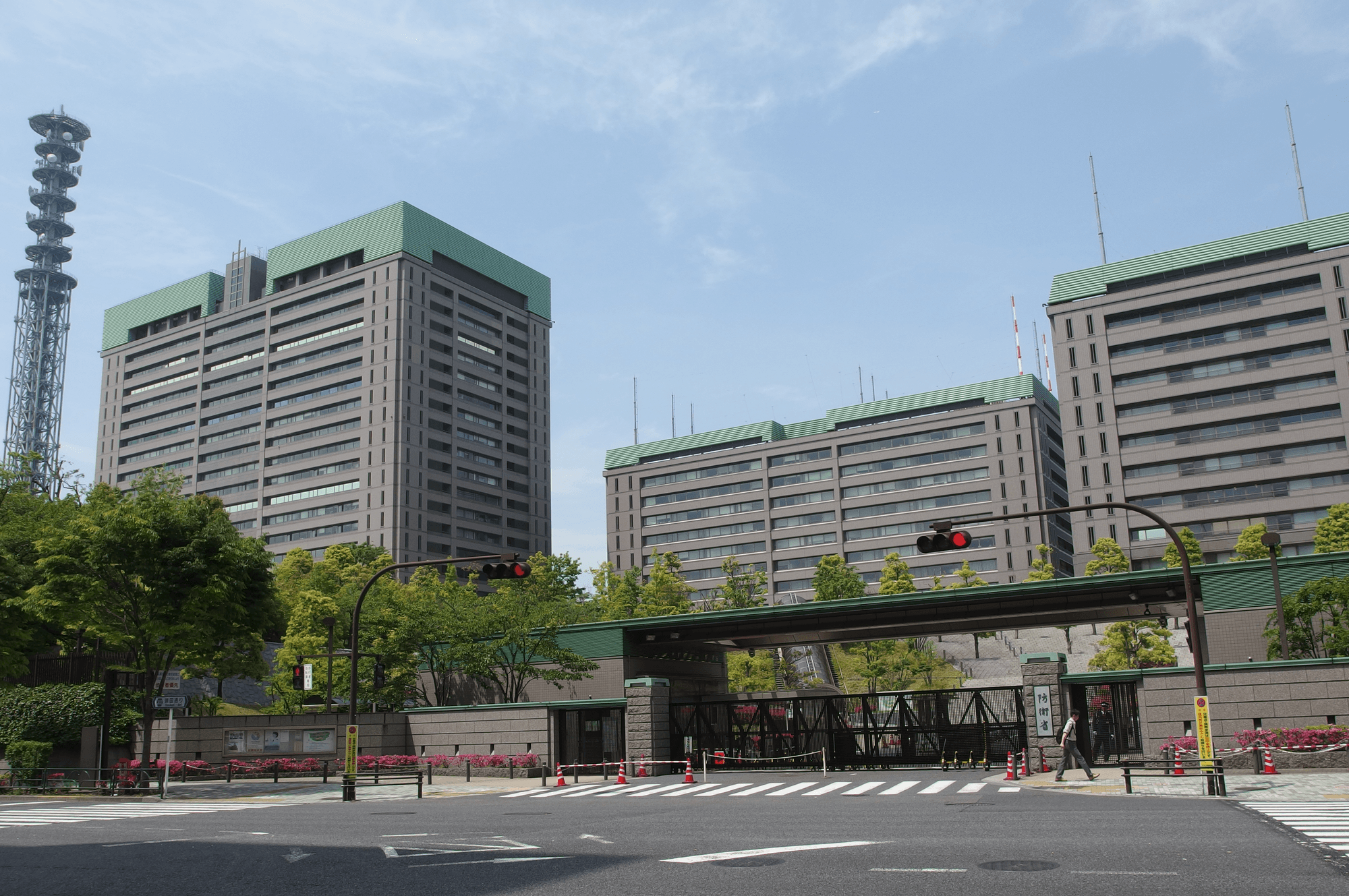
Context · Ichigaya (Tokyo), seat of Japan's Ministry of Defense
Japan Ministry of Defense in Ichigaya.png · Wikimedia Commons · CC BY 2.0 · open original
Part 01
The file in question
On September 14, 2020, the **Japanese Ministry of Defense** (Bōei-shō), under then-Minister Taro Kono, announced a formal procedure for **Self-Defense Forces (JSDF)** personnel —and in particular the **Air Self-Defense Force (JASDF)**— to handle encounters with unidentified aerial phenomena. The protocol establishes, in essence, that personnel must:
- Record and photograph any unidentifiable object they encounter or that enters Japanese airspace, using the means available on board - Document the circumstances of the observation —visual, radar contact, aircrew observation— along with relevant parameters - Report the incident up the chain of command for analysis by the Ministry, which may also integrate information provided by the public
The announcement was a direct response to the 2020 American shift. On April 27 of that year the Pentagon had declassified and officially released the three US Navy UAP videos (FLIR-1, Gimbal, Go Fast); just days later, Kono publicly stated he would ask the JSDF to standardize their reporting procedures, and the formal protocol materialized in September. The Japanese government framed the move explicitly as alignment with American practice and as an airspace-defense matter, not a popular-culture one.
Editorial honesty requires an important nuance: Kono himself expressed personal skepticism about the existence of extraterrestrial craft and stressed he had never received a sighting report from JASDF pilots. His stated motivation was procedural and prudential —to have a defined protocol just in case, and to use the American moment to institutionalize it— rather than an assertion that the phenomenon was anomalous. The directive remains active; the specific contents of any reports produced under it have not been made public.
Part 02
Why this case moved the needle
It is the first institutional protocol by an Asian state to formalize the military handling of the UAP phenomenon, and it predates the establishment of the U.S. AARO office itself (July 2022). It places Japan on the short list of countries that have elevated UAP reporting to official procedure —alongside France (GEPAN/GEIPAN since 1977), Argentina (CEFAe, 2011), Chile (CEFAA) and the United States (2020-2022)— and marks a shift of the phenomenon from the 'cultural' or anecdotal category toward the 'airspace defense' category in a G7 technological power.
Its value to the corpus is as a datum of institutional behavior, not of evidence for the phenomenon: it documents how the 2020 U.S. disclosure triggered a normative-contagion effect among allies. And precisely because of Kono's explicit caution, the case is a clean example of why formalizing a protocol is not equivalent to an ontological claim: a state can institutionalize reporting out of procedural prudence and allied alignment without asserting there are visitors. That is why the case loads lightly on the classified-program (human) narrative: it reinforces the pattern that powers treat the topic as a defense matter, without pronouncing on its nature.
The geographic context helps explain why Japan joined relatively quickly. The archipelago faces growing aerial pressure —incursions near its airspace in the East China Sea, incidents with high-altitude balloons, and a regional environment where rapid identification of any undeclared object is critical to defense. In that setting, a protocol that standardizes the recording and reporting of unidentified objects has operational utility regardless of any exotic interpretation: it turns scattered observations into comparable, traceable data. The Japanese directive is, in that sense, less a statement about the mystery and more a piece of air-intelligence hygiene, which paradoxically strengthens its value as a signal that UAP reporting has been normalized as a defense practice among advanced technological democracies.
Part 03
What's left on paper
Documented evidence
- Public announcement by the Japanese Ministry of Defense (September 14, 2020)
- Formal statements by Minister Taro Kono before the Japanese parliament
- Official communications from the Joint Staff Office (Bōei-shō Tōgō Bakuryō Kanbu)
- Simultaneous coverage by Asahi Shimbun, NHK and international agencies
Patterns it exhibits (2)
Location
Tokyo · Ministry of Defense · 35.69°, 139.69°
Related cases
Associated actors (1)
