Case No. 76·Uruguay
1979·Montevideo · Air Force General Command
Uruguay.CRIDOVNI · FAU commission
On 7 August 1979, the Uruguayan Air Force created CRIDOVNI, an official commission under the Ministry of Defense that investigates reports using military assets —radar, controllers— and classifies them. Active without interruption for over four decades, it is the world's longest-running government UAP commission, with an explicit "non-conventional" case category.
Year
1979
Tier
A
Probability
65%
Category
Document
Institutional evidence: multiple verifiable witnesses or official documentation. Three independent axes: the «tier» measures the strength of the evidence; the «probability» estimates how genuinely unexplained the case is —a natural phenomenon can remain unexplained, so it does not equal «non-prosaic»—; and the partition of explanations (below) says what it most plausibly was. So a well-documented case can have a possible hoax as its most plausible cause, and a Tier B is not, for that reason, a hoax.
Primary documents · viewer
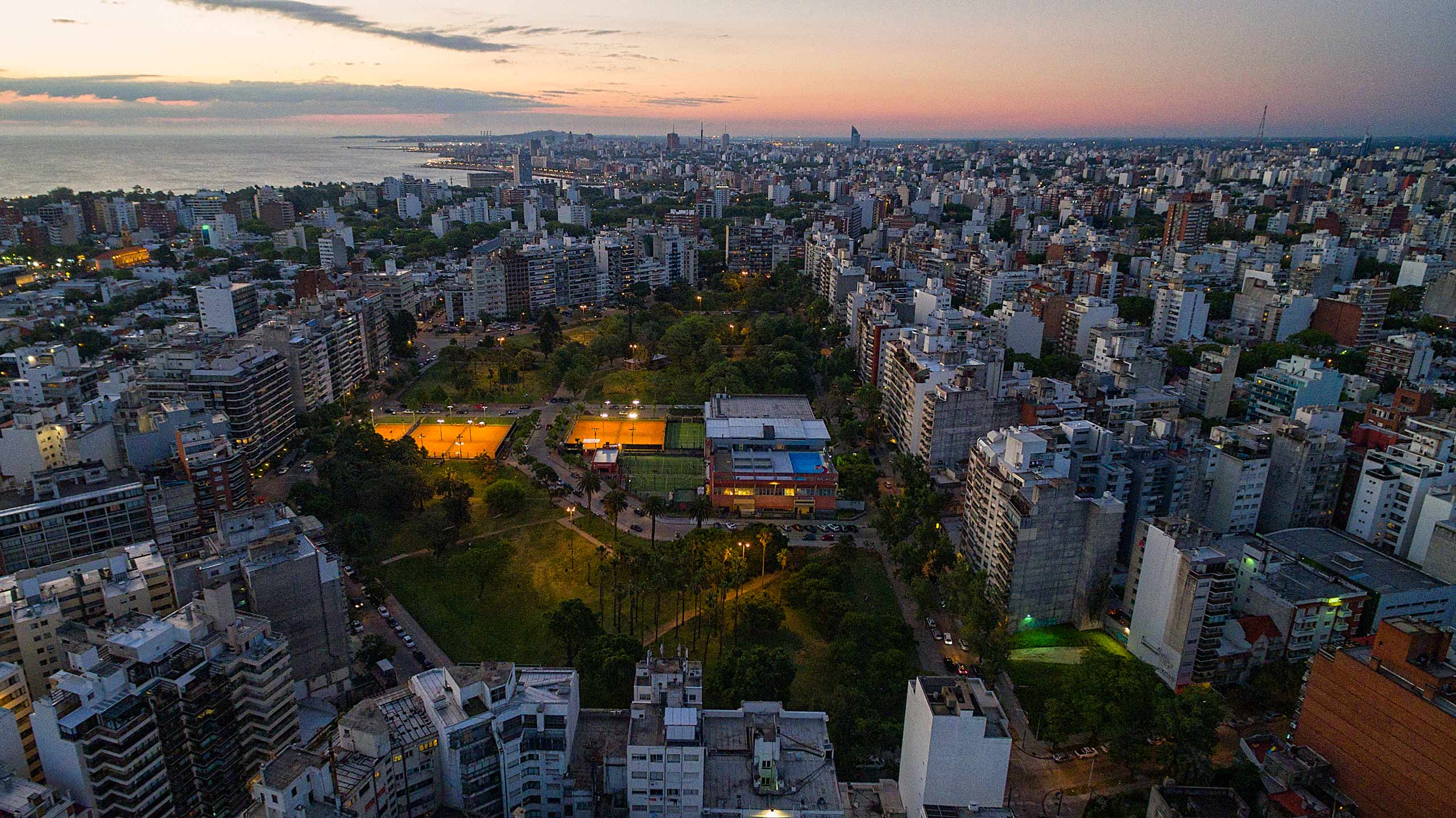
Context · Montevideo (Uruguay), seat of the Air Force's CRIDOVNI
Montevideo - Uruguay sunset.jpg · Wikimedia Commons · CC BY-SA 2.0 · open original
Part 01
The file in question
On August 7, 1979, the General Command of the Uruguayan Air Force formally established **CRIDOVNI** (Commission for Receiving and Investigating Unidentified Flying Object Reports), under the Ministry of National Defence. Its creation responded to the need to complement air-traffic-control tasks amid repeated reports of sightings across the country. It is the longest continuously operating government commission dedicated to the phenomenon known in the world: it has functioned without interruption since 1979, more than four decades.
CRIDOVNI's mandate is to receive, study and evaluate all reports of sightings in national airspace —the Uruguayan Air Force's sphere of competence— in support of airspace control and aeronautical safety. In practice it operates with a staged protocol: receipt and cataloging of the report, technical investigation using the Air Force's own resources (radars, military air traffic controllers, cross-checking against known traffic and weather data), and final classification. The distinctive feature is that the classification includes, alongside the categories of conventional explanation and insufficient data, an explicit category of 'non-conventional' cases — those that, after examination, present a high degree of strangeness and allow nothing to be concluded by what is currently known.
According to figures released by the commission itself and reported by the Uruguayan press, between 1979 and 2021 CRIDOVNI investigated on the order of **1,570 reports**, of which **47 cases —about 3%— were classified as 'non-conventional,'** kept open for their high level of strangeness. That is, the unexplained residue comes not from outside believers but from the Air Force itself after applying its skeptical filter. The commission, led in recent years by Colonel (Av.) Ariel Sánchez Ríos, maintains a sober public stance, framing its work as a matter of airspace sovereignty and security rather than speculation about the phenomenon's origin; in public statements it has even emphasized caution toward reports that turn out to have an explanation.
The case literature also mentions CRIDOVNI's contacts and cooperation with official programs of other countries, including the US AARO (All-domain Anomaly Resolution Office); the degree of formalization of that exchange should be treated as reported and not fully verified by primary source in this record.
Part 02
Why this case moved the needle
CRIDOVNI is one of the corpus's strongest structural anchors for a sustained institutional layer. It is a documented case where a state has maintained for more than four decades an official commission dedicated to the phenomenon, with methodology, statistics and a classification scheme that includes an explicit 'non-conventional' category that survives its own skeptical review.
What makes CRIDOVNI valuable for a calibrated corpus is not any claim about the nature of the phenomenon —the commission deliberately makes none— but three institutional features that are hard to replicate. First, continuity: more than forty uninterrupted years span changes of government, doctrine and command, making the commission a long-duration observer, immune to the cycle of enthusiasm and oblivion that marks public attention to the subject. Second, the provenance of the data: reports are examined with military resources —radar, controllers, cross-checking against known traffic— and the 'non-conventional' category is the verdict of the Air Force itself, not of hobbyists. Third, the proportion: that a body skeptical by function classifies around 3% as unexplained converges strikingly with the residue reported by other independent state programs, such as the ~3% type D of France's GEIPAN.
That convergence of figures across national apparatuses operating separately is perhaps the most sober and interesting datum: different states, with their own methodologies, persistently find a small percentage of cases their analysis cannot close. CRIDOVNI does not demonstrate what those cases are; it demonstrates that the residue is stable, institutional and reproducible across countries. Editorial honesty requires recalling the obverse: the remaining 97% does receive a conventional explanation, and the commission itself frequently stresses that most reports end up identified. The case's weight is structural —the existence and persistence of the apparatus and of its residue—, not evidential about any particular hypothesis.
Part 03
What's left on paper
Documented evidence
- Official Uruguayan Air Force page — CRIDOVNI (mandate 1979 to present)
- FAU release for CRIDOVNI's 40th anniversary
- Búsqueda investigative report with 1,570+ reports and 3% non-conventional figures
- Reported cooperation of CRIDOVNI with foreign official programs, including the Pentagon's AARO (degree of formalization treated as reported, not fully verified)
Patterns it exhibits (2)
Location
Montevideo · Air Force General Command · -34.83°, -56.02°
Related cases
Associated actors (2)