2023·Chamber of Deputies, Mexico City
Mexico.Maussan · Mummies before the Mexican Congress
On 12 September 2023, broadcaster Jaime Maussan presented to a hearing of the Mexican Congress two small mummified bodies, with elongated heads and three-fingered hands, which he said were found in Nazca (Peru) and 'not part of our terrestrial evolution'. UNAM denied endorsing the analysis and scientists called it a fraud; a Peruvian prosecutor had already described manufactured dolls in 2017.
Tier B · IndicativeWhat do they mean? →
Limited evidence: a single witness, testimony gathered years later, or an account without contemporary primary documentation.
What it was
88%natural or human cause
Most likely explanation: possible hoax
See the split across the six explanations
Natural or human cause
No known cause
Read the full reasoning
According to the studies the article cites, the feet of the 'aliens' could have been created by mutilating the foot of a human mummy, as vertebrate paleontologist Rodolfo Salas-Gismondi (Cayetano Heredia University) wrote in a 2017 analysis: 'The feet would have suffered mutilations of digits I and V, in addition to the cutting of the skin and soft tissue of the foot behind the toes, producing a foot with extremely long toes.'Context image (not a document from the case)
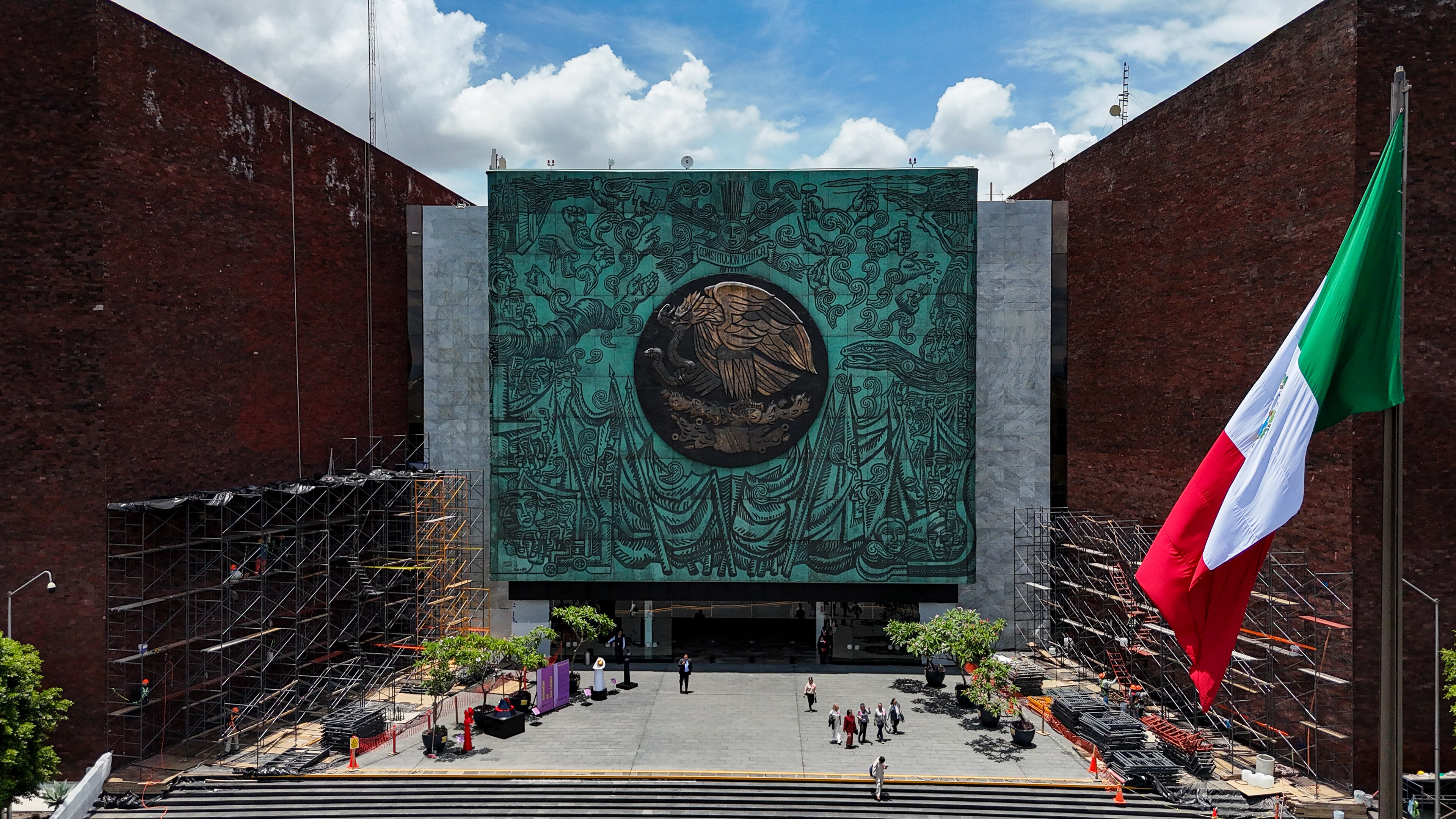
Context · the San Lázaro Legislative Palace (Chamber of Deputies), Mexico City
Palacio Legislativo de San Lázaro obtenido con dron 01.jpg · Wikimedia Commons · CC BY-SA 4.0 · open original
The night in question
On 12 September 2023, the Mexican broadcaster Jaime Maussan starred in one of the most publicized (and embarrassing) episodes in the recent history of the UAP topic. During a public hearing on unidentified anomalous phenomena held in the Chamber of Deputies of the Mexican Congress, Maussan displayed two small mummified bodies, enclosed in glass cases, of humanoid appearance: elongated heads, three-fingered hands and large oval eye sockets. He claimed they had been found in the Nazca region of Peru, and maintained that their DNA showed that 'they are not human beings' and that they were not part of 'our terrestrial evolution'. The image of the bodies presented under oath in a legislative chamber traveled around the world.
The scientific community's reaction was immediate and devastating. Maussan attributed part of the analysis to the National Autonomous University of Mexico (UNAM); but UNAM republished its 2017 statement that it had only carbon-dated the sample it received, without concluding anything about its origin, and Julieta Fierro, a researcher at UNAM's Institute of Astronomy, said the matter 'made no sense'. Various anatomy specialists noted that the bodies appeared assembled from human and animal bones manipulated to simulate an alien morphology.
The case, moreover, was neither new nor isolated. Already in 2017, when similar 'Nazca' mummies first circulated, Peru's prosecutor's office had concluded they were 'recently manufactured dolls', covered with a mixture of paper and synthetic glue to simulate skin. And Maussan himself carried a record of discredited presentations: in 2015 he had led the 'Be Witness' event, where he unveiled a supposed alien body that turned out to be the mummy of a human child. The 2023 Congress episode thus stood, before scientific consensus, as one more fraud in a trajectory of frauds, aggravated by having been staged inside a state institution.
Why it matters
The Maussan episode before the Mexican Congress matters not as evidence of non-human bodies, but as a case study of institutional capture by fraud and of the asymmetry between spectacle and proof. Its value is methodological and, above all, defensive: it shows how a legislative chamber can lend its symbolic authority to a baseless claim, and how the institutional wrapper (bodies under oath, flags, stenographers) is easily mistaken for scientific validation when there is none. When seriously tracking the institutional dimension of the phenomenon, distinguishing the container (an act of Congress) from the content (some dolls) is exactly the hygiene the case forces one to practice.
The chain of evidence against is dense and convergent: UNAM's denial, the anatomical analysis pointing to assembled human and animal bones, the prior 2017 ruling by the Peruvian prosecutor describing paper-and-glue dolls, and Maussan's own documented record with the 2015 child mummy presented as an alien. The only thing left open is that the case's sources document no independent examination with full access to the two specimens shown in Congress. The claim that their DNA is not human could only be supported by a genetic analysis published and replicated by laboratories independent of those who exhibit them. Maussan 2023 is the anchor on the spectacle side: the reminder that an institutional platform amplifies but does not turn into truth, and that the right question before an 'alien' body remains who examined it, by what method and with what independent review.
What's left on paper
Documented evidence
- Presentation of two mummified bodies by Jaime Maussan in Mexico's Chamber of Deputies (12 Sep 2023)
- Claim of non-human morphology (elongated head, three fingers) and DNA 'of unknown origin', supposedly from Nazca, Peru
- UNAM denial (Julieta Fierro): the university did not endorse the conclusions; the data 'make no sense'
- Anatomical analyses indicating assembly of manipulated human and animal bones
- Prior ruling by Peru's prosecutor (2017): dolls manufactured with paper and synthetic glue
- Maussan's record: 'Be Witness' event (2015) with a mummy presented as an alien that was a human child
Sources
- Snopes — 'Alien Corpses Revealed in Hearing Before Mexican Congress'
- Live Science — 'This is complete nonsense: Scientists rail against alien bodies shown before Mexican congress'
- Wikipedia — Jaime Maussan
- El Financiero — «Científicos califican como fraude supuestos cuerpos extraterrestres presentados por Maussan» (13 sep 2023) — Next-day press: Maussan's words on the DNA, the Peruvian prosecutor's 2017 conclusion based on the Institute of Legal Medicine, and Julieta Fierro's reaction.
- Univision — «No puede decirse que los restos presentados en el Congreso de México son de “seres no humanos” ni lo confirmó la UNAM» (sep 2023) — Fact-check: UNAM's statement on the carbon-14 dating and the Peruvian prosecutor's conclusion.
Entity form (1)
Referenced by 1 case
Related cases