2017·New Mexico · undisclosed location
United States.American Cosmic (impact site, New Mexico)
In 2017, religious-studies professor Diana Walsh Pasulka and Stanford immunologist Garry Nolan were taken, blindfolded, to an undisclosed New Mexico site presented as the location of a 1940s impact (explicitly not Roswell). They dug up lightweight, unusual-looking metallic material, of which Nolan took samples. Pasulka recounted the episode in 'American Cosmic' (Oxford University Press, 2019). The site was never disclosed or verified: the case is valuable as an ethnography of the crash-retrieval culture, not as a confirmed trace.
Tier B · IndicativeWhat do they mean? →
Limited evidence: a single witness, testimony gathered years later, or an account without contemporary primary documentation.
What it was
53%natural or human cause
Most likely explanation: possible hoax
See the split across the six explanations
Natural or human cause
No known cause
Context image (not a document from the case)
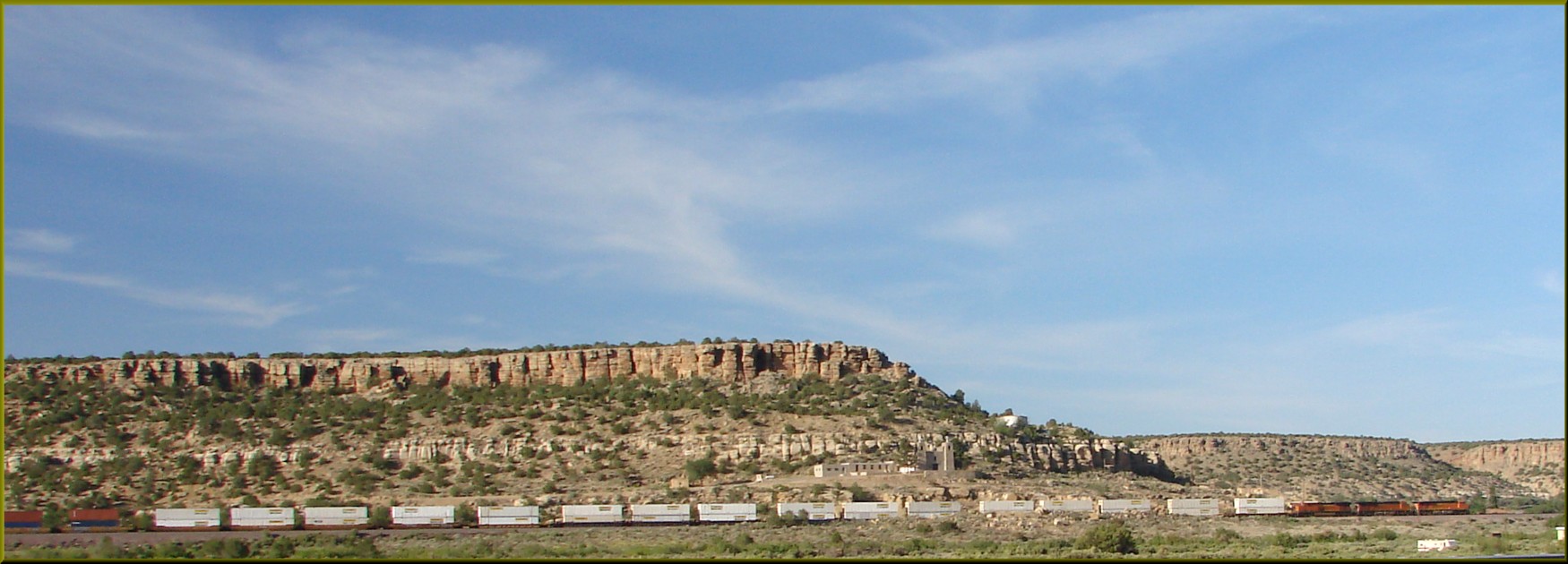
Context · the New Mexico desert, undisclosed setting of the book American Cosmic
Desert Freight, New Mexico 7-30-13 (11388389115).jpg · Wikimedia Commons · CC BY-SA 2.0 · open original
The night in question
Diana Walsh Pasulka, professor of religious studies at the University of North Carolina Wilmington and a former Vatican Library fellow, had spent years studying the UAP phenomenon as an emerging cultural and religious fact: how beliefs, narratives and institutions form around anomalous experiences. In the course of that research she came into contact with a circle of scientists and engineers, some with top-tier institutional credentials, who treat the retrieval of craft debris as a real working subject, not folklore.
Guided by a figure she calls 'Tyler D.' (later publicly identified as Timothy Taylor, an aerospace engineer with years of work for NASA and numerous patents) Pasulka traveled with Stanford immunologist Garry Nolan (whom she calls 'James' in the book) to a spot in New Mexico. According to her account, they were transported blindfolded so they could not locate the site, which was presented as the location of a mid-20th-century impact, explicitly different from Roswell. The spot was full of rubble (in an interview with Shawn Ryan, Pasulka spoke of disintegrated aluminium cans, 'I guess from the 1950s'), and with metal detectors the group located and dug up fragments of a lightweight metallic material with an irregular texture Pasulka described as metallic 'frog skin' or 'honeycomb'. In the same interview she maintained it was hard to get, 'so it couldn't have just been planted there'. Nolan collected samples for lab analysis.
Pasulka reconstructed the episode in 'American Cosmic: UFOs, Religion, Technology' (Oxford University Press, 2019), an academic work on how the UAP phenomenon functions as a form of religiosity in a technology-saturated culture. Nolan's later analysis was, deliberately, ambiguous: he identified part of the material as an early fiberglass composite (that is, mundane) while other samples remained, by his account, without a clear explanation. That indeterminacy is consistent with the point the author herself stresses, which is epistemic rather than material: the location was never disclosed, there is no official record of the site, no chain of custody was published, and the only witnesses to the act are the participants themselves, all sympathetic to the subject. The case's value lies not in a verifiable trace but in first-hand documentation of how the crash-retrieval culture is transmitted and practiced within an 'invisible college' of scientists.
Why it matters
American Cosmic matters as an object of study about the field itself, not as proof of an impact. It is the case that anchors Pasulka's line of research: UAP understood as a religious-technological phenomenon, with its 'invisible college' of scientists, its relics and its rituals of secrecy. And it is, at the same time, an extreme epistemic limit: a blindfolded site, with no location, no official record and only two witnesses, both sympathetic to the subject, cannot be treated as material evidence. That tension is exactly what makes it useful: it shows how belief in crash retrieval is manufactured and transmitted, and why such an account, however serious its author, must remain at the lowest tier of reliability. Anomaly as a cultural datum, yes; material conclusion, no. There is also an internal tension the case lays bare: the participants' scientific credentials (a Stanford immunologist, an engineer with NASA patents) are often invoked as a guarantee of reliability, but the result of the only lab analysis was ambiguous (part of the material, early fiberglass; the rest, no verdict), and no credential substitutes for verifiable provenance. Nolan himself has been cautious in public, avoiding any claim of a non-human origin. The case's usefulness is therefore double and modest: it documents the sociology of belief in crash retrieval among technical elites, and it serves as an explicit lower bound: the rung where an author's seriousness and witnesses' prestige are not, by themselves, enough to move the evidential needle.
What's left on paper
Documented evidence
- First-hand account by Diana W. Pasulka in 'American Cosmic' (Oxford University Press, 2019)
- Garry Nolan as the second participant and analyst of the collected material
- Blindfolded transport; location never disclosed or independently verified
- No official record of the site: the case is ethnographic (crash-retrieval culture), not a confirmed trace
Sources
- Pasulka, D. W. — 'American Cosmic: UFOs, Religion, Technology' (Oxford University Press, 2019)
- Anomaly Archives — «Gifting Fields» (transcripción de Diana Pasulka en el Shawn Ryan Show n.º 166) — Pasulka's account of the trip with Tyler and Nolan: the metal detectors, the blindfolds, the rubble and her claim that the material could not have been planted there.
- The Outline — review of «American Cosmic» (D. W. Pasulka, Oxford University Press, 2019)
Related cases
same explanation · same country · same period
Boyd Bushman · Deathbed Confession
2014 · Tier B
same explanation · same country · same period
Skinny Bob · 2026 viral revival of a fabricated 2011 video
2011 · Tier B
same explanation · same country
Bob Lazar · S-4 / Area 51
1989 · Tier B
same explanation · same country
Linda Napolitano · Brooklyn Bridge
1989 · Tier B
Associated actors (2)