Case No. 333·United States
Developing2011·USA — viral YouTube video, no verified institutional origin
United States.Skinny Bob · viral revival with signs of generative AI (2026)
In May 2011, a grainy video attributed to 1940s-50s U.S. military archives circulated online, showing an extremely thin grey being —nicknamed 'Skinny Bob'— blinking and moving. No one claimed authorship for 13 years. In 2025, self-described former Army intelligence analyst Edward 'Eddie' Abbott stated he had seen the complete, unedited footage inside a SCIF in 2008, with no independent verification. Between May and July 2026, the YouTube channel 'qtecqot' uploaded three new videos —'recovery footage' of the same being and a walkthrough of a craft's interior— structured as an alternate-reality game. An independent technical analysis (a verification bench using ExifTool, C2PA, SynthID and FFmpeg) found specular highlights that stay fixed while underlying geometry moves, a signature generative-AI failure, plus background incoherence — strong evidence of synthetic fabrication disguised as classified 8mm film.
Year
2011
Tier
B
Probability
8%
Category
Document
Limited evidence: single-witness, local or without primary verification. Three independent axes: the «tier» measures the strength of the evidence; the «probability» estimates how genuinely unexplained the case is —a natural phenomenon can remain unexplained, so it does not equal «non-prosaic»—; and the partition of explanations (below) says what it most plausibly was. So a well-documented case can have a possible hoax as its most plausible cause, and a Tier B is not, for that reason, a hoax.
Primary documents · viewer
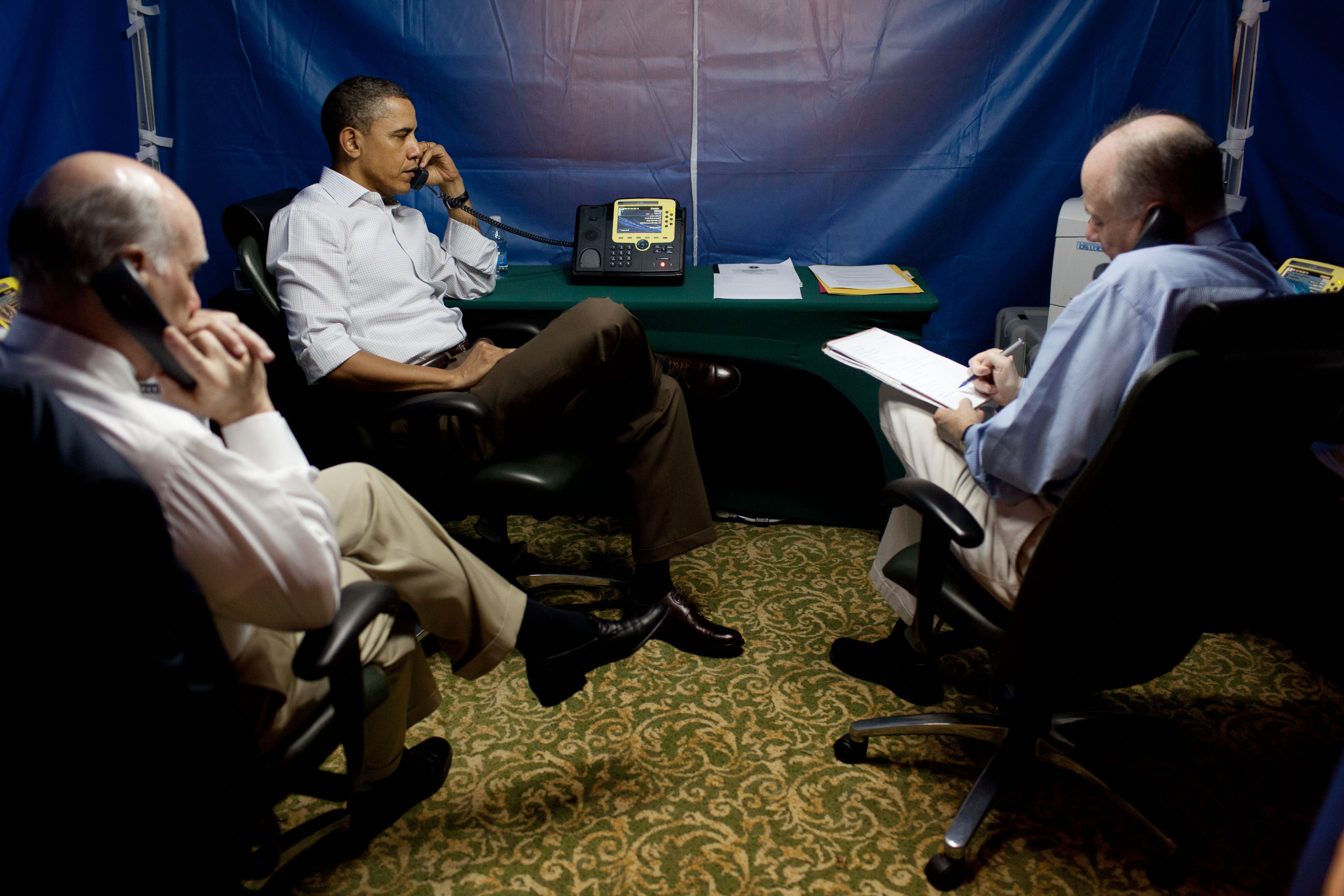
Context · the real interior of a SCIF (White House, 2011)
Barack Obama inside a SCIF.jpg · Pete Souza / Casa Blanca · Wikimedia Commons · Dominio público (PD-USGov-POTUS) · open original
Part 01
The file in question
The video known as 'Skinny Bob' appeared online in early May 2011: grainy black-and-white footage, presented by its uploader as U.S. military archive material from the 1940s and 1950s, showing a grey-like being —extremely thin, bald, disproportionately large head, narrow mouth, large blinking eyes— moving inside what appeared to be an enclosed facility. The clip circulated widely in the UFO community; some speculated it was promotional material for an unannounced film or series. In thirteen years, no one claimed authorship or produced a technically conclusive debunking, and the video sat in the usual 'neither confirmed nor refuted' limbo that characterizes much of the found-footage UFO genre.
In 2025 the case gained a testimonial layer. Edward 'Eddie' Abbott, who presents himself as a former U.S. Army intelligence analyst (2007-2009, with a deployment to Iraq), stated in interviews that he saw the complete, unedited Skinny Bob video inside a SCIF (Sensitive Compartmented Information Facility) in 2008: in color, with the being —whom he describes as 'a pilot'— moving, blinking and, in his account, alive. He further claims that parts of that footage no longer circulate in the public version. Abbott adds other unverified accounts to that claim: photographing a V-shaped object and taking part in artifact-recovery missions in the Middle East tied to an alleged hybrid program. None of his stated credentials, claimed access, or the material he describes has independent documentary corroboration.
Between May 25 and the last week of July 2026, the YouTube channel 'qtecqot' uploaded three new videos presented as a continuation of the original material: 'recovery footage' of the same being, unidentified symbols, the interior of a craft, and military personnel next to an object, with internal dates attributed to a range from 1942 to 1957. The channel's descriptions frame the uploads as numbered installments of a larger archive, preserve the uploader's anonymity, and deliberately replicate the 2011 video's classified 8mm-film aesthetic — an alternate-reality game (ARG) structure rather than a one-off leak. Media coverage speculated, without solid evidence, about a connection between this revival and the recent wave of unidentified orb and drone sightings in Brazil, Miami, Japan, Finland, Indonesia and California during the same period.
Part 02
Why this case moved the needle
The strongest contribution to this case is not testimonial but technical. An independent analysis assembled a full verification bench on the new qtecqot videos: yt-dlp to preserve native resolution and framerate, ExifTool for container metadata, a C2PA content-provenance manifest check, Google's SynthID detector, FFmpeg to examine grain and specular highlights frame by frame, and reverse image search for commercial film-damage overlays. Most of those tests were inconclusive by the material's own design —YouTube strips most container metadata on re-upload, the absence of a C2PA manifest proves nothing, and SynthID only detects Google's own generators, missing Kling, Runway, Veo or local models. But the pixel-level analysis did produce a strong signal: specular highlights that stay fixed while the underlying geometry shifts, a generation failure characteristic of current AI video models, along with background incoherence —repeated cones, foliage that morphs between frames, an implausible body gait. The reasonable conclusion is that the new material is synthetic fabrication disguised under the aesthetic filter of 1960s classified film.
For the corpus, the case matters as the first cataloged example of a pattern likely to recur: the reactivation of an old viral hoax through AI video-generation tools, propped up by an unverified 'insider' testimony that surfaces just before the new material starts circulating. The sequence —Abbott's 2025 statement, qtecqot's 2026 uploads, an ARG structure with numbered installments— suggests the two pieces feed each other rather than coincide independently, and it fits the tradition running parallel to the institutional corpus that pattern 8d catalogs: insider claims and documents of doubtful provenance —like Boyd Bushman's 'deathbed confession' or the MJ-12 papers— that raise public interest without delivering verifiable evidence about the phenomenon's nature. The posterior stays concentrated on media fabrication (mundano_natural), with an indeterminacy tail that acknowledges the impossibility of a definitive technical verdict on the original 2011 video, whose authorship remains unresolved thirteen years on.
Part 03
What's left on paper
Documented evidence
- Original 'Skinny Bob' video uploaded in May 2011, attributed without verification to 1940s-50s U.S. military archives; authorship never claimed in 13 years
- Statements by Edward 'Eddie' Abbott (2025), a self-described former Army intelligence analyst, claiming to have seen the complete footage in a SCIF in 2008 — with no independent documentary corroboration of his service or access
- Three uploads from the YouTube channel 'qtecqot' (May 25, June 15, and the last week of July 2026) structured as an alternate-reality game, with internal dates attributed to 1942-1957
- Independent technical verification bench (yt-dlp, ExifTool, C2PA check, SynthID, grain and specular-highlight analysis via FFmpeg) applied to the 2026 material
- Finding of specular highlights staying fixed while underlying geometry moves — a generation failure characteristic of AI video — plus background incoherence between frames
- Media speculation, without solid evidence, linking the material to the wave of orb/drone sightings in Brazil, Miami, Japan, Finland, Indonesia and California (2026)
Patterns it exhibits (1)
Location
USA — viral YouTube video, no verified institutional origin · 38.90°, -77.03°
Related cases
same country · 1 pattern
The Allagash Abductions
1976 · Tier B · 16%
same country · 1 pattern
Mothman · Point Pleasant
1966 · Tier B · 16%
same country · 1 pattern
Majestic 12 · the 'MJ-12' documents and the FBI's BOGUS verdict
1984 · Tier B · 8%
same country · 1 pattern
Boyd Bushman · Deathbed Confession
2014 · Tier B · 8%