1994·Red Flag (Hongqi) logging camp, Wuchang, Heilongjiang
China.Meng Zhaoguo · Heilongjiang
In June 1994, lumberjack Meng Zhaoguo, of the Red Flag camp in Wuchang (Heilongjiang, China), saw a metallic shine on Mount Phoenix and went to investigate what he thought was a downed helicopter; he said he was struck and, that night, had an intimate encounter with a very tall woman. It is China's most famous contact case, examined by local UFO societies.
Tier B · IndicativeWhat do they mean? →
Limited evidence: a single witness, testimony gathered years later, or an account without contemporary primary documentation.
What it was
57%natural or human cause
Most likely explanation: psychological, medical or social cause
See the split across the six explanations
Natural or human cause
No known cause
Context image (not a document from the case)
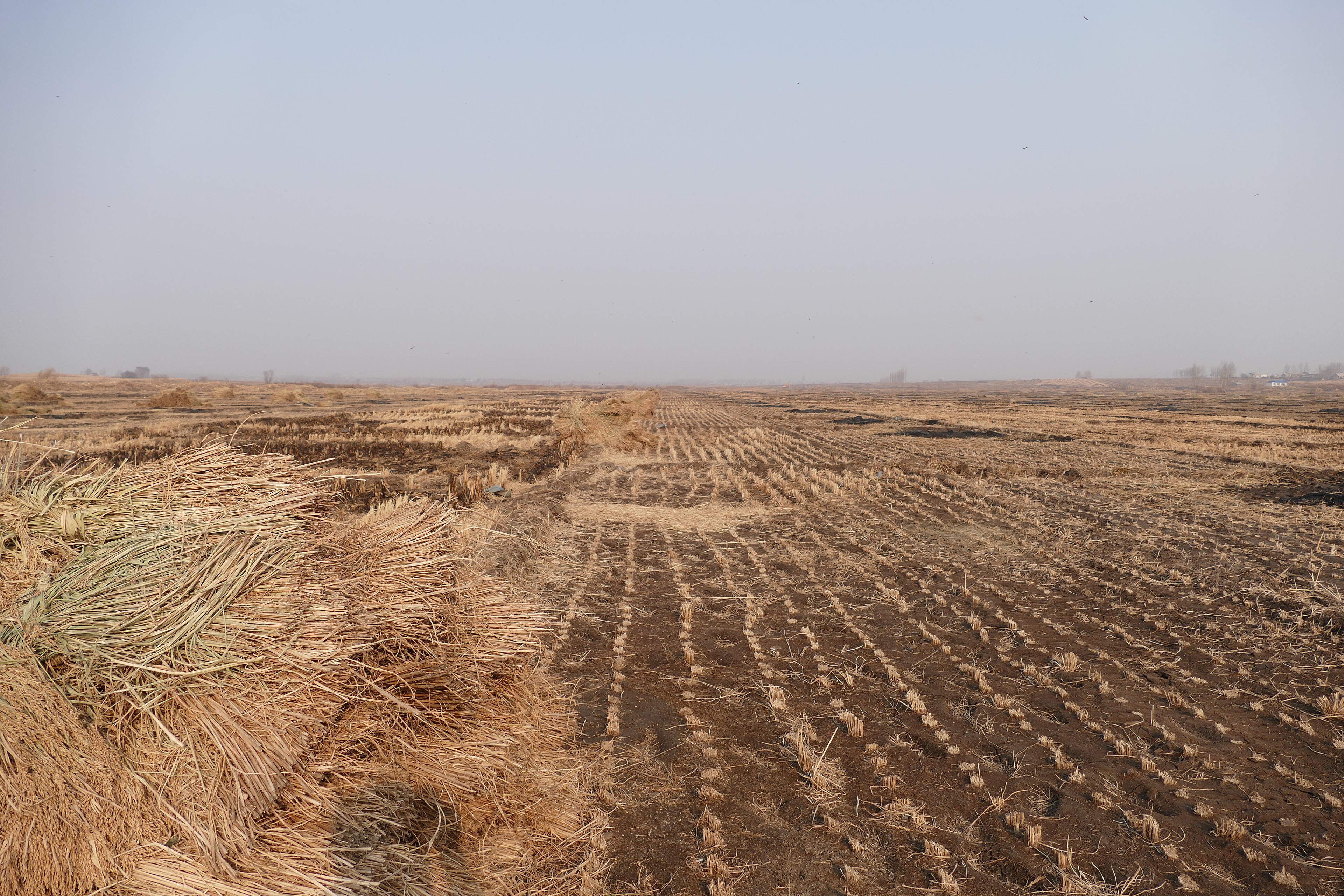
Context · Wuchang (Heilongjiang, China), near the Hongqi logging camp
Wuchang, Harbin, Heilongjiang, China - panoramio (24).jpg · Wikimedia Commons · CC BY-SA 3.0 · open original
The night in question
In June 1994, Meng Zhaoguo was working at the Hongqi ('Red Flag') logging camp, in the northwestern part of Wuchang, in China's Heilongjiang province. Along with two coworkers, he said he saw a strange metallic shine coming from Mount Phoenix. Thinking it might be a crashed helicopter (and drawn by the prospect of recovering valuable scrap) Meng approached the site. By his account, something struck him on the forehead and knocked him out.
A few days later (that same night, in other versions), back at his house, the most extraordinary and famous part of his testimony occurred. Meng claimed to have been visited by a woman about three metres tall, with six fingers and braided leg hair, but otherwise human in appearance. By the early accounts, for about forty minutes he had sexual intercourse with her (in a November 2021 interview he said the sensation lasted only three or four seconds and that he 'was being experimented on') while floating above his sleeping wife and daughter; the figure then disappeared, leaving him a scar about five centimetres long on his thigh. Meng added that on a later visit to the craft he was shown on a screen a comet striking Jupiter (Comet Shoemaker–Levy 9 really did hit Jupiter on 17 July 1994, a month later, and his supporters cite it as proof), and that they announced a son of his would be born on a distant planet sixty years later, around 2054.
The case became the most famous in Chinese ufology and was investigated throughout 1997. The UFO enthusiasts' club at Wuhan University concluded that, although the initial contact might somehow have occurred, the later episodes were almost certainly false. The more official UFO Research Society, by contrast, came to consider his claims true. The thigh scar is the only physical element on Meng himself, without a medical chain of custody independently linking it to the account. At the site, according to The World of Chinese, investigators found scorch marks on the trees and split rocks ('We guessed it was from an aircraft taking off or landing', recalled Wang Fangchen, of the Beijing UFO Research Organization), and a Geiger counter taken to Meng's home 'went haywire' by the wall the beings had supposedly come through. The same article records that Zhou Xiaoqiang, of that organization, said Meng 'has no credibility' and 'local leaders have said he's mad', that many investigators already believed him and were 'easily led astray', and that in 2003 he apparently passed a lie-detector test. Meng, a peasant of modest means, never sought to profit from his story, which for his defenders reinforces his sincerity and for skeptics does not change the nature of the testimony.
Why it matters
Meng Zhaoguo matters as China's emblematic contact case and as a window into how an abduction account forms and is evaluated outside the Anglophone circuit that dominates ufological literature. Its value is comparative: it shows that the account's structure (metallic light, blow, loss of consciousness, nighttime visit by a humanoid entity, physical mark, message about a planetary origin and a future offspring) reproduces almost point for point the motifs of the Western abduction canon, despite arising in a very different cultural context, which suggests a common psychological substrate rather than a replicated encounter.
Astronomer Liu Yan, of the Purple Mountain Observatory, wrote that, if the incident was not exaggerated or fabricated, 'it can only have been a hallucination or delusion'. Such a reading does not require accusing Meng of lying: the core of the nighttime episode (paralysis with a presence, a floating sensation, sexual content, inability to move while the family sleeps alongside) is the classic picture of sleep paralysis with hypnopompic hallucinations, one of the best-documented generators of 'bedroom visitor' experiences. The daytime blow to the head may have seeded a real concussion the brain later elaborated. The scar, without contemporary medical documentation, anchors nothing by itself, and the very disagreement among Chinese investigators (initial contact perhaps, sequel almost certainly false) reflects that boundary. The case was never formally closed. Meng is the proof that the abduction account is a cross-cultural phenomenon, and that its universality points to the human mind rather than the sky.
What's left on paper
Documented evidence
- Testimony of Meng Zhaoguo and two coworkers of a metallic shine on Mount Phoenix (June 1994)
- Account of a blow that knocked him out as he approached the site
- Nighttime episode of a visit by a ~3 m woman with six fingers; sensation of floating above the sleeping family
- ~5 cm scar on the thigh as the only physical element (without a medical chain of custody)
- 1997 investigation: the Wuhan University club judged the later episodes false; the UFO Research Society endorsed them
- Absence of any profit motive on Meng's part (peasant of modest means)
Sources
- Wikipedia — UFO sightings in China (Meng Zhaoguo incident)
- HuffPost — 'Meet the Chinese Lumberjack Who Slept With an Alien'
- TIME — 'Close Encounters' (cobertura del caso chino) — Original (dead link): https://time.com/archive/6645731/close-encounters/
- Sixth Tone, «The Astronomer Who Calmed China's UFO Craze» — Astronomer Liu Yan's conclusion on the Phoenix Mountain incident: hallucination or delusion, if not exaggerated or fabricated.
- The World of Chinese, «The Full Story Behind the Most Famous UFO Sighting in China» (sep 2022) — Scorch marks and Geiger counter in the field investigation; Zhou Xiaoqiang's criticism; the 2003 polygraph.
Entity form (1)
Related cases
Associated actors (1)