1991·Sasovo, Ryazan Oblast, Russia
Russia.Sasovo Explosion
On 12 April 1991, a nighttime explosion near Sasovo (Russia) opened a 28 m crater and broke windows and doors across half the town, next to 30 tonnes of ammonium nitrate brought to the field as fertilizer a week earlier. The military pointed to that nitrate; geophysicist Andrei Ol'khovatov later described an unusual damage pattern (four-lobed, selective, with pipes torn off 15 km away) and argued for a tectonic origin, and others proposed a hydrogen jet. The case remains without an official resolution.
Tier A · AcceptableWhat do they mean? →
Institutional evidence: several identified independent witnesses, or contemporary official documentation, without an instrumental record to corroborate them.
What it was
65%natural or human cause
Most likely explanation: natural phenomenon
See the split across the six explanations
Natural or human cause
No known cause
Read the full reasoning
Another prosaic reading: according to Pravda (15 Apr 1991, FBIS translation), 'Military men who visited the scene of the explosion' said 'that ammonium nitrate exploded', and beside the crater 'there were 30 tonnes of fresh ammonium nitrate' brought to fertilize; the same article says 'the cause of the explosion is still a mystery'.Primary documents
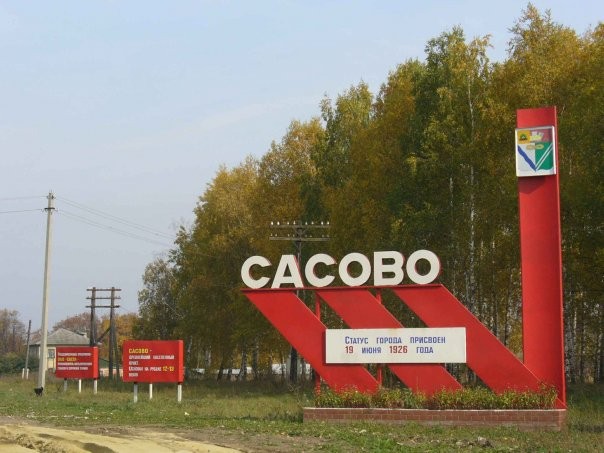
Context · Sasovo (Ryazan Oblast, Russia)
Welcome sign in Sasovo, Ryazan Oblast, Russia.jpg · Wikimedia Commons · Public domain · open original
Pravda, 15 April 1991, "Saltpeter blown up from UFO?": foreign press monitoring translation, in the CIA reading room
Unclassified telex of 17 April 1991 translating correspondent N. Kireyev's report in the first edition of Pravda of 15 April, p. 3. At midnight on 12 April a highly powerful explosion near Sasovo ripped off roofs and knocked out windows in a good half of the buildings. A. Rozhkov, chairman of the rayon soviet, lists the rumours (wartime munitions, an air bomb, a meteorite, UFOs, a "moving fiery sphere"), says the military blame ammonium nitrate and that no change in background radiation was detected. The crater is 28 m across and about 4 m deep, 1 km from the town, beside 30 tonnes of nitrate brought on 5 April. It is a translation of Soviet press, so it is linked rather than hosted.
Pravda (15 abr 1991), traducción del FBIS; sala de lectura de la CIA, espejo en archive.org · view source
The night in question
At midnight on 12 April 1991, a powerful explosion shook the outskirts of Sasovo, a small town in Ryazan Oblast, about 350 kilometres southeast of Moscow. According to Pravda's report of 15 April, the shock wave ripped off roofs in some areas and knocked out windows, frames included, in a good half of the buildings; multistorey blocks rocked as in an earthquake, some people were cut by glass or in shock, and schools temporarily closed. In a field a kilometre from town lay a crater 28 metres across and roughly 4 deep. The chairman of the district soviet, A. Rozhkov, listed the versions going round (munitions buried since the war, an air bomb, a meteorite, UFOs, and people who said they had seen a moving fiery sphere) and noted that no variations in background radiation or air composition had been detected.
What turned Sasovo into an enigma was the anomalous, selective pattern of destruction later described by geophysicist Andrei Ol'khovatov, a proponent of a tectonic origin, in a 1994 letter published by Science Frontiers. According to him, the distribution of frozen soil hurled from the crater and of the damage followed four lobes, rather than the radial symmetry of a normal explosion. A tree just 10 metres from the epicenter was left intact. At ground level there was hardly any damage until close to a kilometre from the crater (only a swaying and jerking of the terrain) but several high suspended electric wires were torn off; and at large distances strange ground-level damage reappeared, with water pipes burst up to 15 kilometres from the epicenter. Ol'khovatov also spoke of 'fireballs' seen for hours before the explosion, radio failures and a second, weaker crater in 1992 about 9 kilometres away.
The proposed explanations cover a broad spectrum, all within the natural or the human. The military men who visited the site pointed to the detonation of the 30 tonnes of ammonium nitrate that, according to Pravda, lay next to the crater after being brought to the field on 5 April as fertilizer, although the paper itself objected that the fertilizer was used without incident across the country. Other hypotheses, more consistent with the damage pattern, propose a geophysical origin: an endogenic (tectonic) explosion or the sudden bursting of an underground gas jet, mainly hydrogen, rising from faults in the Russian Platform. Pravda's report appears, translated, in the declassified CIA archive, because its foreign press monitoring service picked it up under the title 'Diverging opinions on cause of Sasovo explosion'. Despite the investigations, the exact cause of the Sasovo explosion remains formally undetermined.
Why it matters
Sasovo matters as a case of genuine physical anomaly that, unlike most sightings, left an abundant material record (a crater, a measurable damage pattern, pipes burst kilometres away) and still resists a closed explanation. Its interest is not ufological in the strict sense: no one saw a craft. What makes it valuable is that it documents a real, quantifiable and peculiar terrestrial phenomenon (the four-lobe distribution and the selectivity of the damage that Ol'khovatov describes) that science has not managed to attribute with certainty, and which therefore serves as a reminder that 'unresolved' is a category that applies to entirely geophysical events too.
The real unknown lies in the mechanism, not in the terrestrial nature of the event. The competing explanations (ammonium-nitrate detonation, endogenic tectonic explosion, bursting of an underground hydrogen jet) are all prosaic; the debate is which one, not whether it was something non-human. The hydrogen or geophysical-gas hypothesis fits the anomalous damage pattern better and connects to an emerging field (natural hydrogen emissions and explosion craters on continental platforms). Sasovo is the case that disciplines inference: it teaches that a damage pattern 'impossible' at first sight can have an unknown geological cause, and that a phenomenon's strangeness is not, by itself, evidence of agency.
What's left on paper
Documented evidence
- Pravda (15 Apr 1991), translated by the CIA's foreign press service: crater 28 m wide and about 4 m deep 1 km from Sasovo; windows broken in half the town; no change in radiation
- 30 tonnes of ammonium nitrate next to the crater since 5 April; the military pointed to its detonation
- Rumours gathered by local officials: wartime munitions, a bomb, a meteorite, UFOs, a 'moving fiery sphere'
- Anomalous damage pattern according to A. Ol'khovatov (1994): four lobes, tree intact at 10 m, high wires torn off, pipes broken 15 km away
- Geophysical hypotheses: endogenic tectonic explosion (Ol'khovatov, with a second crater in 1992) or a hydrogen jet
Sources
- Science Frontiers — 'Strange Explosions at Sasovo, in Russia'
- CIA FOIA Reading Room — 'Diverging Opinions on Cause of Sasovo Explosion' (FBIS, Pravda, 15 abr 1991), espejo en archive.org — Primary source: translation of Pravda's report of 15 April 1991.
- Russia Beyond — 'Top 10 places in Russia to see a UFO' (contexto Sasovo)
Related cases