1983·Molebka, Perm Oblast, Russia (Sylva River bank)
Russia.Molebka Zone · M-Triangle
The 'Molebka anomalous zone' or 'Perm Triangle', in the Russian Urals, became famous after 1983, when geologist Emil Bachurin said he saw a luminous sphere and found a ~62 m circular print in the snow. In the 1980s-90s it drew expeditions reporting lights, equipment failures and 'mirages'. It is the most famous anomalous zone of the former USSR, on a site already sacred to the Mansi.
Tier B · IndicativeWhat do they mean? →
Limited evidence: a single witness, testimony gathered years later, or an account without contemporary primary documentation.
What it was
57%natural or human cause
Most likely an ordinary cause that no one has identified
See the split across the six explanations
Natural or human cause
No known cause
Primary documents
FBIS, Foreign Press Note 'USSR: Media Report Multitude of UFO Sightings' (22 Nov 1989, 5 pp.)
Summary by the CIA's foreign press monitoring service of the wave of UFO stories in the Soviet press in 1989. On p. 3 it records that Komsomolskaya Pravda of 12 October 1989 reported that a group of scientists visited a field in Perm Oblast to investigate claims that a UFO had landed there and left 'a circular impression measuring 62 meters in diameter'. The note does not name Molebka or date the alleged landing; it is the earliest record located of the 62-metre print in the press of the time.
FBIS (CIA), Foreign Press Note · CIA Reading Room 0000042346 (copia de archive.org) · Public domain · US Government work · open original
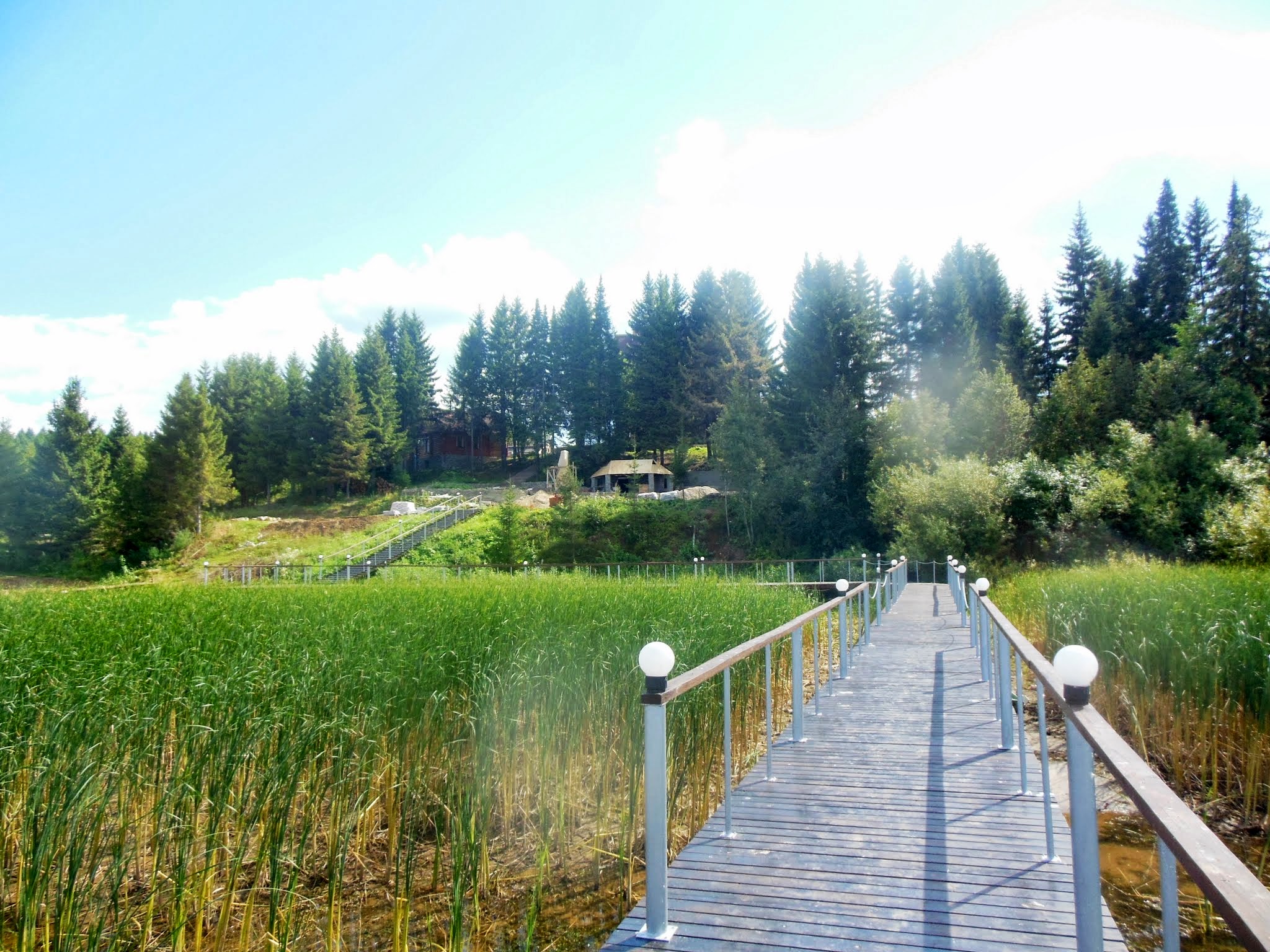
Context · Perm Krai (Russia), region of the Molebka 'M-triangle'
Kungursky District, Perm Krai, Russia - panoramio (26).jpg · Wikimedia Commons · CC BY 3.0 · open original
The night in question
The Molebka anomalous zone, also known as the 'Perm Triangle', 'M-Triangle' or simply 'Zone M', is the Russian equivalent of persistent-phenomena 'hotspots' like Hessdalen in Norway. It lies on the left bank of the Sylva River, opposite the village of Molebka, in Perm Oblast, in the Urals. The place has a long lineage: it was sacred to the Mansi people (its name comes from a ritual sacrificial stone) and there are references to peasants who, as early as the 1830s, claimed to see strange 'flying machines' over the area.
Modern fame begins in 1983. That year, during a winter hunt, geologist Emil Bachurin claimed to have seen a luminous sphere rise over the forest and, on approaching, to have found in the snow a perfect circular mark about 62 metres in diameter. Russia Beyond gives another version: a glow over the forest and a round track 62 metres across on a ploughed field, in October 1983. In October 1984, walking along the Sylva bank, he said he again saw a large purple ball ascending from the forest and slowly dissolving into the sky. By the late 1980s, amid perestroika and the relaxation of Soviet censorship on the paranormal, Molebka leapt to national and international fame. Expedition groups began arriving (among them those led by Eduard Ermilov, of the Gorky section for anomalous phenomena) who interviewed the local population, did panoramic photography, 'medical' experiments and dowsing.
The repertoire of reported phenomena is broad and heterogeneous: chronic mirages, dowsing anomalies, multicolored flashes, colored lights, flying luminous objects, voices and chants of unknown origin, whistles, camera and video-equipment failures, sensations of presence, headaches, fevers and mood alterations. Over time, Molebka consolidated as an 'anomalous tourism' destination: a monument to an alien ('Alyosha') was even erected and the zone lives partly off visitors who come seeking experiences. That very popularity, however, complicates the assessment: separating the original phenomenon from the enormous layer of expectation, folklore and suggestion accumulated over four decades is practically impossible.
Why it matters
Molebka matters as the Soviet world's 'local persistence zone' case (pattern 8g), the eastern counterpart of Hessdalen, Popocatépetl or Kumburgaz: a single place to which luminous and anomalous phenomena are attributed over years or decades. Its value is comparative and methodological: it allows the study of how a 'hotspot' forms and is maintained and, above all, how the success of the legend itself (tourism, expeditions, monuments) becomes a source of contamination that feeds back into the reports.
Unlike Hessdalen, where instrumented scientific campaigns have documented real physical lights still not fully explained, at Molebka the bulk of the evidence is testimonial and accumulated at the height of the perestroika paranormal craze, without a sustained, reproducible measurement program. The very heterogeneity of the 'anomaly' catalog (from lights to 'chants', fevers and mood alterations) is the signature of a mostly psychological and cultural phenomenon: expectation, collective suggestion and reinterpretation of environmental stimuli (natural lights, geomagnetic discharges, mirages) in a remote setting laden with prior sacred meaning. As in any hotspot, there could be a minor uncharacterized physical core. Its founding report also rests on a single witness, the geologist Emil Bachurin, whose 1983 sphere and snow print and whose 1984 purple ball are not corroborated by independent instruments in the sources consulted, and the later expeditions relied on interviews, photography and dowsing rather than calibrated measurement. Molebka is the reminder that a famous 'anomalous zone' is, first of all, a social phenomenon to be peeled layer by layer before asking what physical residue remains underneath.
What's left on paper
Documented evidence
- Geologist Emil Bachurin's account (1983): luminous sphere and ~62 m circular print in the snow near Molebka
- Bachurin's second sighting (Oct 1984): large purple ball ascending from the forest
- Background: Mansi sacred site; references to 'flying machines' since the 1830s
- 1980s-90s expeditions (e.g. Eduard Ermilov, Gorky section) with interviews, photography and dowsing
- Heterogeneous catalog of phenomena: colored lights, equipment failures, voices/chants, mirages, physical malaise
- Consolidation as an 'anomalous tourism' destination ('Alyosha' monument), a source of report contamination
Related cases