1979·Soesterberg Air Base (Vliegbasis Soesterberg)
Netherlands.Soesterberg · twelve servicemen at an air base (Netherlands)
On 3 February 1979, at about 5:45 a.m., at Soesterberg air base (partly used by U.S. forces during the Cold War) twelve servicemen of the military guard service reported a large triangular object with bright lights over the runway. The number and character of the witnesses forced one of the few occasions on which Dutch authorities felt they had to give an official answer. The Netherlands' first case: multiple military witnesses at an active base.
Tier B · IndicativeWhat do they mean? →
Limited evidence: a single witness, testimony gathered years later, or an account without contemporary primary documentation.
What it was
61%natural or human cause
Most likely explanation: natural phenomenon
See the split across the six explanations
Natural or human cause
No known cause
Primary documents
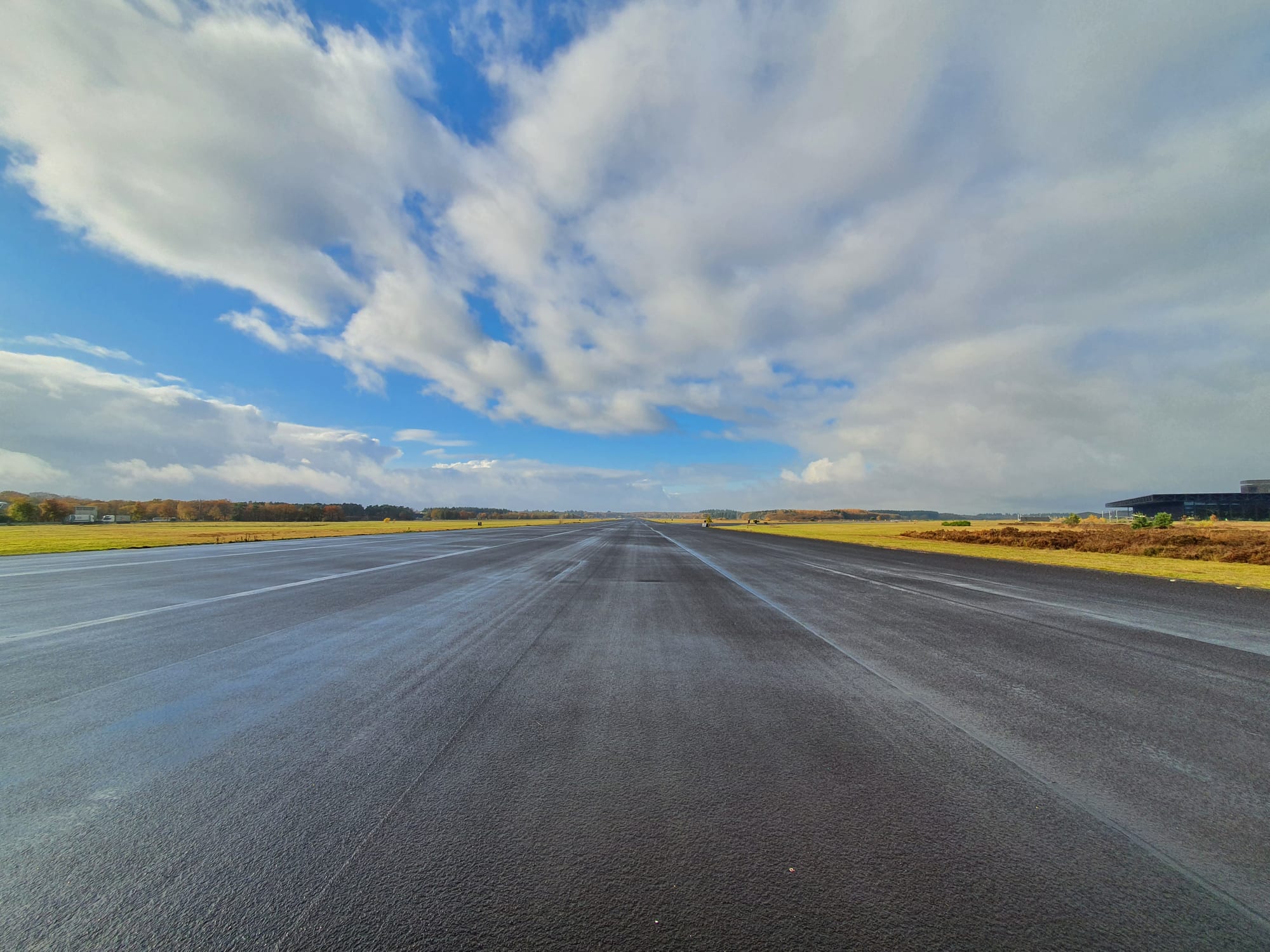
Context · Soesterberg Air Base (Netherlands)
Vliegbasis Soesterberg 2.jpg · Wikimedia Commons · CC BY-SA 4.0 · open original
De Waarheid, 31 October 1980, "Ufologen mogen speuren op de departementen": the NOVOBO bureau on "the sensational report over Soesterberg airfield"
Column by Jos Haagmans in the daily De Waarheid, in the Delpher newspaper archive, on the permission several ministries gave the civilian NOVOBO bureau to consult their UFO files. W. de Graaff, speaking for NOVOBO, says that almost every case turns out to be aircraft lights and that "we are still left with that sensational report over Soesterberg airfield a year or so ago", which "we have now also traced back to an aircraft", though they still do not know what kind or type, so "it still counts as an original UFO". It gives neither the date of the event nor the number of witnesses. Copyrighted press: it is linked.
De Waarheid (31 oct 1980), vía Delpher (Biblioteca Real de los Países Bajos) · view source
The night in question
On 3 February 1979, Soesterberg air base (Vliegbasis Soesterberg), a Dutch military installation that during the Cold War also hosted units of the U.S. Air Force, in particular fighters dedicated to the air defense of Central Europe, was the scene of a sighting with an unusually strong witness profile. By the accounts, at about 5:45 a.m. twelve servicemen of the military guard service saw a large triangular object appear over the runway, with three bright lights at the front and a red one at the rear, which passed over the base twice and moved off. The sources consulted do not confirm that the control tower saw it, and one of the twelve, interviewed in 2023, recalled seeing two lights, not a triangle. Some witnesses described a dark, large structure; the exact shape and fine chronology are best treated as reported rather than fully verified, since the primary documentation of the episode is limited and reconstructed decades later.
What matters is the institutional quality of the testimony: this was not an isolated civilian sighting but on-duty military personnel at an active air base, observing the phenomenon from a position of operational responsibility and trained to recognize aircraft. The concentration of qualified witnesses at a sensitive installation (at the height of the Cold War, on a base with a U.S. presence) made the episode public, and it was one of the few times Dutch authorities felt compelled to comment publicly. The Netherlands has not maintained a state UAP investigation program comparable to France's GEIPAN, so the official responses were ad hoc and aimed at normalizing the event.
The mundane explanation offered by the authorities, by the reconstructions, pointed successively to a mirage and then to an atmospheric phenomenon: reflections (for example of vehicle headlights) projected into the sky through a temperature-inversion layer. That class of explanation is physically possible and covers some sightings of lights, but the military witnesses found it insufficient against an object they perceived as structured. Documentary maker Bram Roza, who interviewed them in 2023, says he was told reports on the sightings were made but that he has been unable to obtain them. What is documented and solid is the witness chain (twelve on-duty servicemen) at an air base; there is no public radar confirmation or recovered material, and the official response sought to close the episode.
Why it matters
Anchored in witness quality: twelve servicemen on guard at an active air base with U.S. use, not a stray civilian sighting. It forced an official response in a country that, unlike France, never built a state UAP investigation program. That very absence of institutional apparatus is what makes the case valuable: when a state with no protocol is forced to comment on a sighting, the episode that triggers such a reaction carries testimonial weight that is hard to dismiss.
Its analytic interest is twofold. First, it rests on qualified witnesses rather than a rumor. Second, it illustrates the tension between trained military testimony and a minimizing official explanation: the mirage or temperature-inversion reading the authorities offered is plausible for lights but clashes with the description of a large dark triangle that passed over the base twice and shot away, given by military observers, although one of them recalled only two lights in 2023. That tension remains unresolved (the primary documentation is sparse and late): the case is strong on witness quality and weak on instrumental evidence.
What's left on paper
Documented evidence
- Twelve servicemen of the military guard service at Soesterberg air base (3 February 1979, about 5:45 a.m.).
- Large triangle with three lights at the front and a red one at the rear that passed twice over an active air base, partly used by the USAF, and moved off.
- One of the few Dutch cases that forced a response from the authorities.
- No public radar confirmation or recovered material: the anchor is the multiple military testimony.
- Official Air Force explanation: a mirage from a temperature inversion mirroring car headlights; the servicemen did not accept it.
Related cases
same explanation · same period
Val Johnson · patrol car with documented physical damage (USA, 1979)
1979 · Tier A
same explanation · same period
Hessdalen lights
1981 · Tier A
same explanation · same period
Wow! Signal · Big Ear
1977 · Tier A
same explanation · same period
Bardenas Reales · the lights over the firing range
1975 · Tier B