1981·Hessdalen Valley
Norway.Hessdalen lights
Norway's Hessdalen valley has produced recurring anomalous lights since 1981 and has been under continuous instrumented scientific monitoring for over four decades, with an automated measurement station and peer-reviewed publications.
Tier A · AcceptableWhat do they mean? →
Institutional evidence: several identified independent witnesses, or contemporary official documentation, without an instrumental record to corroborate them.
What it was
73%natural or human cause
Most likely explanation: natural phenomenon
See the split across the six explanations
Natural or human cause
No known cause
Primary documents
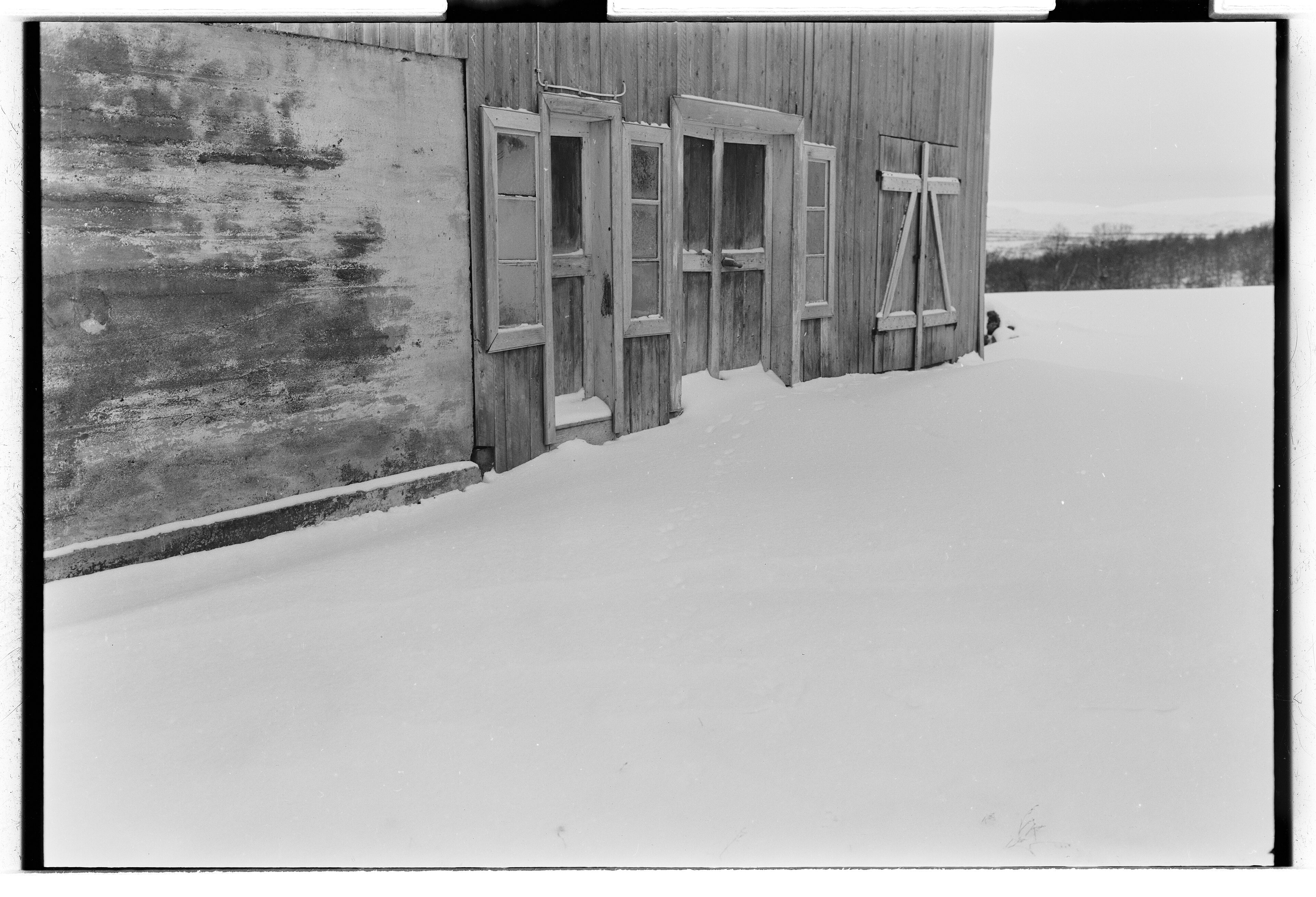
Context · the Hessdalen valley (Norway), where the lights have been studied since 1981
Hessdalen - Fo30141603210119.jpg · Wikimedia Commons · CC BY-SA 4.0 · open original
Project Hessdalen 1984 · final technical report (Erling Strand, 5 January 1985)
Report on Project Hessdalen's first field campaign, 21 January to 26 February 1984, signed by engineer Erling Strand. It lists the instruments (radar, seismograph, magnetometer, spectrum analyser, laser, Geiger counter, IR viewer) and their results: 188 light reports, only six of which received the highest "no known explanation" score; 36 radar returns, only three of which were probably also seen as lights; nothing on the Geiger counter, seismograph or IR viewer. It concludes: "We have not found out what this phenomenon is", but that it can be measured. The text is the project's copyright; it is linked here.
Project Hessdalen (old.hessdalen.org) · © Project Hessdalen · view source
The night in question
Since late 1981, residents of the Hessdalen Valley (central Norway, near Røros) have reported anomalous lights (white, yellow, or red luminous spheres and shapes) hovering, descending, ascending, and moving through the valley, typically at night but also during the day. According to the Project Hessdalen technical report (Strand, 1985), the lights began in December 1981 and could be seen up to about four times a day inside the valley, 12 km long and home to about 150 people, mostly at night and in winter; in spring 1983 they became much rarer, in summer 1983 there were no reports, and in the autumn they returned, though less often. Over the years the frequency fell to the sporadic levels that persist today.
Between 21 January and 26 February 1984 the first organized field campaign, Project Hessdalen, was mounted, led by Erling Strand with support from researchers at the Norwegian Defence Research Establishment and the universities of Oslo and Bergen: volunteers (about 22 on the test weekend, sometimes only one or two) operated radar, a seismograph, a magnetometer, a spectrum analyser, diffraction-grating cameras, Geiger counters, a laser and infrared viewers. They gathered 188 reports of lights; 53 were scored as leaving a non-conventional explanation open, but only 6 a score of F9 or higher, and the report judges that "too little to draw any conclusion". The spectra photographed were "too weak to say what kind of spectrum it is". The radar recorded 36 echoes, of which only three were probably also seen as lights, and the report cites a speed of about 8,500 m/s tracked by radar; the magnetometer disturbances were perhaps due to the phenomenon, "we have to do more measurements". The Geiger counter, seismograph and IR viewer recorded nothing. The most striking result was the laser: pointed nine times at a flashing light, eight times the light changed its flashing sequence, a result Strand himself calls "very surprising" and a short sample. His conclusion: "We have not found out what this phenomenon is". From 1998 the project installed the Automatic Measurement Station (AMS), an unmanned station that monitors the valley continuously, and from the 2000s the Politecnico di Torino (Italy) joined in the EMBLA campaigns, adding further spectrometers and radar.
Erling Strand (Østfold University) and astrophysicist Dr. Massimo Teodorani (Italy) published analyses in the Journal of Scientific Exploration and international proceedings. The physical characterization emerging from that data is of a luminous phenomenon of variable power, at times several kilowatts, with durations from seconds to over an hour (well beyond the few seconds typical of ball lightning) and movements that occasionally reach high speeds. The most developed conventional hypotheses are plasma-type: combustion or ionization of gases, possibly fed by local geochemistry (the valley has mineral deposits and old copper and zinc mines), or even a hypothesis of a natural geological 'battery' between rocks of different composition on either side of the river. None of these hypotheses has been confirmed or reproduced in the laboratory at the observed scale, and the phenomenon remains formally unexplained.
Why it matters
Hessdalen has had continuous, instrumental, multidisciplinary, peer-reviewed scientific investigation for over four decades of a recurrent luminous phenomenon in a specific geography.
Four decades of magnetometers, spectra and automatic monitoring have recorded no solid structure, no intentional maneuvering and no propulsion signature: the lights hover, drift, pulse and fade as we would expect of a physical-atmospheric phenomenon, not a vehicle. The only sign of a response to a stimulus is the 1984 laser test, eight reactions in nine attempts, which Strand himself presented as a short sample. If the phenomenon had an intentional or technological component, this is exactly the place where 44 years of instrumentation would have captured it, and it has not happened. Hessdalen shows that not every luminous anomaly is a craft. Its symmetric limit is that there is no closed conventional explanation either (the plasma hypotheses have not been reproduced at the observed scale) so the case sits in a category of its own: a genuine, recurrent, measurable and still-unsolved physical anomaly, more likely pointing to exotic atmospheric or geophysical physics than to intelligence.
What's left on paper
Documented evidence
- Project Hessdalen 1984 technical report (Strand, 1985): 188 reports, 36 radar echoes, spectra too weak to classify
- 1984 laser test: the light changed its flashing sequence in 8 of 9 attempts
- AMS (Automatic Measurement Station) operational since 1998
- Publications by Teodorani, Strand and others in the Journal of Scientific Exploration and the EuroSky proceedings
Sources
- Project Hessdalen — official site (Østfold University)
- Teodorani, M. — 'A Long-Term Scientific Survey' JSE 2004
- EuroSky Workshop proceedings — Hessdalen sessions — Annual proceedings 2010-2024
- Strand, E. — Project Hessdalen 1984, Final Technical Report, part 1 (5 Jan 1985) — Primary source: instruments, 188 reports, radar echoes, laser test and conclusion of the 1984 campaign
- Paiva, G. S. and Taft, C. A. — «Color Distribution of Light Balls in Hessdalen Lights Phenomenon», Journal of Scientific Exploration 25(4), 2011
Related cases
same explanation · same period
Soesterberg · twelve servicemen at an air base (Netherlands)
1979 · Tier B
same explanation · same period
Val Johnson · patrol car with documented physical damage (USA, 1979)
1979 · Tier A
same explanation · same period
Wow! Signal · Big Ear
1977 · Tier A
same explanation · same period
Dalnegorsk · Height 611
1986 · Tier B
Associated actors (1)