1978·Kaikōura, South Island, New Zealand
New Zealand.Kaikōura Lights
Between 21 and 31 December 1978, cargo aircrews, Wellington controllers and an Australian TV crew reported lights off the north-east coast of New Zealand's South Island, and the crew filmed one on 16 mm while the aircraft's weather radar showed a target in the same direction. The Air Force and DSIR investigation attributed the sightings to Venus and surface lights distorted by temperature inversions and the ground echoes to anomalous propagation, while conceding two radar observations that did not fit.
Tier S · SolidWhat do they mean? →
Strong evidence: a contemporary instrumental record (radar, sensor, film or photo of known provenance) that corroborates several independent witnesses.
What it was
57%natural or human cause
Most likely explanation: planet or star
See the split across the six explanations
Natural or human cause
No known cause
Primary documents
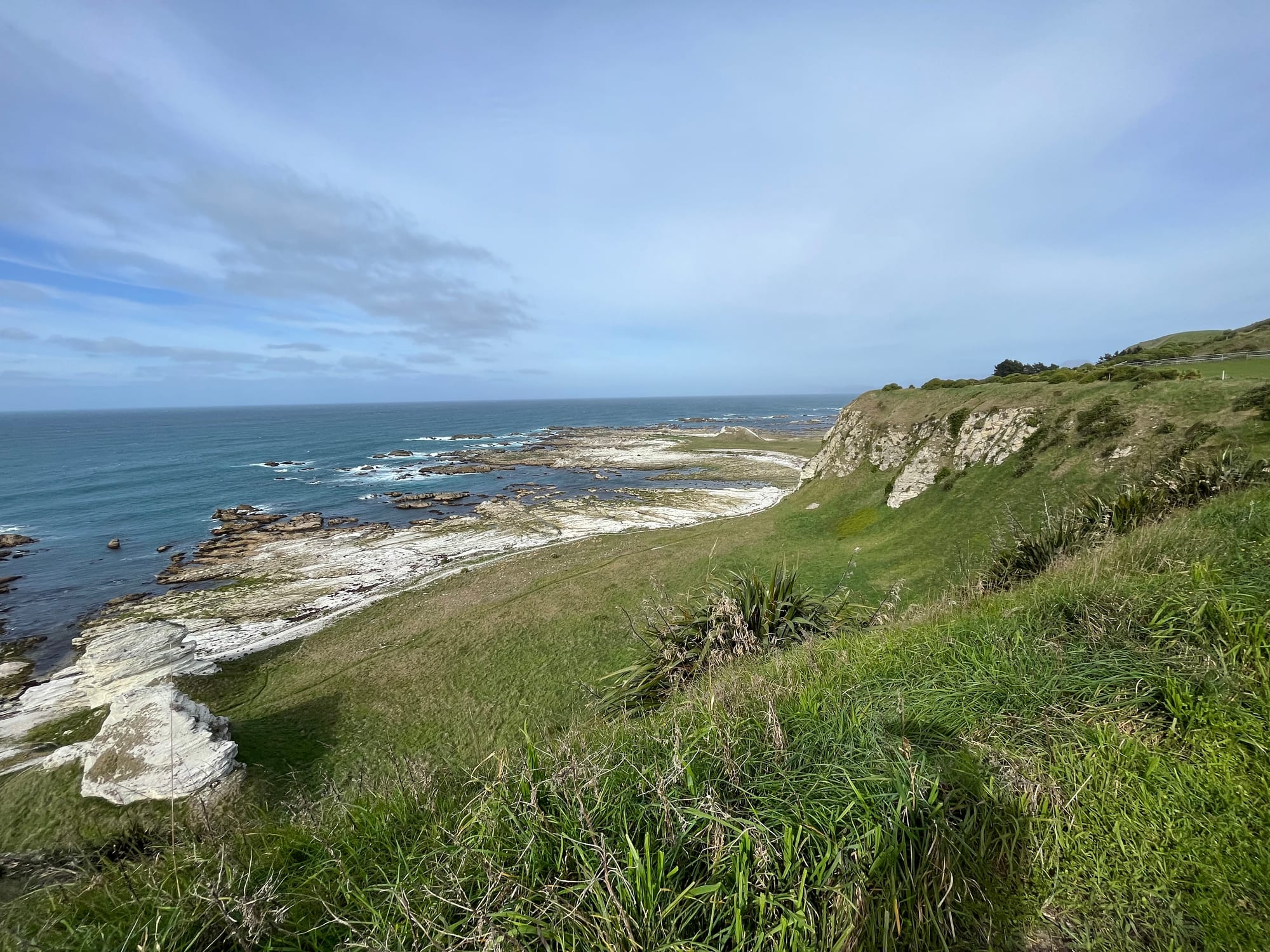
Context · Kaikōura (New Zealand), where the cargo plane filmed the lights
Kaikōura Peninsula coast, New Zealand (52385942035).jpg · Wikimedia Commons · CC BY 2.0 · open original
Twelve volumes, right before Christmas: New Zealand's 2010 UFO declassification
On 22 December 2010 the New Zealand Defence Force released twelve volumes, about 2,500 pages, of Royal New Zealand Air Force UFO files going back to 1952, among them file AIR 1080/6/897 on the 1978 Kaikōura lights. The release followed an Official Information Act request filed in January 2009 by Suzanne Hansen of UFOCUS NZ. Its limits are documented: it covered only the Air Force (the Navy and Army kept their records), with privacy embargoes until 2050, pages made illegible by redaction and known sightings missing from the file without official explanation.
The night in question
Between 21 and 31 December 1978, a series of sightings off the north-east coast of New Zealand's South Island, around Kaikōura and the mouth of the Clarence River, was recorded by cargo pilots, Wellington air traffic controllers and, in its climactic episode, by an Australian television crew that flew deliberately to document the phenomenon.
The first phase came in the early hours of 21 December, when the crews of Safe Air's Argosy freighters carrying the early-morning newspapers, among them those of Captains Vern Powell and John Randle, saw bright lights along the coast. The Wellington controllers, John Cordy and Andy Herd, reported echoes that appeared and disappeared near the Clarence River mouth and a target that, by their account, moved some 30 kilometres at about 120 knots. The succession of reports drew international media interest.
The filmed episode came on the night of 30 to 31 December. A crew from Melbourne's Channel 0, of the 0-10 group, made up of reporter Quentin Fogarty, cameraman David Crockett and sound recordist Ngaire Crockett, boarded an Argosy flown by Captain Bill Startup and co-pilot Bob Guard to film background material. On the southbound leg, Wellington controller Geoffrey Causer reported several anomalous targets near the aircraft; the technician with him, Bryan Chalmers, found that they vanished when the radar's moving-target processing was switched off. On the leg from Christchurch to Blenheim, at about 02:20, a very bright light appeared to the right of the aircraft; Crockett filmed it on 16 mm colour film, and the Argosy's weather radar, in mapping mode, showed a large echo in the same direction, at some 18 to 20 miles at first and closer later, according to the crew and reporter Dennis Grant, who had taken Ngaire Crockett's place on that leg. The Christchurch ground radar did not detect it.
The official investigation is in Air Force file AIR 1080/6/897, declassified by the Defence Force in 2010. The Air Force's press statement concluded that the sightings were 'the result of natural but unusual atmospheric phenomena': temperature inversions distorting light and radar waves, Venus, rising before dawn at its brightest, and more than fifty Japanese squid boats that had sailed from Wellington to a point 120 miles off Banks Peninsula, each carrying some 200 kilowatts of light; it added that the Wellington radar had for some time been giving spurious returns off that coast and that neither Christchurch nor Wellington recorded anything while the large light was being filmed. The DSIR interim report, signed by M. A. Collins on 12 January 1979, held that most sightings, made toward the east and low on the horizon from 3 a.m., were consistent with Venus seen through a disturbed atmosphere, and that Startup's light, seen some ten minutes before Venus should rise at that altitude, was 'classic' for a heavily refracted planet. A test of the windows of another Argosy concluded that the horizontal streaks on Crockett's film were window defects. The same report acknowledged two observations that did not fit: the airborne radar echo that accompanied Powell's light on 21 December, which it tentatively put down to meteors, and the large echo that accompanied Startup at about 16 kilometres, which a ground radar should have seen and which it attributed to an atmospheric reflection.
Why it matters
It combines 16 mm colour film, testimony from commercial pilots and a press crew, a recording of the communications with Wellington control, and radar echoes both on the ground and on board. That convergence of modalities is real, but the official file shows they match each other less than is usually told: the Wellington echoes were weak, vanished without moving-target processing, and the DSIR itself saw eighteen similar echoes on the night of 7 to 8 January with nothing visible in their direction; and the filmed light did not appear on any ground radar. The strongest correlation is the Argosy's weather radar, whose echo matched the light in azimuth according to Startup, Guard and the crew. Bruce Maccabee, an optical physicist at the Naval Surface Weapons Center, interviewed the witnesses, analysed the film and tapes and argued that his investigation ruled out Venus, the squid boats, ground lights and atmospheric effects; his report, which a New Zealand UFO group passed at his request to the Ministry of Defence and the DSIR, sits in the same file.
The official explanation has real explanatory power and should not be caricatured. Venus was at its brightest and rising in the east at the time of most sightings; temperature inversions were documented; the squid boats existed, though more than 100 kilometres away, and the pilots pointed them out to the passengers, as they did Venus at the end of the return flight, which suggests the crew could tell those lights apart from the object. The weakness of the explanation lies in the observation the DSIR itself left open: a large echo on the airborne radar, in the direction of the light, which it attributed to an atmospheric reflection without demonstrating it. In 2017 the New Zealand press publicised a document from the CIA archive describing the case as 'unique among civilian UFO reports' for the amount of documentary evidence; its wording matches Maccabee's analyses and there is no indication that it is the agency's own assessment. Kaikōura thus remains a divided case: the film alone admits a mundane reading, and the combination of light, airborne echo and professional witnesses is the only thing the official investigation did not close.
What's left on paper
Documented evidence
- 16 mm colour film by Channel 0 (David Crockett, 31 Dec 1978); DSIR attributed its horizontal streaks to the Argosy window
- Echo on the Argosy's weather radar in the direction of the light (Startup and Guard, 31 Dec); not detected by the Christchurch ground radar
- Anomalous Wellington radar echoes (21 and 31 Dec), weak and visible only with moving-target processing
- Reports by the Safe Air crews (Captains Vern Powell and John Randle, 21 Dec)
- Air Force file AIR 1080/6/897: press statement on 'natural but unusual atmospheric phenomena' and the DSIR interim report (refracted Venus, two airborne echoes without a firm explanation)
Sources
- Royal New Zealand Air Force — file AIR 1080/6/897 vol. 1 (1978-1981), declassified by the NZDF in 2010 (copy on archive.org) — Primary source: the Air Force press statement, the DSIR interim report (M. A. Collins, 12 Jan 1979), the DSIR field work, the Argosy window test and Maccabee's analysis.
- Maccabee, B. — analysis of the 1978 New Zealand case (1979), included in file AIR 1080/6/897 — Analysis by the main proponent of the anomalous hypothesis: timeline from the Wellington tapes, airborne radar data and the night's light sources.
- Archives New Zealand — AIR 1080/6/897 — Portal of the archive holding the original file.
- Startup, B. & Illingworth, N. — The Kaikoura UFOs (1980)
- Wikipedia: Kaikōura lights (secondary source) — Encyclopaedic summary, not a primary archive.
- UFOCUS NZ — 'Relinquishing Responsibility? Circumstances Surrounding the Release Of the New Zealand MOD UFO files 2010/11' — Suzanne Hansen's account of the release's circumstances and limitations.
Related cases
Associated actors (1)
