1978·Bass Strait, Australia
Australia.Disappearance of Frederick Valentich
On 21 October 1978, the 20-year-old Australian pilot Frederick Valentich disappeared in a Cessna 182 over Bass Strait, en route to King Island. Minutes earlier he told the Melbourne flight service that an aircraft with four bright lights was passing at least 300 m above him, that 'it's not an aircraft' and that his engine was rough idling; after 17 seconds of open microphone, the communication cut off. The search found no trace of him or the plane. It is one of Australia's most famous cases, though its only 'evidence' is the radio transcript.
Tier A · AcceptableWhat do they mean? →
Institutional evidence: several identified independent witnesses, or contemporary official documentation, without an instrumental record to corroborate them.
What it was
69%natural or human cause
Most likely explanation: planet or star
See the split across the six explanations
Natural or human cause
No known cause
Primary documents
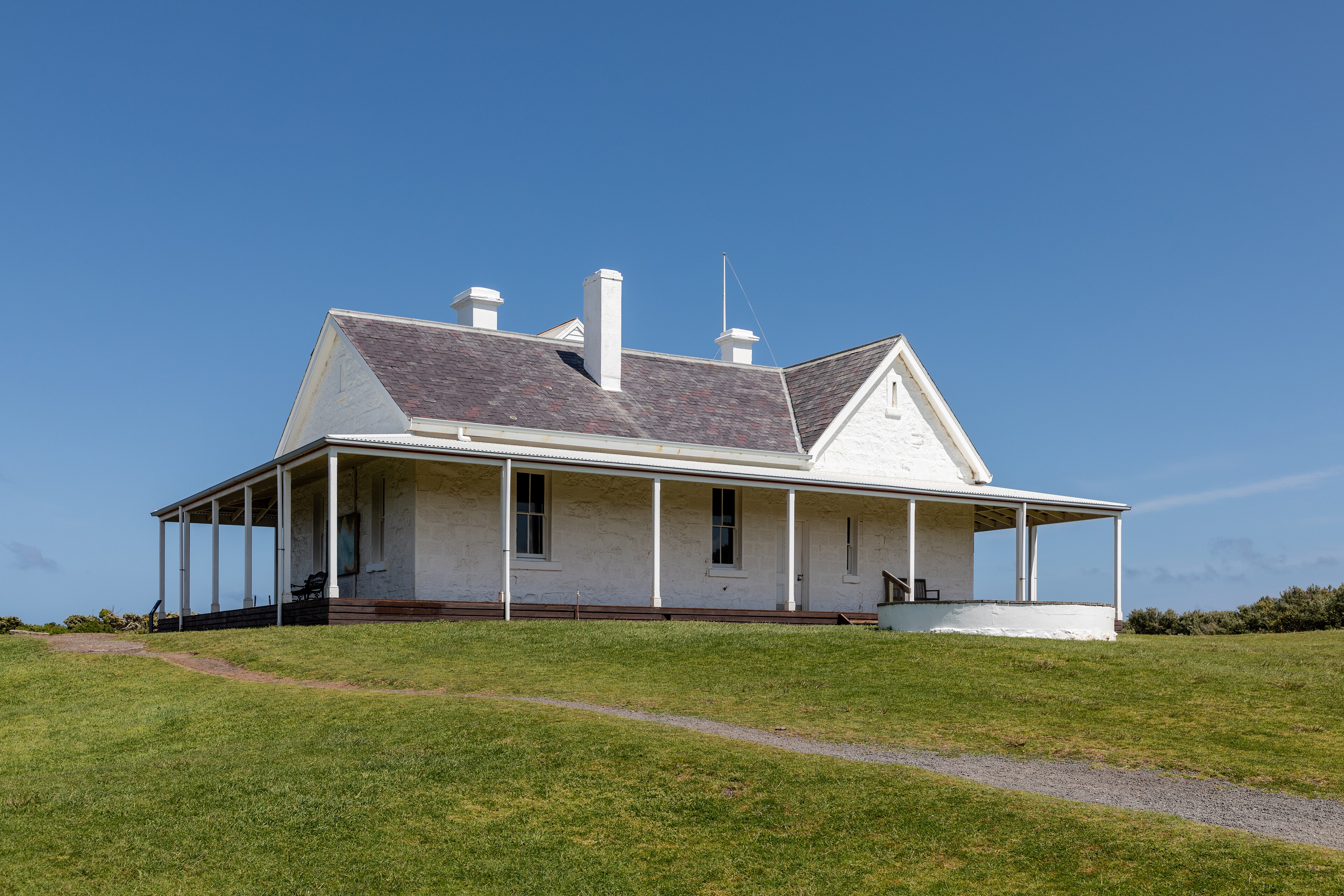
Context · Cape Otway, over the Bass Strait where Valentich vanished
Cape Otway (AU), Cape Otway Lighthouse, Telegraph Station -- 2019 -- 1179.jpg · Wikimedia Commons · CC BY-SA 4.0 · open original
Australian Department of Transport, file V116/783/1047: aircraft accident investigation summary report on VH-DSJ (approved 27 Apr 1982)
The file of the official investigation (National Archives of Australia, B1497), 316 pages in The Black Vault's copy. Pages 9-11 hold the summary report: it transcribes the exchanges between VH-DSJ and the Melbourne flight service unit, from 'it seems to me like landing lights' to 'that strange aircraft is hovering on top of me again… it is hovering and it's not an aircraft' and the 17 seconds of open microphone at 19:12:28, notes that the alert phase was declared at 19:12, that the search went on until 25 October without finding any trace of the aircraft, and concludes 'The reason for the disappearance of the aircraft has not been determined'. It is signed by A. R. Woodward. An Australian Government work under Crown copyright, so it is given as a link.
National Archives of Australia, B1497 · copia de The Black Vault · view source
The night in question
On the afternoon of 21 October 1978, Frederick Valentich, a 20-year-old pilot holding a private pilot licence, a Class Four instrument rating for night visual flight and about 150 hours in total according to the official report, took off from Moorabbin (Melbourne) at 6:19 PM in a Cessna 182L (registration VH-DSJ) for a roughly 125-nautical-mile flight bound for King Island, crossing Bass Strait. He reported Cape Otway at 7:00 PM and, at 7:06 PM, already over the water and in the last of the daylight (the report puts the end of daylight at Cape Otway at 7:18 PM), he asked the Melbourne Flight Service Unit whether there was known traffic below 5,000 feet, because a large aircraft with four bright lights, which seemed to him like landing lights, had just passed 'at least a thousand feet above' him. Melbourne replied that there was no known traffic in the area.
Over the next few minutes, the transcript records an escalation: Valentich described the object moving at high speed, passing and positioning itself over him, with a shiny metallic surface and a green light; he said 'it's not an aircraft' (the official transcript's wording) and that the engine was rough idling and 'coughing'. His last words describe the object hovering above him; then the official transcript records 17 seconds of open microphone and no further transmission. Contemporary press, clipped in the file itself, spoke of a 'metallic noise' on that transmission; the official transcript does not describe the sound. Valentich never reached King Island.
The intensive air, sea and land search continued until 25 October 1978 and, according to the official report, found 'no trace of the aircraft'. An oil slick seen in the area was analysed by the Defence laboratories and found consistent with ship bunker fuel, not with aviation gasoline or lubricant. The Australian Department of Transport investigation, whose summary report A. R. Woodward signed on 27 April 1982, concluded that 'the reason for the disappearance of the aircraft has not been determined' and listed the pilot as 'presumed fatal'. The file's initial telex listed among its lines of inquiry human factors, because the press indicated a possible predisposition of the pilot towards UFOs ('it is reported that he believed in such phenomena'), and the astronomical and atmospheric aspects, since the event occurred at about last light. Years later, a physical datum reshaped the debate: on 15 May 1983 an engine cowl flap from a Cessna 182, from a serial-number range that included Valentich's aircraft, was found on the beach at Parry's Bay, on the west coast of Flinders Island; its operating bolt appeared to have failed on impact or in flight, and the Royal Australian Navy research laboratory thought it reasonable that a 1983 storm had moved parts towards Flinders. It is a range match, not an identification of the part, but it points to a crash into the water rather than a traceless disappearance. Over the years several conventional explanations were proposed: the dominant one is nighttime spatial disorientation over a sea with no visible horizon: an inexperienced pilot may have entered inverted flight and mistaken the reflection of his own lights, or bright celestial bodies (planets or stars) low in the sky, for an 'object', with the resulting loss of control. Other hypotheses include mechanical failure, and even a hoax or staged suicide; none was proven. The case is famous, but its evidential core regarding the 'object' is a single source: the radio account of a young pilot flying alone; the official file consulted contains no radar record of the object.
Why it matters
Valentich matters for its place in culture and for what it teaches about the limits of evidence. The sighting coincides with the witness's actual, irreversible disappearance, which gave it enormous dramatic weight and made it an Australian icon, cited for nearly half a century. That fusion of human tragedy and aerial mystery is precisely what makes it hard to assess coldly: the fatal outcome tends to lend the 'object' account a solidity the account, on its own, does not have.
Because, examined coldly, the evidence for the anomalous component is weak: everything rests on the radio transcript of a young pilot with about 150 hours, flying alone, with no radar record of the 'object' in the official file, no second witness, and no visual recording. Conventional explanations are plausible and could never be ruled out (nighttime spatial disorientation over a horizonless sea is a well-documented mechanism of fatal accidents) and the later recovery of a compatible Cessna 182 part on Flinders Island reinforces the reading of a real crash into the water. It is a famous testimonial case, with that explicit frontier: the tragedy is undeniable, but the UFO is, strictly, an uncorroborated account. It serves as a deliberate contrast with the Australian cases backed by sensor data or by multiple independent witnesses, which carry more evidentiary weight.
What's left on paper
Documented evidence
- Radio transcript pilot–Melbourne control (21 Oct 1978): object with four lights that 'is not an aircraft'
- Control confirms there was no known traffic at his altitude in the area
- 17 s of open microphone at the end of the communication (the press spoke of a metallic noise); loss of contact at 7:12 PM
- Search found no trace of the aircraft by 25 Oct 1978; official report (27 Apr 1982): cause not determined; Cessna 182 cowl flap of a compatible serial range found on Flinders on 15 May 1983
Sources
- Disappearance of Frederick Valentich — Wikipedia — Secondary source.
- Department of Transport (Australia) — investigación del accidente VH-DSJ (1978) — Official investigation; cause undetermined.
- Australian Department of Transport, Air Safety Investigation Branch — file V116/783/1047, 'Aircraft Missing (Valentich)', 1978-1992 (NAA B1497; The Black Vault mirror with NAA permission) — 316 pp. It includes the summary report signed on 27 Apr 1982 ('the reason for the disappearance of the aircraft has not been determined'), the official transcript and the debris analysis.
- James McGaha and Joe Nickell — «The Valentich Disappearance: Another UFO Cold Case Solved», Skeptical Inquirer (Nov 2013)
Related cases
Associated actors (1)