1996·Low Earth orbit · Space Shuttle Columbia (STS-80), launched from Kennedy Space Center, Florida
United States / low Earth orbit.STS-80 · unidentified object in orbital photography (1996)
During Space Shuttle Columbia's STS-80 mission, from 19 November to 7 December 1996, Earth-observation photography captured a small, elongated white object, seen against the black of space next to the Earth's sunlit limb and, in another frame, against the clouds. NASA cataloged three frames as 'unidentified object' images (NASA-UAP-D030/031/032), declassified in 2026 by AARO. They are single-camera photos, with no radar or ranging data: the explanation proposed is a fragment near the orbiter lit by the Sun, whose scale and distance cannot be judged from a monocular image.
Tier A · AcceptableWhat do they mean? →
Institutional evidence: several identified independent witnesses, or contemporary official documentation, without an instrumental record to corroborate them.
What it was
63%natural or human cause
Most likely explanation: space object
See the split across the six explanations
Natural or human cause
No known cause
Primary documents
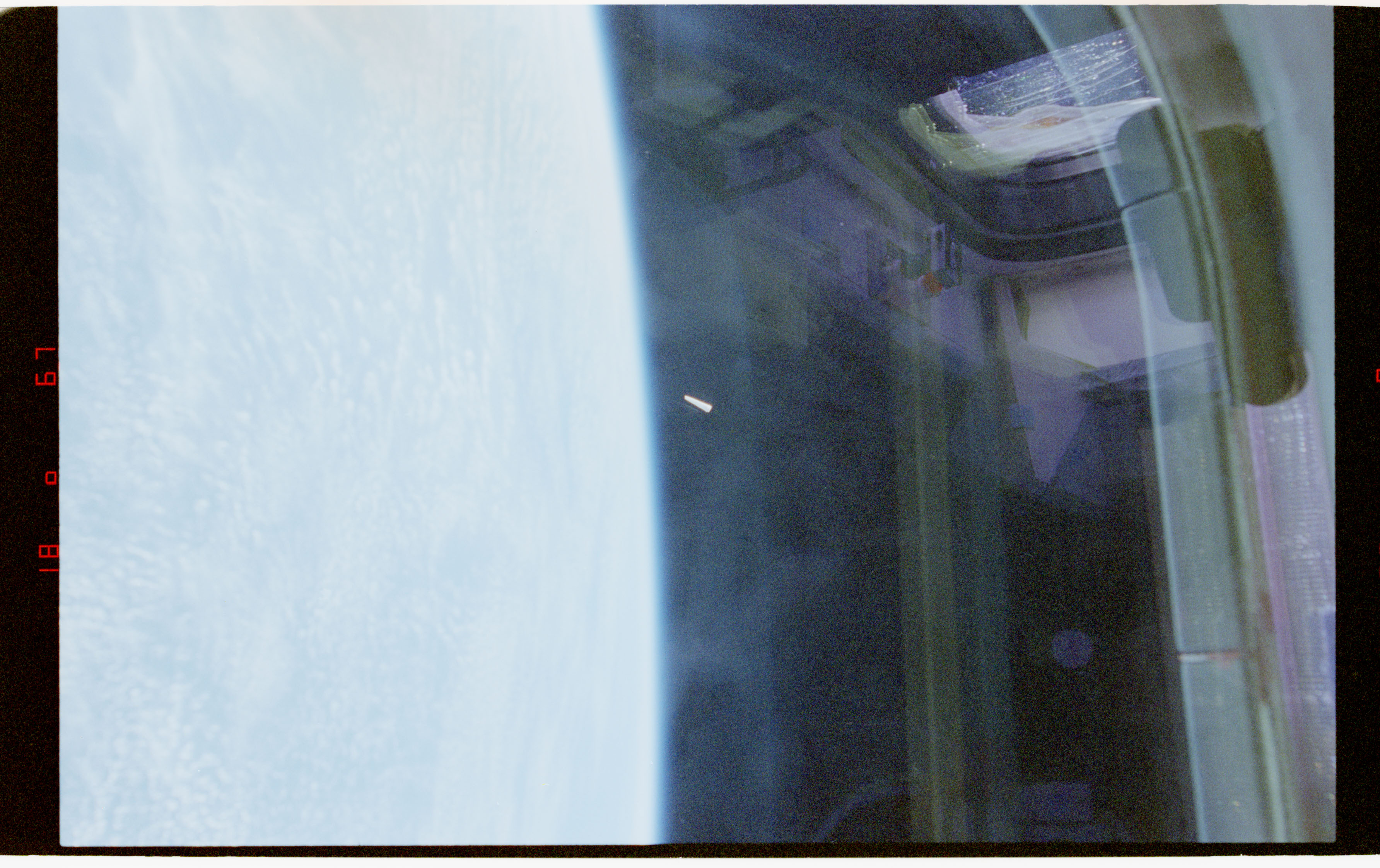
NASA-UAP-D030 — STS-80, unidentified object (image 1, 1996)
NASA / AARO (PURSUE Release 04) · Public domain · US Government work · open original
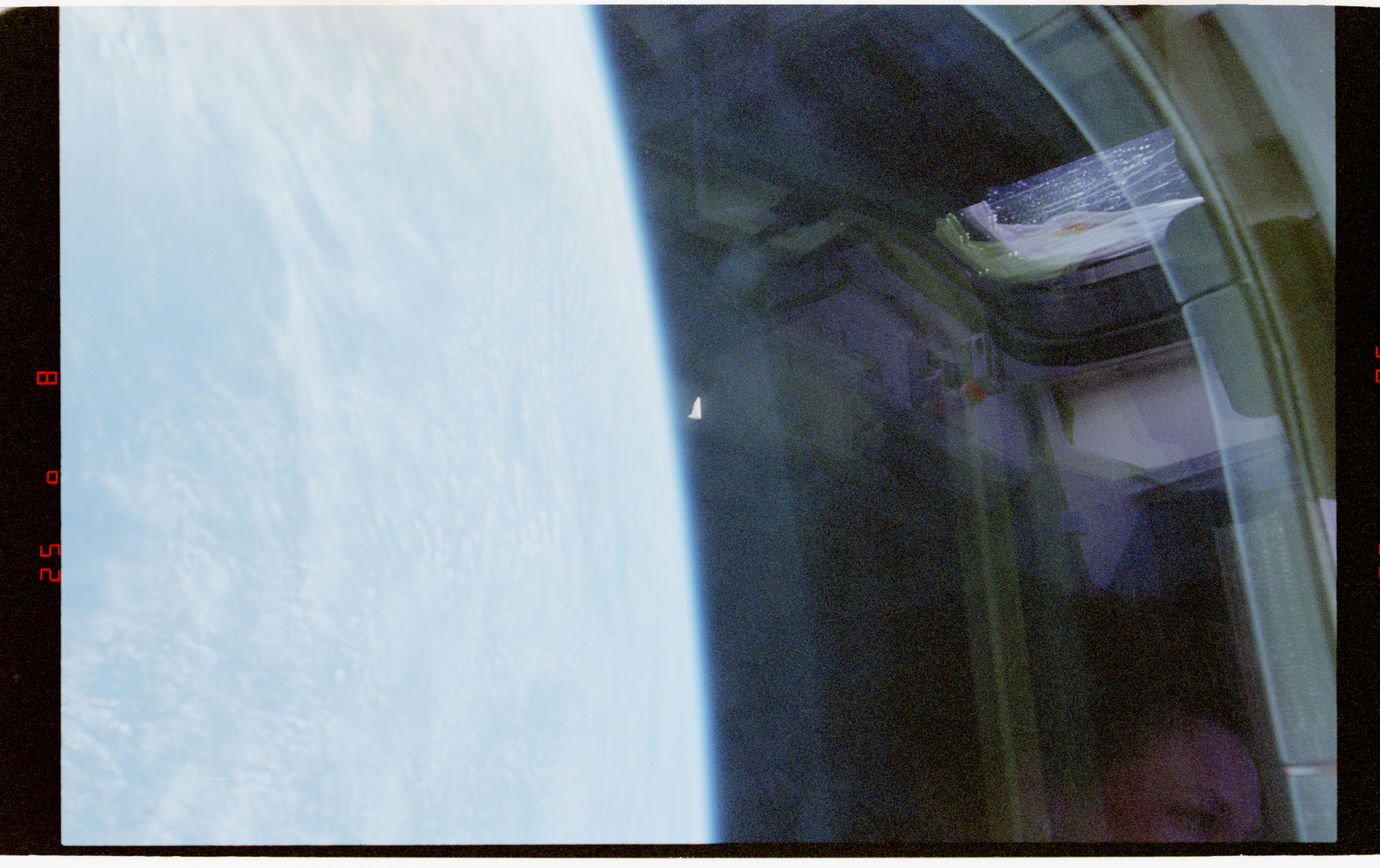
NASA-UAP-D031 — STS-80, unidentified object (image 2, 1996)
NASA / AARO (PURSUE Release 04) · Public domain · US Government work · open original
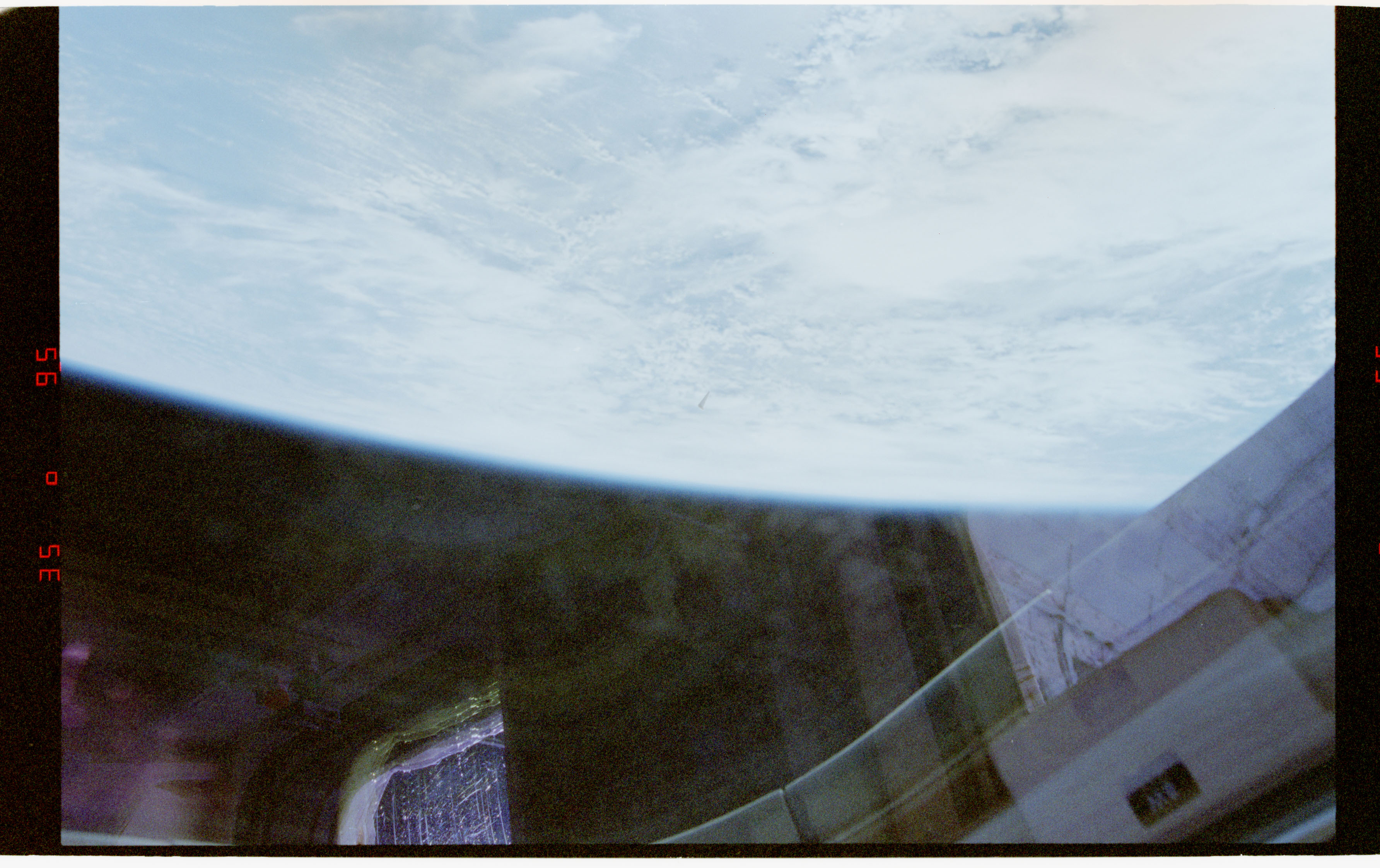
NASA-UAP-D032 — STS-80, unidentified object (image 3, 1996)
NASA / AARO (PURSUE Release 04) · Public domain · US Government work · open original
The night in question
The STS-80 mission of Space Shuttle Columbia flew from 19 November to 7 December 1996 and was, at over 17 days, the longest of the entire Shuttle program. As on nearly every flight, the crew spent time on Earth-observation photography from the flight-deck windows. Two of the three published frames show a small white object, elongated in one and almost triangular in the other, against the black of space a short way from the planet's sunlit limb (the blue-white band of clouds and atmosphere), with the window and payload-bay structure in the frame and with reflections of the cabin interior in the glass, among them a crew member's face. In the third, which shows the Earth and the payload bay, the object appears against the clouds as an elongated white speck.
NASA identified and cataloged three of these shots as STS-80 'unidentified object' images, declassified in 2026 within the UAP Records of the All-domain Anomaly Resolution Office (AARO), under the codes NASA-UAP-D030, D031 and D032. It is important to stress what they are and are not: three still photographs, taken with a single camera, with no telemetry, no radar and no associated distance or velocity data. The 'unidentified' label means exactly that (that the object in the photo was not identified), not that anything anomalous was established about its nature.
The conventional explanation for this kind of image is solid and well documented by space-program analysts. In orbit, the orbiter is permanently surrounded by a cloud of its own particles: ice flakes shed from the maneuvering thrusters and water lines, fragments of insulation or paint, and small debris released by the vehicle. Lit by the Sun against the dark background of space or the bright background of Earth, those nearby particles appear as luminous 'objects' whose size and distance are impossible to estimate in a monocular image: a millimeter-scale flake a few meters from the window is optically indistinguishable from a large craft kilometers away. Added to this are the reflections and double images produced by the multi-layer glass of the Shuttle windows. Without triangulation from two points, or radar data, the photograph alone cannot resolve the ambiguity, the same limit that governs the earlier STS-48 (1991) case.
Why it matters
The case matters for its calibration value, not its content: it is the textbook example of how a spectacular image can carry almost no usable information. It is part of NASA's imagery batch in AARO's release 04 (a documented institutional item with a chain of custody), but the mundane explanation (a particle near the orbiter) suffices for what the photos show. Placing it next to STS-48 (1991) lets the reader compare two episodes of the same type and see that the official 'unidentified' label describes a limitation of the data, not a property of the object.
The error this case corrects is the most common in popular UAP coverage: treating 'unidentified' as a synonym for 'anomalous' or 'non-human.' A single camera, with no distance or radar, cannot distinguish an ice flake from a craft; and the history of the Shuttle program is full of these 'appearances' that, when additional data existed, turned out to be orbital or vehicle debris. What remains as a residue is modest: NASA photographed something it did not positively identify, and without more sensors it cannot be fully closed. That uncertainty is what prevents cataloging it outright as resolved, and the weakness of the data is what prevents giving it more weight.
What's left on paper
Documented evidence
- Three STS-80 'unidentified object' still photographs (NASA-UAP-D030/031/032, 1996), declassified in 2026 (AARO release 04)
- Context: Columbia's STS-80 mission (19 Nov – 7 Dec 1996), the longest of the Shuttle program
- Small white object visible in all three photos: in two, against the black background next to the sunlit limb; in the third, against the Earth's clouds; window/payload-bay structure and cabin reflections in the glass
- No radar, telemetry or ranging data: single-camera (monocular) image
- Proposed explanation: particle near the orbiter (ice / insulation / paint) lit by the Sun, indistinguishable from a distant object without triangulation
Sources
- NASA / AARO — «STS-80 Unidentified Object» (imágenes 1–3, 1996) — Photographs declassified in 2026 in the AARO UAP Records, release 04, codes NASA-UAP-D030, D031 and D032. Official PURSUE index at war.gov/UFO/.
- Wikipedia — STS-80 (secondary source: mission data)
- Wikipedia — James Oberg (secondary source on the analyst) — Standard explanation of the shuttle-window objects as particles near the orbiter (ice/debris).
- Tom Jones — «Did UFOs Visit STS-80 Columbia?», Flight Notes (18 Apr 2011)
Related cases
same explanation · same country · same period
The “Black Knight” · the cover lost on the STS-88 mission
1998 · Tier S
same explanation · same country · same period
STS-48 NASA
1991 · Tier A
same explanation · same country
Skylab · light flashes and reddish object (NASA, PURSUE)
1973 · Tier B
same explanation · same country
Apollo 11 · Technical Crew Debriefing observations (NASA, PURSUE)
1969 · Tier B