1957·RAF Manston, Kent, sobre East Anglia
Reino Unido.RAF Manston · la orden de disparar (Milton Torres)
Según el relato que escribió en 1988, la noche del 20 de mayo de 1957 el teniente de la USAF Milton Torres despegó de RAF Manston (Kent) en un F-86D y recibió la orden de disparar una salva de 24 cohetes contra un eco que el control de tierra seguía sobre East Anglia.
Seguir leyendo el resumen
Dentro de las nubes y sin verlo nunca, lo enganchó en su radar a 15 millas con un retorno «con las proporciones de un portaaviones volador»; el eco se alejó, rompió el enganche y salió de su escala de 30 millas. Al día siguiente un civil le ordenó silencio. No se conoce registro militar de la época: los de Manston los guardaba la USAF y no consta que se consultaran; el relato llegó al MoD en 1988 y se publicó en 2008.
Tier B · Indiciario¿Qué significan? →
Evidencia limitada: un solo testigo, un testimonio recogido años después o un relato sin documentación primaria de la época.
Qué fue
53%causa natural o humana
Explicación más probable: tecnología humana clasificada
Ver el reparto entre las seis explicaciones
Causa natural o humana
Sin causa conocida
Documentos primarios
Expediente DEFE 24/1931: memorandos de Sec(AS)2a del 22 de julio y del 18 de noviembre de 1988 sobre el incidente de 1957
Tres páginas del expediente DEFE 24/1931 del Ministerio de Defensa. Dos memorandos manuscritos de Sec(AS)2a del 22 de julio de 1988 remiten el relato de «un incidente inusual de 1957» y piden a la Air Historical Branch que busque si hay registro de él, «un ovni o un experimento de la RAF». El memorando de traspaso del 18 de noviembre recoge la consulta del Daily Express sobre dos cazas de la USAF de Manston armados y con orden de disparar el 20 de mayo de 1957; una nota a mano anota que la Air Historical Branch confirmó que Manston estaba bajo control de la USAF de diciembre de 1956 a mayo de 1958, que sus registros de salidas los guarda la USAF y que ni el PRO ni la AHB tienen nada.
The National Archives (Reino Unido), DEFE 24/1931, págs. 255-256 y 65 del PDF; copia digital en archive.org (BritishUFOFiles) · Open Government Licence v3.0 (Crown copyright, Ministerio de Defensa) · abrir original
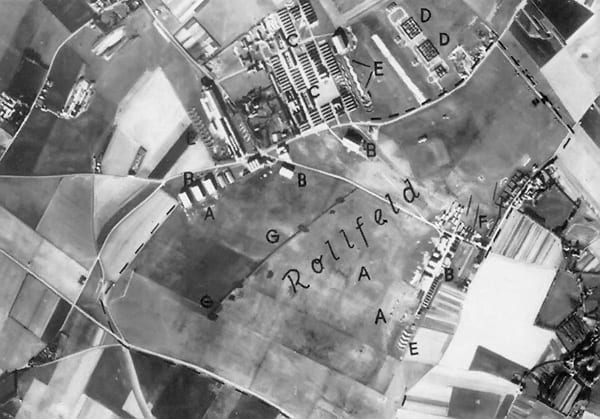
Contexto · RAF Manston (Kent, Inglaterra), base del interceptor con orden de disparar
Luftwaffe Photograph Of RAF Manston 1939.jpg · Wikimedia Commons · Dominio público · abrir original
Carta del abogado al Ministerio de Defensa (20 de julio de 1988) y relato mecanografiado de Milton Torres, en DEFE 24/1931
Páginas 259 a 262 del expediente DEFE 24/1931 en la copia de archive.org. La carta del abogado, fechada el 20 de julio de 1988 y titulada «Radar Blip», remite el relato de un antiguo piloto estadounidense y pregunta si un «blip» falso por mal tiempo o un experimento de «guerra electrónica» explicarían el episodio, y si la tecnología para crear esas ilusiones de radar existía en 1957. El relato mecanografiado del piloto narra el despegue de dos F-86D en alerta en Manston el 20 de mayo de 1957 y la persecución de un eco que, según él, se le escapó del alcance de 30 millas. Son documentos de particulares archivados por el ministerio, no obra de la Corona.
The National Archives (Reino Unido), DEFE 24/1931; copia digital en archive.org (BritishUFOFiles) · ver fuente
La noche en cuestión
En mayo de 1957, East Anglia era uno de los cielos más militarizados del planeta: una densidad extraordinaria de bases de la USAF y la RAF, radares de alerta temprana y cazas en alerta por la amenaza de bombarderos soviéticos. Todo lo que se sabe del episodio procede del relato mecanografiado de Milton Torres, piloto del 514.º Escuadrón de Interceptores de la USAF. Según ese texto, esa noche dos F-86D Sabre estaban en alerta de cinco minutos al final de la pista de RAF Manston, en Kent, con tiempo de vuelo instrumental. El control de intercepción (GCI) le informó de que llevaba tiempo siguiendo un eco que orbitaba East Anglia con muy poco movimiento, que había estado inmóvil durante intervalos largos y que, tras las comprobaciones habituales con los demás organismos de control, se consideraba no identificado.
Guiado por el GCI, Torres (entonces teniente de 25 años) subió con postcombustión a unos 32.000 pies y voló dentro de las nubes, sin ninguna referencia visual: «estoy en la sopa y es imposible ver nada», respondió cuando le pidieron observaciones. Recibió la orden de disparar una salva completa de sus 24 cohetes Mighty Mouse, pidió la autenticación y la obtuvo. Encontró el eco donde le dijeron, 30 grados a babor y a 15 millas (24 km), y lo describió como un retorno que «quemaba un agujero en el radar», parecido al de un B-52, con «las proporciones de un portaaviones volador»; lo enganchó en segundos, a la distancia máxima del sistema. A unos diez segundos del disparo, el indicador de velocidad de cierre pasó de unos 800 nudos a favor a 200 nudos en contra, el máximo negativo que mostraba el equipo; el eco se alejó, rompió el enganche y salió de su escala de 30 millas, y el GCI le dijo que también lo había perdido, en dos barridos. Torres escribió que la velocidad real no se podía medir, pero que su impresión era que el objeto viajaba a «números Mach de dos dígitos». Regresó a Manston sin disparar y sin haber visto nada a simple vista.
Al día siguiente, según Torres, un civil con aspecto de «vendedor de IBM» lo interrogó en la zona de operaciones, le dijo que el asunto era altamente clasificado y lo amenazó con una violación de la seguridad nacional si hablaba de él, ni siquiera con su comandante. Torres calló unos treinta años. En mayo de 1988 los dos pilotos coincidieron en una reunión de veteranos en Manston; Torres escribió entonces su relato y un abogado británico que investigaba el caso lo envió al Ministerio de Defensa el 20 de julio de 1988, preguntando si se había tratado de un eco falso causado por el tiempo o de un experimento de guerra electrónica. El MoD acusó recibo y lo consultó con la Sección Histórica del Aire, que respondió que Manston estuvo bajo control de la USAF de diciembre de 1956 a mayo de 1958, que los registros de sus salidas los guardaba la USAF y no la RAF, y que ella no conservaba nada; el expediente da los contactos de la USAF, pero no recoge ninguna respuesta suya. El compañero de Torres, Dave Roberson, envió su propio relato con diferencias importantes: recordaba un vuelo de entrenamiento sin armas, un aterrizaje en RAF Bentwaters para cargar cohetes y varios blancos desconocidos que se extendían hasta Escocia; no recordaba advertencia alguna de guardar silencio, aunque dijo que eso no le sorprendía y que no tenía motivos para dudar del relato de Torres. En lo esencial, sin embargo, lo confirmaba: «sí perseguimos ovnis esa noche». El controlador le indicó que los desconocidos «cambiaban de velocidad y de altitud con bastante frecuencia», y el eco hacia el que lo guiaron a él, a baja altura, «aceleró o descendió, y el controlador lo perdió». La correspondencia se hizo pública en la liberación de archivos OVNI del MoD en los Archivos Nacionales, en octubre de 2008, y Torres confirmó entonces su identidad a la prensa.
Por qué importa
En el relato de Torres, el mando ordena abrir fuego: una salva completa de cohetes contra un eco no identificado sobre East Anglia. Si la orden se dio tal como la recuerda, mide cuán en serio tomó el control aéreo aquel contacto. Pero esa orden solo consta en la memoria de un piloto, escrita treinta y un años después; su compañero no la menciona y no existe ningún registro de la época (ni del GCI, ni de la RAF, ni de la USAF) que la confirme. Lo mismo vale para la salida a velocidad hipersónica: el equipo de Torres solo podía mostrar 200 nudos de alejamiento, y los «dos dígitos de Mach» son una inferencia suya, no una medida. El eco que se aleja de un interceptor lanzado a más de Mach 0,9 y desaparece del radar de tierra en dos barridos sigue siendo notable, pero no equivale a la aceleración medida que a veces se le atribuye.
Lo que el caso sí muestra es cómo la Guerra Fría podía convertir un eco ambiguo en una orden de fuego, y cómo el silencio impuesto a un piloto hace que un episodio así aflore décadas después y sin papeles. Sus límites son estos: el contacto fue solo de radar, sin adquisición visual, dentro de las nubes; los dos testigos discrepan en hechos básicos, como si despegaron en alerta o en un vuelo de entrenamiento; y el único rastro documental es la correspondencia de 1988. Aun así, la carta de Roberson corrobora de forma independiente el núcleo del episodio: esa noche persiguieron desconocidos que el controlador veía cambiar de velocidad y de altitud, y a él también se le escapó uno. La única hipótesis prosaica con nombre sigue abierta: un ejercicio de guerra electrónica que generara blancos falsos en los radares. En 1988 un investigador preguntó al Ministerio de Defensa si había sido un experimento de ese tipo, y el Ministerio no encontró ninguna referencia al incidente; el historiador David Clarke recordó en 2008 que la CIA llegó a tener un programa para crear señales fantasma en el radar. Torres consideró posible la segunda, aunque no probable.
Lo que queda en papel
Evidencia documentada
- Relato mecanografiado de Milton Torres (1988), en el expediente DEFE 24/1931 de los Archivos Nacionales británicos
- Carta de un abogado al MoD (20 jul 1988) con las hipótesis de eco falso por el tiempo o experimento de guerra electrónica
- Enganche del radar del F-86D a 15 millas sobre un retorno «con las proporciones de un portaaviones volador», sin contacto visual
- Salida del eco con 200 nudos de alejamiento (máximo mostrado) y pérdida en el radar de tierra en dos barridos, según Torres
- Carta del compañero, Dave Roberson (DEFE 24/1931, pp. 66-67): confirma la persecución («sí perseguimos ovnis esa noche») y blancos que cambiaban de velocidad y altitud, pero discrepa en el vuelo de entrenamiento y no recuerda advertencia de silencio, algo que dice no sorprenderle
- Sin registro de la época: ni el MoD ni la USAF hallaron documentación del incidente
Fuentes
- The National Archives (UK), DEFE 24/1931 — correspondencia OVNI del MoD, 1988 (copia en archive.org) — Fuente primaria: relato mecanografiado de Torres, carta del abogado del 20 de julio de 1988 con las dos hipótesis y acuses de recibo del MoD (pp. 254-262 del PDF), y carta de Dave Roberson (pp. 66-67). El caso continúa en DEFE 24/1942.
- Satter, R. G. (AP) — «U.S. pilot was ordered to shoot down UFO», NBC News, 20 oct 2008 — Crónica de la liberación de 2008: sin registro militar británico ni estadounidense, relato discrepante del segundo piloto y declaraciones de Torres.
- History of Manston Airfield — «USAF F-86D from Manston ordered to fire on UFO» — Fuente secundaria: transcribe los relatos de Torres y de Roberson tal como figuran en los archivos del MoD.
- Hansard — Cámara de los Comunes, «Unidentified Flying Objects» (15 may 1957) — Cifras oficiales del secretario del Aire sobre objetos no identificados: 5 en lo que iba de 1957 y 6 en 1956. Open Parliament Licence.
Casos relacionados
mismo país · misma época
West Freugh · radar RAF + silencio del Air Ministry
1957 · Tier S
mismo país · misma época
Lakenheath-Bentwaters
1956 · Tier S
mismo país · misma época
BOAC «Centaurus» · sobre Labrador
1954 · Tier A
mismo país · misma época
Operation Mainbrace · oleada sobre la flota OTAN
1952 · Tier A