Caso Nº 171·Reino Unido
1979·Dechmont Law, Livingston, West Lothian, Escocia
Reino Unido.Robert Taylor · el único OVNI investigado como delito (Escocia, 1979)
El 9 de noviembre de 1979, el guardabosques Robert 'Bob' Taylor caminaba por Dechmont Law, cerca de Livingston (Escocia), cuando dijo encontrar en un claro una 'cúpula voladora' de unos 6 metros y dos esferas con púas que rodaron hacia él, le agarraron los pantalones y lo arrastraron antes de que perdiera el conocimiento. Regresó a casa con la ropa rasgada y heridas en mentón y muslos. Por las lesiones, la policía de Lothian and Borders registró el hecho como agresión común —lo que lo convierte en el único avistamiento OVNI que derivó en una investigación criminal oficial—. En el lugar quedaron marcas en el suelo: dos rastros paralelos tipo escalera y unos 30-40 orificios circulares. Caso de traza física y efecto sobre el testigo, genuinamente ambiguo entre encuentro real y episodio médico.
Año
1979
Tier
A
Probabilidad
48%
Categoría
Incidente
Evidencia institucional: múltiples testigos verificables o documentación oficial. Tres ejes independientes: el «tier» mide la fuerza de la evidencia; la «probabilidad» estima cuán genuinamente inexplicado está el caso —un fenómeno natural puede seguir sin explicación, así que no equivale a «no-prosaico»—; y la partición de explicaciones (abajo) dice qué fue más plausiblemente. Por eso un caso bien documentado puede tener como causa más plausible un posible fraude, y un Tier B no es, por eso, un fraude.
Documentos primarios · visor
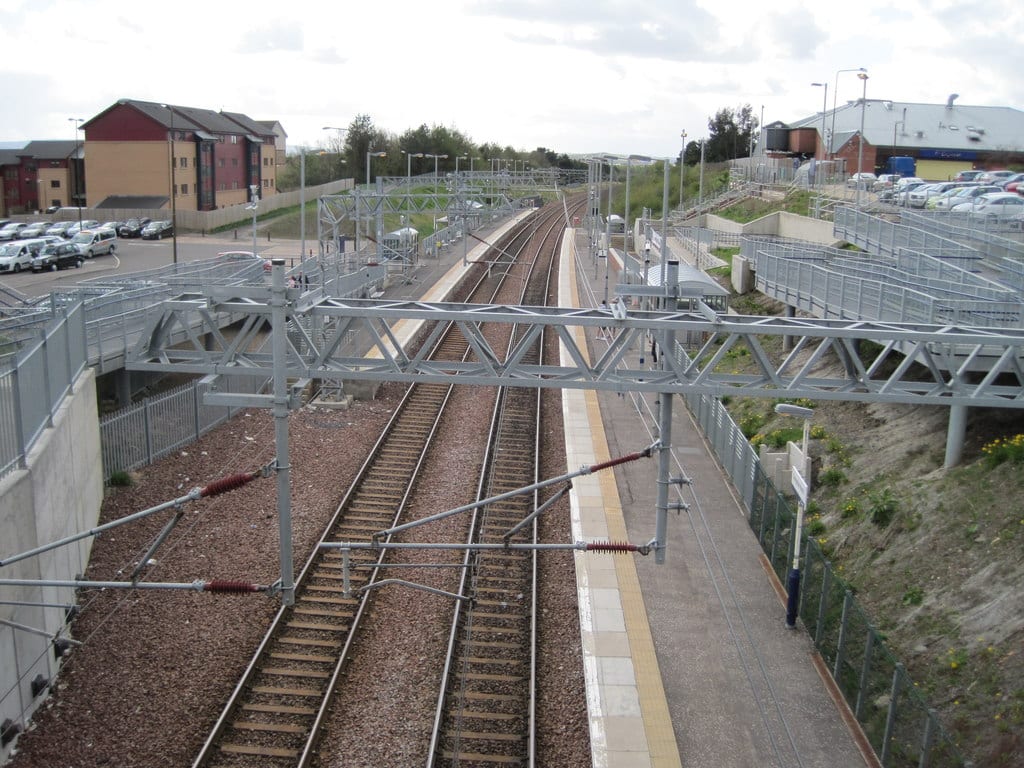
Contexto · Livingston (Escocia), donde Robert Taylor tuvo el encuentro de Dechmont Law
Livingston North railway station, West Lothian - geograph.org.uk - 3707656.jpg · Wikimedia Commons · CC BY-SA 2.0 · abrir original
Parte 01
La noche en cuestión
La mañana del 9 de noviembre de 1979, hacia las 10:30, Robert 'Bob' Taylor, guardabosques de 60 años de la Livingston Development Corporation, estacionó su camioneta junto a una carretera cerca de la autopista M8 y subió por un sendero hacia un área forestal recién plantada en Dechmont Law, West Lothian, acompañado de su perra setter irlandés, Lara. Su tarea ese día era simplemente mantener la plantación libre de ovejas. En un claro, a unos 450 metros del vehículo, dijo encontrar un objeto en forma de cúpula —de unos 6 metros de diámetro, oscuro y con una textura cambiante que parecía hacerse en parte transparente— suspendido o posado sobre el suelo. La perra ladró agitada.
Según su relato, dos esferas pequeñas con púas, parecidas a minas marinas, rodaron hacia él, se adhirieron a las perneras de su pantalón y lo arrastraron hacia el objeto; sintió un olor acre que lo hizo atragantarse, se mareó y perdió el conocimiento. Al despertar, el objeto había desaparecido. Regresó a pie y en su camioneta, conmocionado y cojeando, con los pantalones rasgados a la altura de las caderas y raspaduras en el mentón y los muslos. Su esposa, Mary, y su empleador lo encontraron en estado de shock; el médico que lo atendió confirmó las lesiones.
Lo que distingue al caso es la respuesta institucional. Por las lesiones de Taylor, la policía de Lothian and Borders abrió un expediente y registró el hecho como una agresión (common assault) —el único avistamiento OVNI que se convirtió formalmente en una investigación criminal—. En el sitio, los agentes documentaron marcas físicas: dos conjuntos paralelos de huellas en forma de peldaños de escalera (de unos 2,5 metros) y entre 32 y 40 orificios circulares de unos 9 cm de diámetro, dispuestos de forma compatible con el relato de los objetos menores. La credibilidad personal de Taylor fue un factor central: cuantos lo conocían lo describían como un hombre honesto y poco dado a la fantasía —su empleador, Malcolm Drummond, declaró sin rodeos que no era persona de inventar historias—, no bebía y sostuvo la misma versión sin variarla hasta su muerte en 2007. Las explicaciones prosaicas apuntan a un episodio médico —Taylor padecía epilepsia y se ha sugerido un ataque, un mini-ictus o un episodio que produjera alucinación olfativa y caída— mientras que las marcas del suelo nunca recibieron una explicación consensuada (se barajó maquinaria forestal, sin confirmarse). El caso quedó como uno de los pocos con traza física documentada por la policía y, a la vez, con una alternativa médica seria.
Parte 02
Por qué este caso movió la aguja
Es único en el corpus mundial: el único avistamiento que la policía tramitó como delito, con un expediente criminal abierto por las lesiones del testigo. Esa respuesta institucional, sumada a la traza física documentada por agentes (huellas en escalera + decenas de orificios) y al efecto corporal sobre Taylor (ropa rasgada, raspaduras, mareo), lo coloca por encima de un avistamiento puramente visual. Pero su fuerza tiene un contrapeso serio: Taylor era un único testigo y padecía epilepsia, lo que abre una explicación médica plausible —un ataque que combinara colapso, alucinación olfativa y caída— que la prosa honesta no puede ignorar. El caso es el ejemplo arquetípico de evidencia física ambigua: marcas reales en el suelo y una lesión real, sobre una experiencia de un solo observador con una alternativa clínica. El equilibrio analítico es delicado en ambos sentidos. A favor de un evento externo: la traza en el suelo es física y fue documentada por terceros profesionales, no por el testigo; las lesiones y la ropa rasgada son reales; y Taylor no buscó publicidad ni lucro, manteniendo un relato sobrio durante 28 años. En contra: un solo testigo, ausencia de cualquier objeto recuperado, y una condición neurológica conocida que puede generar precisamente alucinaciones olfativas (el olor acre que él describió es un aura epiléptica clásica), pérdida de conciencia y caída con lesiones. La hipótesis médica, sin embargo, no explica por sí sola las marcas en el suelo, y la coincidencia temporal entre esas marcas y el episodio sigue sin cerrarse. Tier A por la documentación policial y la traza; probabilidad moderada por la hipótesis médica no descartable.
Parte 03
Lo que queda en papel
Evidencia documentada
- Relato de Robert Taylor, guardabosques, el 9 de noviembre de 1979 en Dechmont Law (Livingston, West Lothian)
- Investigación criminal de la policía de Lothian and Borders, que registró el hecho como agresión (common assault) — único OVNI tramitado así
- Efecto físico sobre el testigo: pantalones rasgados a la altura de las caderas, raspaduras en mentón y muslos, mareo y pérdida de conocimiento
- Trazas en el suelo documentadas por agentes: dos rastros paralelos tipo escalera (~2,5 m) y 32-40 orificios circulares (~9 cm)
- Descripción: cúpula oscura de ~6 m y dos esferas con púas tipo mina marina
- Alternativa médica seria: Taylor padecía epilepsia; se ha propuesto un ataque/mini-ictus con alucinación y caída — las marcas del suelo no recibieron explicación consensuada
Fuentes
- Wikipedia — Robert Taylor incident — Cronología, investigación policial y trazas.
- BBC News — 'The UFO sighting investigated by the police' — Cobertura del 40º aniversario y el expediente policial.
- West Lothian Council — Dechmont Law UFO (información oficial) — Documento institucional local sobre el incidente y el sitio.
Patrones que exhibe (1)
Ubicación
Dechmont Law, Livingston, West Lothian, Escocia · 55.89°, -3.50°
Distribución de explicaciones
Este caso se clasifica entre las hipótesis del modelo: la barra reparte el 100% según cuánto pesa cada explicación (la incertidumbre se reparte entre las hipótesis que el caso apoya). Sumadas en todo el corpus producen la partición comparable. Es una pregunta distinta de la Probabilidad de arriba: aquella estima qué tan probable es que el caso sea un fenómeno genuinamente no explicado; esta reparte cuál sería la explicación.
Hipótesis modal: Misidentificación 66% · suma 100%
Se confundió con: Sin objeto único identificado
Juicio analítico estructurado, no frecuencia calibrada. Clasificación forzada: la masa que la evidencia no permite asignar se reparte entre las hipótesis que el caso sí apoya.
Casos relacionados