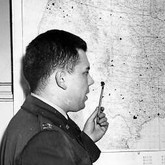
1947·Monte Rainier, estado de Washington
Estados Unidos.Kenneth Arnold · el avistamiento que acuñó 'platillo volador' (EE.UU., 1947)
El 24 de junio de 1947, el piloto privado Kenneth Arnold volaba cerca del Monte Rainier (Washington) cuando reportó nueve objetos brillantes en cadena entre el Rainier y el Monte Adams. Cronometró su paso y dedujo unas 1.700 millas por hora. Su descripción del movimiento («como un platillo si lo lanzas rebotando sobre el agua») llevó a la prensa a acuñar «flying saucer» y disparó la oleada de 1947.
Seguir leyendo el resumen
El agente que lo entrevistó lo consideró sincero, pero J. Allen Hynek mostró que distancia, tamaño y detalle no podían ser ciertos a la vez, y que con el tamaño estimado irían a unas 400 millas por hora; Blue Book lo cerró como «Otro (espejismo)».
Tier B · Indiciario¿Qué significan? →
Evidencia limitada: un solo testigo, un testimonio recogido años después o un relato sin documentación primaria de la época.
Qué fue
67%causa natural o humana
Explicación más probable: aeronave
Ver el reparto entre las seis explicaciones
Causa natural o humana
Sin causa conocida
Documentos primarios
Incident Summaries 1-100 — fichas «Check-List: Unidentified Flying Objects» (USAF)
Tres volúmenes de «Incident Summaries» de la Fuerza Aérea de Estados Unidos, con los incidentes numerados del 1 al 233, procedentes de sus registros en los Archivos Nacionales y desclasificados en la primera entrega de PURSUE, el 8 de mayo de 2026. Cada resumen gira en torno a una ficha estandarizada, «Check-List - Unidentified Flying Objects», con fecha, lugar, descripción del objeto, rumbo, meteorología y fiabilidad del testigo, y muchos añaden listas de testigos y declaraciones. Es el instrumento con que los proyectos Sign (1948) y Grudge (1949) tabularon los reportes de discos voladores, antecedente de las fichas de Blue Book. Una ficha prueba que un reporte se recibió y se procesó, no que fuera anómalo: la mayoría se resolvía como globos, astros, aeronaves o errores de identificación.
Department of War / USAF (PURSUE Release 01) · Dominio público · obra del Gobierno de EE. UU. · abrir original
Incident Summaries 101-172 — fichas «Check-List: Unidentified Flying Objects» (USAF)
Department of War / USAF (PURSUE Release 01) · Dominio público · obra del Gobierno de EE. UU. · abrir original
Incident Summaries 173-233 (parte 1/4) — fichas «Check-List: Unidentified Flying Objects» (USAF)
Department of War / USAF (PURSUE Release 01) · Dominio público · obra del Gobierno de EE. UU. · abrir original
Incident Summaries 173-233 (parte 2/4) — fichas «Check-List: Unidentified Flying Objects» (USAF)
Department of War / USAF (PURSUE Release 01) · Dominio público · obra del Gobierno de EE. UU. · abrir original
Ver los otros 2 documentos
Incident Summaries 173-233 (parte 3/4) — fichas «Check-List: Unidentified Flying Objects» (USAF)
Department of War / USAF (PURSUE Release 01) · Dominio público · obra del Gobierno de EE. UU. · abrir documento
Incident Summaries 173-233 (parte 4/4) — fichas «Check-List: Unidentified Flying Objects» (USAF)
Department of War / USAF (PURSUE Release 01) · Dominio público · obra del Gobierno de EE. UU. · abrir documento
La noche en cuestión
El 24 de junio de 1947, a primera hora de la tarde, Kenneth Arnold (empresario de productos contra incendios y piloto privado experimentado de Boise, Idaho) despegó de Chehalis, en el suroeste del estado de Washington, rumbo este a Yakima en su avioneta de dos plazas CallAir A-2. Hizo un desvío sobre la cordillera de las Cascadas para buscar un transporte militar siniestrado (un C-46 del Cuerpo de Marines caído cerca del Monte Rainier) por el que se ofrecía una recompensa de 5.000 dólares. Hacia las 15:00, un destello le hizo mirar al norte: reportó nueve objetos brillantes y planos volando en formación escalonada entre el Monte Rainier y el Monte Adams.
Arnold hizo lo que pocos testigos podían: una estimación cuantitativa. En el informe escrito que entregó a la inteligencia del Ejército del Aire el 12 de julio contó que volaba a unos 9.200 pies, con un DC-4 a su izquierda y detrás, y que vio a su izquierda, al norte del Rainier, una cadena de nueve objetos que volaban de norte a sur, a su misma altura aproximada, con rumbo de unos 170 grados. Al principio creyó que eran aviones a reacción, pero no les encontró cola; cada pocos segundos dos o tres cabeceaban o cambiaban levemente de rumbo y el sol les arrancaba destellos. Los situó a 20 o 25 millas, les dio una envergadura parecida a la de un DC-4 (unos 45 a 50 pies) y una cadena de unas cinco millas de largo. Con el reloj del tablero midió 1 minuto y 42 segundos entre el Rainier y el Adams, 47 millas según su cálculo (unos 76 km), lo que el propio expediente traduce en 1.656,71 millas por hora; a la prensa había dado primero la cifra de 1.200. En 1947 los describió como planos, «como una bandeja de tarta», tan brillantes que reflejaban el sol como un espejo, y el formulario oficial anota una forma «aproximadamente circular»; el perfil de media luna con una punta que se reproduce hoy se consolidó en versiones posteriores, como notó Donald Menzel. La frase del platillo que rebota describía el movimiento, no la forma, y de ese malentendido nació el término «flying saucer».
El reporte de Arnold, recogido el 25 de junio y difundido por la prensa nacional, desató la oleada de avistamientos del verano de 1947 (el anuncio de Roswell llegó dos semanas después) y fundó el léxico y el marco cultural del fenómeno moderno. El expediente de la Fuerza Aérea contiene tres lecturas oficiales que no coinciden. El agente que lo entrevistó en Boise escribió que Arnold había visto los discos y que, si podía redactar un informe así sin haberlos visto, debía dedicarse a escribir ficción de Buck Rogers. J. Allen Hynek, en la evaluación del incidente 17, calculó que para distinguir tanto detalle a 20 o 25 millas los objetos tendrían que medir al menos 100 pies de grosor y unos 2.000 de largo; que si el tamaño estimado era el correcto estaban a unas seis millas y habrían recorrido solo 11 en 102 segundos, unas 400 millas por hora; y concluyó que «parece probable» que fueran subsónicos y que «podrían, por tanto,» haber sido algún tipo de avión conocido. El Mando de Material Aéreo fue más lejos: el informe «no resiste ni un examen superficial» y debía descartarse, y su publicidad explicaba buena parte de los reportes posteriores. La tarjeta de Blue Book, redactada después, lo cerró como «Otro (espejismo)» por la estabilidad del aire que el propio Arnold describió, y el expediente guarda el análisis que Menzel recogió del meteorólogo Richard Reed sobre nubes lenticulares en movimiento. Se sugirieron además meteoros, reflejos en la cabina y aves. Arnold rechazó esas lecturas y mantuvo su relato hasta su muerte en 1984. Ninguna explicación quedó demostrada, pero el propio archivo muestra que la cifra de velocidad, el dato que convirtió el caso en un enigma, depende de una distancia que choca con el tamaño y el detalle que él mismo dio.
Por qué importa
Kenneth Arnold protagoniza el caso fundacional del fenómeno moderno: el 24 de junio de 1947 inaugura la era contemporánea, dispara la oleada de ese verano y aporta el término («platillo volador») que organizó la percepción cultural durante ocho décadas. Tiene además valor de método: Arnold, piloto con experiencia, intentó medir la velocidad cronometrando los objetos entre dos picos de distancia conocida, algo raro en los reportes de su época. Pero esa misma medición es su punto débil, porque, como mostró Hynek con los números del propio Arnold, la velocidad solo es extraordinaria si la distancia es la que él estimó, y con esa distancia no habría podido ver el detalle que describió.
El caso es también un estudio de caso sobre cómo se forma un mito perceptual. La paradoja que lo persigue es lingüística: en 1947 Arnold describió la forma como plana, «como una bandeja de tarta» (el perfil de media luna llegó solo en versiones posteriores), pero el movimiento «como un platillo rebotando sobre el agua»; la prensa fundió ambas cosas y acuñó 'platillo volador', y a partir de entonces innumerables testigos reportaron discos. Es decir, el reporte fundacional puede haber sembrado el molde visual de las décadas siguientes (una advertencia metodológica permanente sobre la sugestión y la contaminación cultural del testimonio).
Su límite es el de 1947: un solo observador primario, sin radar, foto ni película, una velocidad que depende de una distancia estimada a ojo y un menú de explicaciones prosaicas (avión conocido, espejismo o nubes de onda, meteoros, reflejos, aves) que no cierran el caso pero que la propia evaluación oficial consideró más probables que un vehículo extraordinario.
Lo que queda en papel

Dibujo de los objetos que Kenneth Arnold entregó a la inteligencia de la Army Air Force el 12 de julio de 1947, tras su avistamiento del Monte Rainier que acuñó el término «platillo volador».
Army Air Force (vía Wikimedia Commons) · Dominio público
Evidencia documentada
- Informe escrito de Kenneth Arnold a la inteligencia del Ejército del Aire (12 de julio de 1947): nueve objetos en cadena, de norte a sur, a unas 20 o 25 millas, con envergadura parecida a la de un DC-4
- Cronometraje de 1 minuto y 42 segundos entre el Rainier y el Adams (47 millas); el expediente lo traduce en 1.656,71 millas por hora (unos 2.700 km/h)
- Descripción de 1947: objetos planos, «como una bandeja de tarta», brillantes como un espejo y sin cola; el movimiento «como un platillo que rebota» dio origen al término «flying saucer»
- Opinión del agente que lo entrevistó: Arnold vio los objetos y es un testigo creíble
- Evaluación de Hynek (incidente 17): distancia, tamaño y detalle son incompatibles; con el tamaño estimado, unas seis millas y 400 millas por hora, «parece probable» que fueran subsónicos y que «podrían, por tanto,» haber sido algún avión conocido
Ver 2 evidencias más
- Opinión del Mando de Material Aéreo: el informe «no resiste ni un examen superficial»
- Tarjeta de Blue Book: «Otro (espejismo)»; otras explicaciones propuestas (nubes de onda, meteoros, aves), ninguna demostrada
Fuentes
- Project Blue Book, expediente «Mt. Rainier, Washington», 24 de junio de 1947 (archive.org) — Fuente primaria: tarjeta («Otro (espejismo)»), informe de la entrevista en Boise con la opinión del agente, informe escrito de Arnold, evaluación de Hynek del incidente 17 y opinión del Mando de Material Aéreo
- Wikipedia — Kenneth Arnold UFO sighting (fuente secundaria) — Resumen secundario; útil como orientación, no como registro.
- National Museum of the USAF — Unidentified Flying Objects and Project Blue Book (contexto) — Marco institucional del estudio de la USAF.
Casos relacionados
misma explicación · mismo país · misma época
Roswell
1947 · Tier A
misma explicación · mismo país · misma época
Discos sobre Muroc Army Air Field
1947 · Tier A
misma explicación · mismo país · misma época
Gorman Dogfight · F-51 vs. luz maniobrante (Fargo)
1948 · Tier A
misma explicación · mismo país · misma época
Film de Mariana · Great Falls, Montana
1950 · Tier A
Actores asociados (1)