1980·Todmorden, West Yorkshire, Inglaterra
Reino Unido.Todmorden · agente Alan Godfrey
El 28 de noviembre de 1980, hacia las 5:00, el agente Alan Godfrey patrullaba Todmorden (West Yorkshire) buscando unas vacas extraviadas cuando reportó un objeto grande, romboidal y de base giratoria, suspendido sobre la carretera mojada, que bajo él estaba «mojada y seca a manchas».
Seguir leyendo el resumen
Hizo un croquis, informó a sus superiores y describió un lapso de unos diez minutos; cuatro policías habían visto 25 minutos antes una bola de luz cerca de Halifax. Una regresión hipnótica posterior, de fiabilidad baja, recuperó un relato de abducción. La cultura popular lo ligó a la muerte sin explicar del minero Zygmunt Adamski, hallado meses antes en la zona.
Tier A · Aceptable¿Qué significan? →
Evidencia institucional: varios testigos independientes identificados, o documentación oficial de la época, sin un registro instrumental que los corrobore.
Qué fue
59%sin causa conocida
La evidencia no alcanza para decidir entre las explicaciones
Ver el reparto entre las seis explicaciones
Sin causa conocida
Causa natural o humana
Documentos primarios
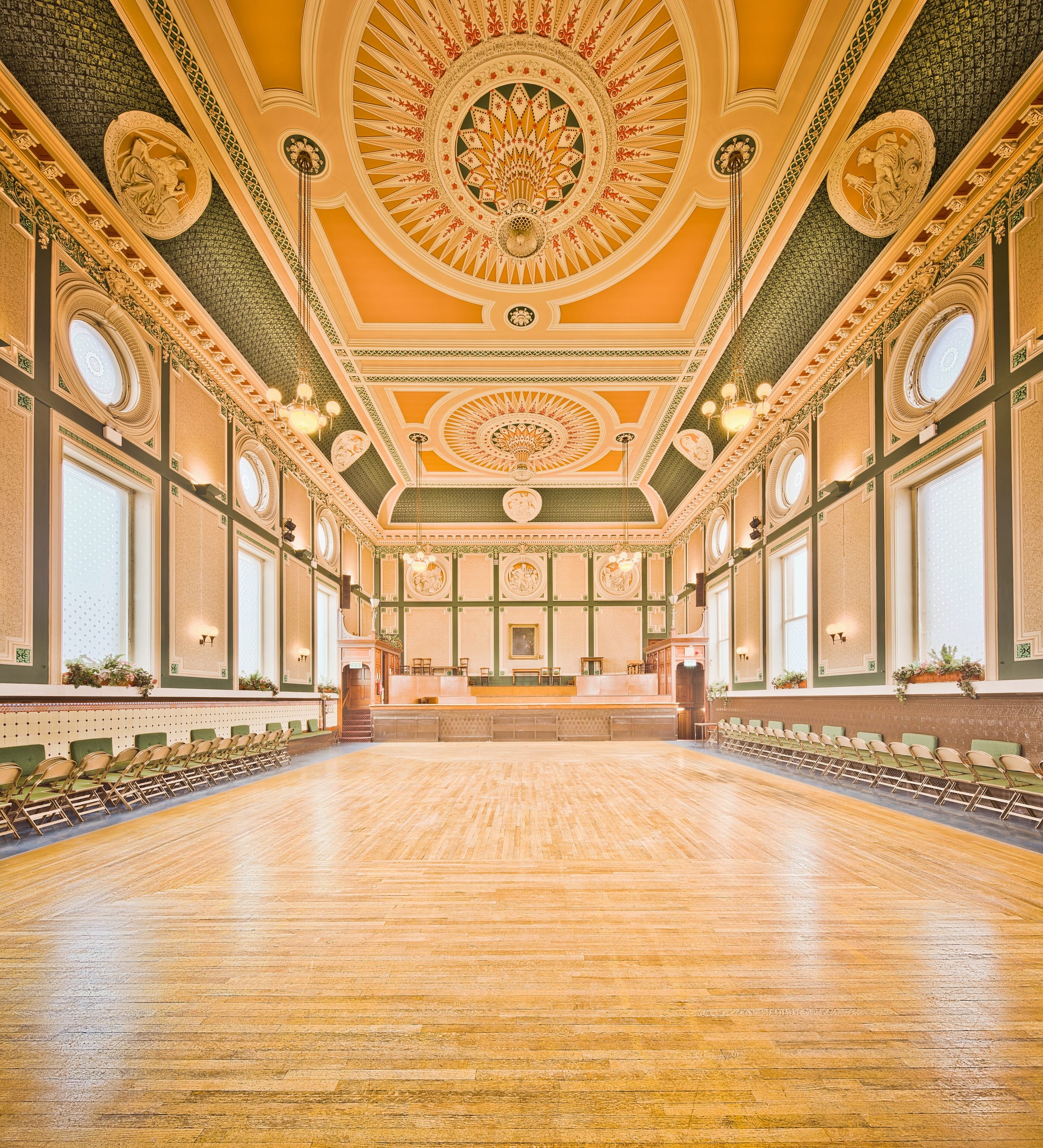
Contexto · Todmorden (West Yorkshire, Inglaterra)
Todmorden Town Hall Interior.jpg · Wikimedia Commons · CC0 · abrir original
Jenny Randles, «A Policeman's Lot» (informe MUFORA/UFOIN del 3 de junio de 1981 y posdata del 11 de junio), Flying Saucer Review 27(2)
Primer informe publicado de la investigación de la Manchester UFO Research Association, con el agente bajo el seudónimo «PC Alan Davies». Narra que el 28 de noviembre de 1980, hacia las 05:15, en Burnley Road (Todmorden), vio un objeto en forma de cúpula de unos 20 pies que giraba a cinco pies del suelo, lo dibujó en su tablilla y notó la calzada «mojada y seca a manchas» debajo, y que de pronto se encontró más adelante sin recordar cómo, oyendo una voz. La posdata calcula unos diez minutos perdidos, recoge la bola de luz que vieron cuatro policías cerca de Halifax a las 04:50 y el aviso de un conserje a las 05:45, y anuncia una regresión hipnótica.
Flying Saucer Review, vol. 27, n.º 2 (1981); copia en archive.org · ver fuente
La noche en cuestión
Hacia las cinco de la madrugada del 28 de noviembre de 1980, el agente Alan Godfrey, de la policía de West Yorkshire, conducía su patrullero por Burnley Road, a la entrada de Todmorden, un pueblo de los Peninos en el norte de Inglaterra. Estaba de servicio, buscando un grupo de vacas que habían sido reportadas como extraviadas esa noche. En la carretera, frente a un conjunto de viviendas sociales, encontró lo que al principio tomó por un autobús atravesado en la vía. Al acercarse, vio que se trataba de un objeto grande y luminoso, de forma romboidal o de trompo achatado (más ancho que alto, de unos cinco metros de ancho y tres o cuatro de alto), suspendido inmóvil a poca altura sobre el asfalto. La mitad inferior parecía rotar, y arbustos y hojas cercanas se agitaban.
Según el primer informe de la investigación, fechado en junio de 1981 y firmado por Jenny Randles, que lo llamaba con el seudónimo de «Alan Davies», el objeto tenía forma de cúpula, con luz fluorescente arriba y una hilera de «ventanas» cuadradas oscuras, unos 20 pies de diámetro, y flotaba a cinco pies del suelo entre dos farolas; los faros del coche se reflejaban en él. Godfrey intentó llamar por radio en VHF y UHF y no obtuvo nada, aunque él mismo advirtió que en la zona hay muchos puntos ciegos para la radio. Sacó su libreta y dibujó un croquis del objeto mientras lo observaba. Entonces (y este es el punto crítico del caso) refirió una discontinuidad: en un instante el objeto ya no estaba y él se encontró conduciendo más adelante en la carretera, sin recordar la transición. Según el informe de 1981, oyó entonces una voz (cree que dentro de su cabeza) que le dijo «You should not be seeing this. It is not for your eyes, Davies. You will forget it» (Davies es el seudónimo del informe); ya no estaba seguro de qué, si algo, había olvidado. El coche estaba en primera y avanzaba despacio. Volvió hacia el pueblo, recogió a un compañero y comprobó que eran las 5:30: su recuerdo consciente cubría unos cuatro minutos desde que salió de la comisaría a las 5:15, de modo que faltaban unos diez. Relatos posteriores añaden una marca en una pierna y una bota rota.
Godfrey informó del incidente a sus superiores, que lo interrogaron esa misma madrugada. Según el informe de 1981, mientras observaba el objeto vio que la calzada, muy mojada por la lluvia, estaba bajo él «mojada y seca a manchas»; las versiones posteriores hablan de un asfalto seco y arremolinado. El mismo informe recoge dos observaciones independientes: a las 4:50, cuatro policías que patrullaban en coche en una ladera sobre Halifax, a unas ocho millas al este, vieron una bola de luz brillante que pasó en silencio sobre ellos, tan baja que se agacharon, y se alejó hacia Todmorden, y lo comunicaron a su base, que registró la llamada a las 4:53; y poco después de las 5:45 el conserje de una escuela situada sobre el lugar del encuentro dijo haber visto una bola de luz blanca azulada subir del suelo y alejarse muy deprisa. Los propios investigadores advirtieron que la coincidencia «no es una confirmación en sentido estricto». El caso fue tomado en serio por sus colegas y se convirtió en uno de los avistamientos policiales británicos más conocidos. Meses después, ante la insistencia de investigadores civiles, Godfrey aceptó someterse a una sesión de regresión hipnótica para intentar recuperar el lapso de memoria. Bajo hipnosis emergió un relato de abducción (una sala, figuras humanoides, un ser y un perro negro), material que el propio entorno investigador, incluidos ufólogos rigurosos como Jenny Randles, trató con cautela explícita: la hipnosis no recupera memoria fiable, tiende a confabular y es altamente sugestionable, de modo que ese contenido se considera de valor probatorio bajo, separado del núcleo del avistamiento en vigilia.
Un segundo hilo enredó el caso en la cultura popular. En junio de 1980, cinco meses antes, el cuerpo de Zygmunt Adamski, un minero polaco de 56 años, había aparecido en lo alto de una pila de carbón en Todmorden tras estar desaparecido cinco días; según el informe del forense que obtuvo el abogado Harry Harris, murió de un ataque al corazón (padecía del corazón), sin señales de violencia, y tenía en el cuello y la cabeza una quemadura causada al parecer por un líquido corrosivo dos días antes, que no contribuyó a la muerte; nadie supo explicar cómo llegó el cuerpo a lo alto de la pila, y la investigación judicial cerró con un veredicto abierto. Godfrey había estado vinculado, como agente, a aspectos de aquel caso. La coincidencia geográfica y temporal hizo que la prensa y la literatura ufológica entrelazaran ambos episodios, aunque no existe ningún vínculo causal establecido entre la muerte de Adamski y el avistamiento de Godfrey: son dos hechos separados que la narrativa fundió.
Por qué importa
El caso Godfrey es un buen ejemplo de un expediente con dos capas de muy distinta calidad probatoria, y de por qué separarlas es la tarea analítica central. La capa fuerte es el avistamiento en vigilia de un testigo institucional (un policía en servicio que informó a sus superiores esa misma madrugada, hizo un croquis en el momento y describió la calzada «mojada y seca a manchas» bajo el objeto), con dos observaciones independientes de una bola de luz esa madrugada. La capa débil es el relato de abducción recuperado bajo hipnosis, una técnica que la propia comunidad investigadora reconoce como generadora de confabulación y no de memoria fiable. Tratar ambas como un solo bloque (sea para creer o para descartar el caso entero) es un error metodológico.
Un único testigo, de madrugada, cansado tras una noche de patrulla, es vulnerable a la mala interpretación de una luz o un fenómeno atmosférico, y el lapso de memoria admite explicaciones prosaicas (microsueño, estrés). Las manchas secas en la calzada, que describe el propio testigo, son sugestivas pero no concluyentes.
Para la metodología, Todmorden ancla dos lecciones: cómo un testigo creíble e institucional eleva el piso de un avistamiento individual, y cómo el material hipnótico debe descontarse explícitamente en lugar de inflar el caso. La fusión cultural con la muerte de Adamski (dos hechos sin vínculo causal demostrado) ilustra además el mecanismo por el cual la narrativa popular crea conexiones que la evidencia no sostiene, un sesgo que hay que señalar y descartar.
Lo que queda en papel
Evidencia documentada
- Relato del agente Alan Godfrey, policía de West Yorkshire, a sus superiores la madrugada del 28 de noviembre de 1980
- Croquis del objeto hecho por Godfrey en el lugar
- Calzada «mojada y seca a manchas» bajo el objeto según el informe de 1981 (seca y arremolinada en versiones posteriores); bola de luz vista 25 minutos antes por cuatro policías cerca de Halifax
- Investigación de los ufólogos Jenny Randles y David Clarke, con tratamiento cauteloso de la regresión hipnótica
- Muerte del minero Zygmunt Adamski por ataque al corazón, con una quemadura corrosiva en la cabeza y veredicto abierto (Todmorden, junio 1980)
Fuentes
- Randles, Jenny — The Pennine UFO Mystery (1983)
- Clarke, David — How UFOs Conquered the World (2015), capítulo sobre casos policiales británicos
- The National Archives (UK) — MoD UFO files — Original (enlace caído): https://www.nationalarchives.gov.uk/ufos/
- We Are the Mutants — Richard McKenna, «The Alan Godfrey Abduction Case, 1980» (2017)
- Jenny Randles, «A Policeman's Lot» (informe MUFORA/UFOIN del 3 jun 1981, con posdata del 11 jun 1981), Flying Saucer Review 27(2), 1981 — Primer informe de la investigación, con el testimonio del agente bajo seudónimo, el lapso de unos diez minutos, la bola de luz vista por cuatro policías cerca de Halifax y el informe del forense sobre Adamski.
Casos relacionados
misma explicación · mismo país · misma época
Robert Taylor · el único OVNI investigado como delito (Escocia, 1979)
1979 · Tier A
mismo país · misma época
Rendlesham Forest
1980 · Tier A
misma explicación · misma época
Dulce · Phil Schneider
1979 · Tier B
misma explicación · misma época
Zanfretta · Torriglia
1978 · Tier B
Actores asociados (1)