Caso Nº 317·Corea del Sur
1976·Seúl (Gangbuk / Cheong Wa Dae)
Corea del Sur.Seúl · la defensa antiaérea dispara sobre la Casa Azul
Al anochecer del 14 de octubre de 1976, miles de habitantes de Seúl vieron más de una decena de objetos luminosos avanzar en formación semicircular sobre la ciudad; cuando el grupo entró en el espacio aéreo prohibido sobre la Casa Azul (Cheong Wa Dae), residencia presidencial, las unidades de defensa antiaérea que rodeaban el centro abrieron fuego. Se dispararon miles de proyectiles; una persona murió y 31 resultaron heridas por la munición que caía. La explicación oficial —un carguero estadounidense que invadió la zona— se contradijo con que ese avión aterrizó intacto en Tokio sin haber sido tiroteado.
Año
1976
Tier
A
Probabilidad
68%
Categoría
Incidente
Evidencia institucional: múltiples testigos verificables o documentación oficial. Tres ejes independientes: el «tier» mide la fuerza de la evidencia; la «probabilidad» estima cuán genuinamente inexplicado está el caso —un fenómeno natural puede seguir sin explicación, así que no equivale a «no-prosaico»—; y la partición de explicaciones (abajo) dice qué fue más plausiblemente. Por eso un caso bien documentado puede tener como causa más plausible un posible fraude, y un Tier B no es, por eso, un fraude.
Documentos primarios · visor
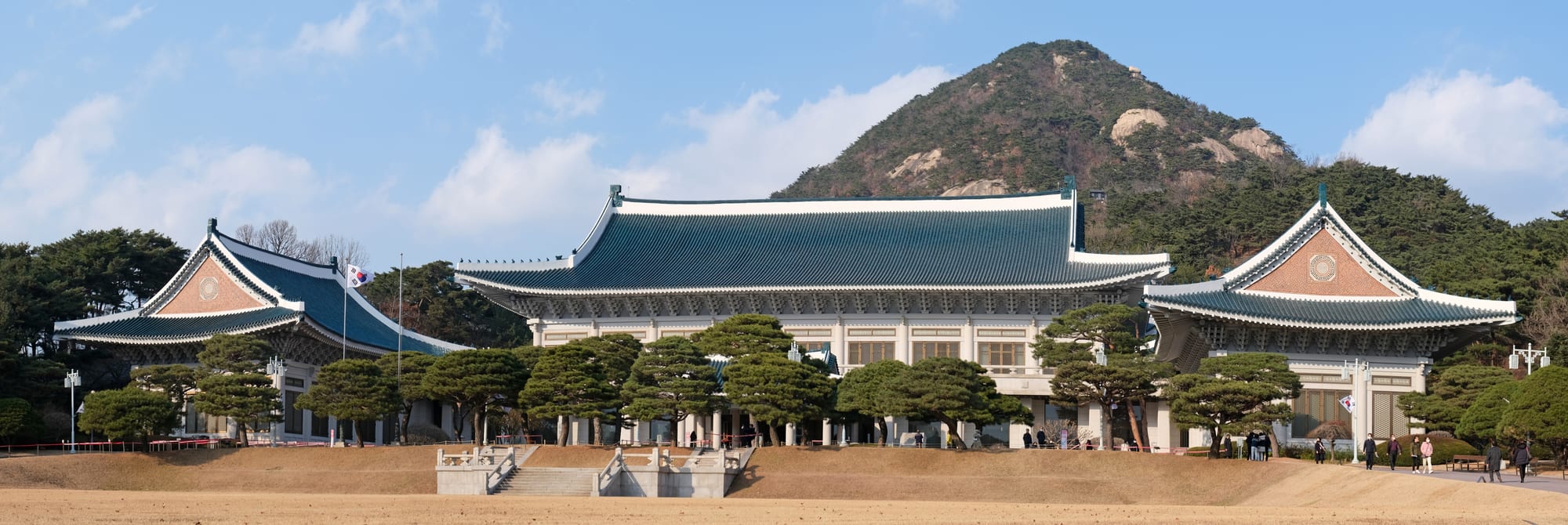
Contexto · la Casa Azul (Cheong Wa Dae), Seúl
Blue House Seoul 3.jpg · Wikimedia Commons · CC BY-SA 4.0 · abrir original
Parte 01
La noche en cuestión
La tarde del 14 de octubre de 1976, entre las seis y las ocho, la penumbra caía sobre Seúl cuando miles de habitantes del área de Gangbuk, al norte del río Han, comenzaron a señalar el cielo. Más de una decena de objetos luminosos —descritos como luces brillantes que se movían a velocidad constante, en una formación semicircular o en cuña— avanzaban lentamente hacia el sur sobre la ciudad. No era un punto aislado ni un reflejo: era un grupo ordenado de luces sobre una capital de varios millones de personas, a plena vista.
La trayectoria llevó a la formación hacia el espacio aéreo prohibido que protege la Casa Azul (Cheong Wa Dae), la residencia y oficina del presidente —entonces Park Chung-hee—, una de las zonas de exclusión más estrictas del país. En 1976 las defensas de Seúl estaban en tensión máxima: apenas dos meses antes, el incidente del hacha en Panmunjom había llevado a la península al borde de la guerra, y los sistemas antiaéreos que anillaban la capital estaban preparados para responder a cualquier intrusión desde el norte. Cuando el grupo de luces penetró la zona restringida, varias baterías abrieron fuego a discreción. Se dispararon miles de proyectiles antiaéreos sobre el cielo de la ciudad. La munición que subía volvía a caer sobre los barrios: una persona murió y treinta y una resultaron heridas por los fragmentos y las balas perdidas —el único episodio UAP conocido en Corea del Sur con víctimas causadas por la propia respuesta militar.
La explicación que se ofreció entonces fue que el «OVNI de la Casa Azul» había sido un avión de carga estadounidense que se había desviado hacia la zona de exclusión, y que el fuego antiaéreo iba dirigido contra él. Pero la versión no cerraba: el carguero al que se atribuyó el incidente aterrizó sin daños en Tokio y nunca había sido tiroteado, de modo que aquello sobre lo que dispararon las baterías de Seúl quedó sin identificar. El caso fue silenciado durante décadas —el país vivía bajo un régimen autoritario con control estricto de la prensa— y solo volvió a la discusión pública cuando el programa de investigación de la MBC «Geuseosi Algo Sipda» (I Want to Know It) le dedicó un especial emitido el 7 de noviembre de 2020, reuniendo testimonios y recortes de la época.
Parte 02
Por qué este caso movió la aguja
Seúl 1976 es el caso que fija a Corea del Sur en el mapa institucional del corpus, y lo hace del modo más contundente posible: no con un avistamiento reportado, sino con un Estado abriendo fuego real sobre el objeto, con muertos. La respuesta militar es, en la lógica de este corpus, la mejor medida de cuán real fue el contacto para el mando que decidió disparar. No se ordena un tiro de barrera antiaérea sobre una capital densamente poblada —con el costo garantizado de munición cayendo sobre los barrios— por un reflejo o un planeta: se ordena cuando el sistema de defensa trata a la formación como un intruso hostil dentro de la zona de exclusión presidencial. La península en octubre de 1976, semanas después del incidente del hacha de Panmunjom, era exactamente el escenario donde una intrusión no identificada se interpretaba como amenaza inminente del norte.
El valor analítico está en el residuo. La narrativa adversaria —una incursión de reconocimiento norcoreana o soviética sobre Seúl— es la primera hipótesis operativa y la que explica la reacción, pero choca con la morfología reportada: una decena de luces en formación semicircular a velocidad constante no corresponde al perfil de una aeronave de combate ni de un dron de la época. Y la explicación oficial —un carguero estadounidense extraviado— se derrumba sola: ese avión aterrizó intacto en Tokio y nunca fue tiroteado, así que la versión que debía cerrar el caso dejó el objeto sin identificar y expuso el patrón de encubrimiento que el corpus rastrea. Seúl 1976 completa además el mapa coreano: el corpus ya tenía a Corea del Norte con Wonsan-Sunchon (guerra de Corea), y ahora incorpora al Sur con su episodio militar mejor documentado, rescatado del silencio de la era autoritaria por el periodismo de investigación cuarenta años después.
Parte 03
Lo que queda en papel
Evidencia documentada
- Avistamiento masivo por miles de habitantes de Seúl (área de Gangbuk) al anochecer: más de una decena de luces en formación semicircular a velocidad constante
- Entrada de la formación en el espacio aéreo prohibido sobre la Casa Azul (Cheong Wa Dae), residencia presidencial
- Fuego real de las baterías de defensa antiaérea que anillaban el centro de Seúl: miles de proyectiles disparados
- Víctimas por la munición que caía: 1 muerto y 31 heridos entre la población civil
- Contexto de tensión máxima (incidente del hacha de Panmunjom, agosto de 1976) que primaba una lectura de intrusión hostil
- Explicación oficial (carguero estadounidense extraviado) contradicha: ese avión aterrizó intacto en Tokio sin haber sido tiroteado
- Recuperación pública del caso en el especial de la MBC «I Want to Know It» (7 de noviembre de 2020)
Fuentes
- MBC — «Geuseosi Algo Sipda» (I Want to Know It), especial del 7 de noviembre de 2020 — Investigación periodística que reúne testimonios y prensa de época del incidente de la Casa Azul
- Prensa surcoreana de octubre de 1976 sobre el fuego antiaéreo en Seúl — Registra los disparos, las víctimas y la explicación oficial del «carguero estadounidense»
- Compilaciones documentales del incidente de la Casa Azul (1976) — Reconstruyen la formación, la zona de exclusión y la contradicción de la versión oficial
Patrones que exhibe (2)
Ubicación
Seúl (Gangbuk / Cheong Wa Dae) · 37.59°, 126.98°
Distribución de explicaciones
Este caso se clasifica entre las hipótesis del modelo: la barra reparte el 100% según cuánto pesa cada explicación (la incertidumbre se reparte entre las hipótesis que el caso apoya). Sumadas en todo el corpus producen la partición comparable. Es una pregunta distinta de la Probabilidad de arriba: aquella estima qué tan probable es que el caso sea un fenómeno genuinamente no explicado; esta reparte cuál sería la explicación.
Hipótesis modal: Misidentificación 51% · suma 100%
Se confundió con: Aeronave
Juicio analítico estructurado, no frecuencia calibrada. Clasificación forzada: la masa que la evidencia no permite asignar se reparte entre las hipótesis que el caso sí apoya.
Casos relacionados