1992–1997·Bonnybridge, Scotland
United Kingdom.Bonnybridge · Falkirk Triangle
Since 1992, the Scottish town of Bonnybridge, in the centre of the so-called 'Falkirk Triangle', concentrated hundreds of reports of lights and objects. Local councillor Billy Buchanan took the matter to government: he wrote to the Prime Minister and the Ministry of Defence and in early 1993 organised a public meeting on the sightings. It is less an incident than a sustained 'hotspot' phenomenon (high volume, low individual evidence quality) and a case study in how a community and its local government process a wave.
Tier B · IndicativeWhat do they mean? →
Limited evidence: a single witness, testimony gathered years later, or an account without contemporary primary documentation.
What it was
74%natural or human cause
Most likely explanation: aircraft
See the split across the six explanations
Natural or human cause
No known cause
Primary documents
File DEFE 24/1963: Ministry of Defence reply on the Bonnybridge wave (13 April 1993)
Letter from Sec(AS)2a, the British Ministry of Defence office that co-ordinated UFO reports, dated 13 April 1993 and filed in DEFE 24/1963. It answers a letter of 29 March: it says the ministry is aware from other researchers of a wave of sightings centred on Bonnybridge but has received no reports from that area; that the US authorities' position is that the Aurora aircraft does not exist; that it cannot suggest any military activity to explain the sightings, other than that the area sees some military jet activity from time to time; and that RPVs fly only in ranges, never near Bonnybridge.
The National Archives (Reino Unido), DEFE 24/1963, pág. 249 del PDF; copia digital en archive.org (BritishUFOFiles) · Open Government Licence v3.0 (Crown copyright, Ministry of Defence) · open original
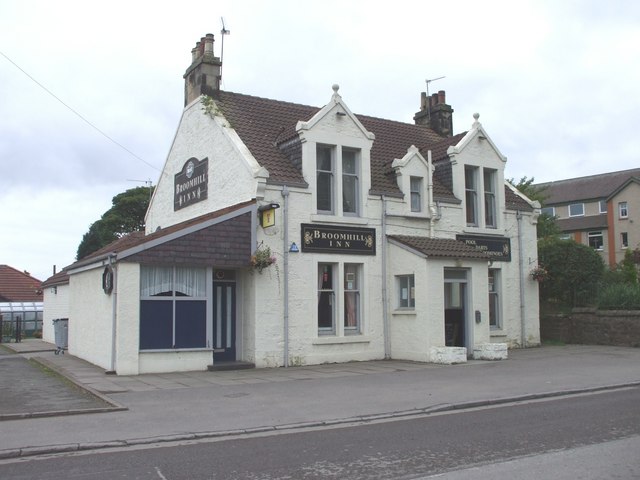
Context · Bonnybridge (Scotland), heart of the 'Falkirk Triangle'
The Broomhill Inn, Bonnybridge - geograph.org.uk - 986712.jpg · Wikimedia Commons · CC BY-SA 2.0 · open original
Strange Phenomena Investigations letter to the Ministry of Defence on the Bonnybridge sightings (29 March 1993), in DEFE 24/1963
Letter from the editor of SPI Enigmas, the magazine of the group Strange Phenomena Investigations, filed in DEFE 24/1963 (p. 250 of the archive.org copy). It asks the ministry for information on a spate of sightings in central Scotland, particularly over Bonnybridge, which it says have been occurring since November 1992 and continue; it says Edinburgh, Glasgow and Cumbernauld airports could not clarify them, and asks whether they could be military exercises, the Aurora aircraft or drone tests over populated areas. It is the letter the ministry answers on 13 April; it is a private letter, not a Crown work.
The National Archives (Reino Unido), DEFE 24/1963; copia digital en archive.org (BritishUFOFiles) · view source
The years in question
From 1992, the small town of Bonnybridge, in the Falkirk district (central Scotland), became one of the most-reported UFO sighting spots in the world. The area was dubbed the 'Falkirk Triangle', an imaginary zone joining Stirling, Cumbernauld and Falkirk, with about 165,000 inhabitants. The public trigger was a series of reports picked up by the local press from 1992, among them that of a man, James Walker, who described a star-shaped object hovering over a road. Over the next five years, to 1997, hundreds of reports of lights, objects and 'craft' accumulated in the district, along with numerous home videos of highly variable quality.
What is distinctive about Bonnybridge is not any single, well-documented incident (there is no Nimitz or Lakenheath here) but the sustained volume and, above all, the local institutional response. Falkirk district councillor Billy (William) Buchanan took up the issue as a banner: he wrote letters to the Prime Minister and the Ministry of Defence asking for an official investigation, and in early 1993 organised a public meeting on the phenomenon at a Bonnybridge hotel. According to the Scottish press of January 1993, residents had already reported at least twenty-two close encounters, and Buchanan said he had been swamped by calls from frightened people who had seen UFOs in the previous two weeks; by late July 1993 he spoke of more than two hundred sightings, and his insistence brought a Japanese television crew to the town. Buchanan has kept the campaign going for decades, demanding that the Scottish and British governments investigate formally. That insistence made Bonnybridge a peculiar case: a mass-sighting phenomenon raised to a local government's agenda and, through it, to the national executive's mailbox.
Evidentially, the body is weak though voluminous. The vast majority of reports are night lights and distant objects without instrumentation, exactly the kind of observation most vulnerable to prosaic explanations: aircraft on approach (the area lies under Edinburgh and Glasgow air-traffic routes), bright planets and stars, satellites, beacons, sky lanterns and, over time, an expectation effect: once a place becomes famous for UFOs, people look up more and reinterpret the ambiguous. The home videos, low-resolution and without reliable metadata, rarely allow these causes to be ruled out. No individual case with the multi-sensor redundancy that characterizes the hard files has emerged from the Bonnybridge reports.
Even so, the case has real value, distinct from that of evidence. Bonnybridge is a natural experiment in the social dynamics of a wave: how a first report amplified by the press generates more reports, how an institutional figure (a councillor) can channel community unease toward the state, and how a 'hotspot' sustains itself for years through a mix of real misidentified phenomena, cultural expectation and, to a lesser extent, possible hoaxes. That campaign ran up against the British MoD's policy of the era: record, not investigate unless defence was implicated. As early as late July 1993 the Scottish ufologist Ron Halliday, a driving force behind the Scottish UFO Report Line, said he was convinced most of the Bonnybridge sightings were down to a ScottishPower helicopter working in the area, and that the affair had become "a bit of a circus". The episode is therefore more interesting as institutional sociology of the phenomenon than as evidence of anything flying over Falkirk.
Why it matters
Bonnybridge matters not for its evidence (high in volume and low in quality) but for what it shows about the dynamics of a 'hotspot' and its institutional processing. It is a case study in how a wave feeds itself: local press, a first report, a councillor (Billy Buchanan) channelling unease toward the Prime Minister and the MoD, and years of low-resolution sightings sustained by cultural expectation. The skeptical reading the press records is that the town lies under the Edinburgh and Glasgow airport flight paths, and this file adds air traffic, celestial bodies, satellites and the effect of looking harder where one already expects to see. Its place is as the counterweight to the 'hard apex' (the radar-visual cases): the example of the pyramid's wide base (much report, little signal) and of how a local government ends up writing to the national executive over a phenomenon no body ever confirmed.
What's left on paper
Documented evidence
- Hundreds of reports of lights and objects in the 'Falkirk Triangle' between 1992 and 1997, collected by the local press.
- Initial 1992 report (James Walker): a star-shaped object over a road.
- Letters from councillor Billy (William) Buchanan to the Prime Minister and the Ministry of Defence requesting an official investigation; public meeting he organised in Bonnybridge in early 1993.
- Numerous low-resolution home videos, without reliable metadata to rule out prosaic causes.
- Location under Edinburgh and Glasgow air-traffic routes, a plausible source of many of the night sightings.
- Scottish press of 1993 (UFO Newsclipping Service): at least 22 close encounters reported in January and more than 200 sightings according to Buchanan in late July; ufologist Ron Halliday put most of them down to a ScottishPower helicopter working in the area
Sources
- The Bonnybridge (or Falkirk) Triangle — UFOs.ac.uk — Synthesis of the phenomenon, the chronology since 1992 and councillor Buchanan's campaign.
- Falkirk Herald — coverage of Bonnybridge councillor Billy Buchanan — Local press on the sustained institutional campaign.
- VICE (Chris McCall) — 'Watching for Aliens in the UFO Capital of Scotland', 4 nov 2014 — Records the skeptical explanation: the town lies under the Edinburgh and Glasgow flight paths and a few miles from Cumbernauld airfield.
- History (UK) — 'Why is a small village in Scotland the UK's UFO hotspot?' — Among the explanations it reviews, secret military training over the Scottish Lowlands.
- UFO Newsclipping Service n.º 282 (enero de 1993) — prensa escocesa sobre Bonnybridge y el concejal Buchanan (archive.org) — Contemporary press: the first twenty-two reported encounters and residents' accounts.
- UFO Newsclipping Service n.º 284 (marzo de 1993) — anuncio de la reunión pública organizada por Buchanan en el Norwood House Hotel (archive.org) — Contemporary press: the public meeting on the sightings organised by councillor Buchanan in Bonnybridge.
- UFO Newsclipping Service n.º 290 (septiembre de 1993) — visita de un equipo de televisión japonés y opinión de Ron Halliday (archive.org) — Contemporary press: Buchanan speaks of more than two hundred sightings; Ron Halliday attributes most of them to a ScottishPower helicopter.
Related cases
same explanation · same country · same period
Howden Moor · rescue operation for a phantom object
1997 · Tier A
same explanation · same country
Operation Mainbrace · NATO Fleet Wave
1952 · Tier A
same explanation · same country
Farnborough · test pilot Hubbard's discs
1950 · Tier B
same explanation · same country
British Scareships · 1909
1909 · Tier B