1986·Capilla del Monte, Córdoba, Argentina
Argentina.Capilla del Monte · Cerro Uritorco
On 9 January 1986, several residents of Capilla del Monte (Córdoba, Argentina) (including an 11-year-old boy, Gabriel Gómez) said they saw a large round craft with windows land beside Cerro Pajarillo. The next day a large scorched elliptical mark over a hundred metres long appeared on the slope. In 2016, a grandson of the hill's owner said the mark had been left by lightning in the previous night's storm and that his grandmother invented the flying saucer to attract tourism. Journalist José de Zer covered it with huge impact; analyses found no soil anomalies or radiation.
Tier B · IndicativeWhat do they mean? →
Limited evidence: a single witness, testimony gathered years later, or an account without contemporary primary documentation.
What it was
60%natural or human cause
Most likely explanation: atmospheric
See the split across the six explanations
Natural or human cause
No known cause
Primary documents
CEFAe (Argentine Air Force) · photos from Capilla del Monte and Cerro Uritorco analysed in the 2015 and 2016 reports
Fuerza Aérea Argentina, CEFAe — informes de 2015 (pp. 1 y 8) y 2016 (pp. 1-3, 6-8, 29-31, 55, 57-58 y 81) · CC BY 4.0 (argentina.gob.ar) · open original
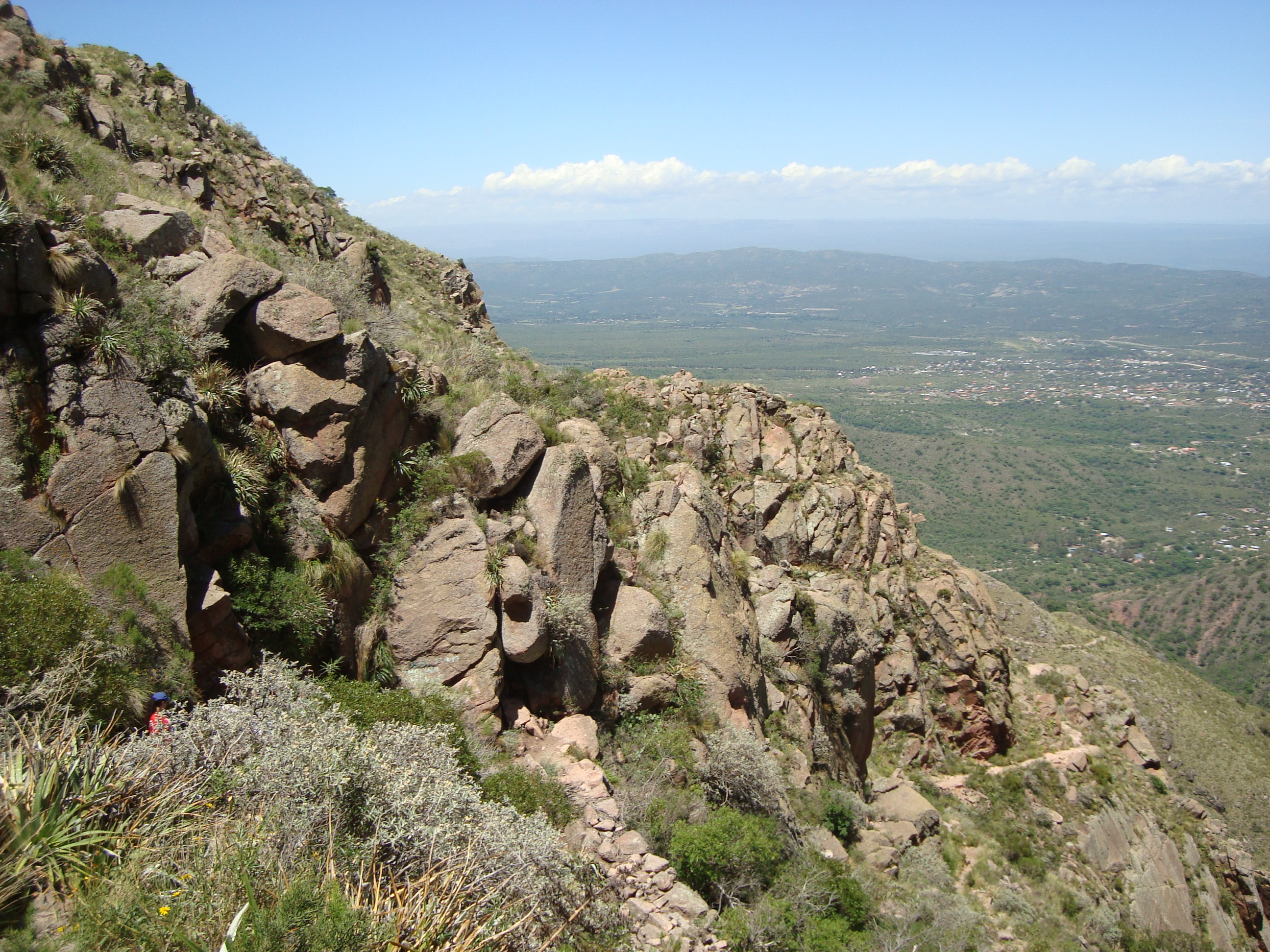
Context · Capilla del Monte (Córdoba, Argentina), at the foot of Cerro Uritorco
Allá.... Capilla del Monte- Córdoba.JPG · Wikimedia Commons · CC BY-SA 4.0 · open original
The night in question
On 9 January 1986, the small town of Capilla del Monte, in the Córdoba hills (Argentina) (at the foot of Cerro Uritorco, which according to Página/12 and Chequeado was little known outside the area until this coverage and later became an esoteric centre) became the epicenter of the country's most famous UFO case. By the account, several residents, including an eleven-year-old boy named Gabriel Gómez, claimed to have seen a large round craft with windows and bright lights land beside Cerro Pajarillo. Gómez described a large, metallic object emitting a strange glow. The report in Tiempo Argentino of 19 January 1986, quoting the municipal government secretary Jorge Suárez, placed the landing at 11 p.m. on the previous Thursday (which would give 16 January, a week after the date the other sources give), near Lomas del Pajarito, some twelve kilometres from the town: a few residents said they followed its movements until it landed about two kilometres from them and, after it took off, saw the low vegetation burning; a nine-year-old boy drew it round, with many windows and bright coloured lights, and others said a nearby willow had changed colour. The mayor, Suárez and a councillor went to the site and verified the burnt grass, in a circle about a hundred metres across.
The element that turned the sighting into a national phenomenon appeared the next day: on the slope a huge elliptical mark was found, dubbed 'la Huella del Pajarillo' (the Pajarillo Imprint), about 115 by 57 metres according to the reconstruction by the Factor blog (other sources give 120 by 70), with the vegetation inside apparently scorched and flattened. The mark, visible and photographable, gave the case an apparent physicality few sightings possess.
The coverage was led by journalist José de Zer, of the Nuevediario program, whose sensationalist on-site reports (with suspense music, night shots and a cameraman nicknamed 'Chango') hypnotized the Argentine audience and catapulted Capilla del Monte to world fame. That same coverage is, however, part of the problem. In July 2002, five years after De Zer's death, his cameraman, Carlos 'Chango' Torres, told journalist Mariano Blejman, in Página/12's Radar supplement, how those reports had been put together. According to Torres, De Zer saw in the local paper a photo of burnt grassland that looked like the imprint of a flying saucer; they went to the site, found the mark and put together 'a little script'. Asked whether they had invented everything, he answered: 'The mark was real. But everything else was pure fiction.' He said they threw dead, dried beetles on the road so that De Zer could announce 'desiccated bugs'; that in some caves a local guide took them to they painted drawings on the ceiling and buried pebbles they had painted as little figures with nail polish, and that De Zer, on camera, presented the drawings as 'strange hieroglyphs' and the pebbles, which he dug up, as extraterrestrial life; that when the news director ordered them to camp on the summit, they sent the guide with three extras to pitch a tent up there while De Zer, never leaving the foot of the hill, narrated as if from the summit and greeted as a 'support plane' a light aircraft Torres had rented in La Falda; and that the pre-dawn lights, filmed from a tent pitched at the back of the hotel, were the road crossing a slope in the Los Terrones countryside. 'We never got to the top of the hill,' he said. The article places the crew's arrival 'at the beginning of 1985' (Chequeado, 'the summer of 1985'); the press of the time and the other testimonies date the mark to January 1986. His confession does not touch the residents' sighting or the origin of the mark, which by his account had already appeared in the newspaper before they arrived. In the same interview he said he never saw an extraterrestrial but believes in them, because 'sometimes we saw inexplicable things', and gave as an example, without placing it at the Uritorco, some 'completely desiccated' trees beside which a tethered dog 'had shrunk and NASA came and took it away'. Back then, when asked, he would insist: 'The lights were the real thing.' He also said the residents, who at first resented them, later 'made fortunes' from the coverage. Investigations of the imprint found no conclusive traces beyond the surface burns: neither anomalous soil composition nor radiation levels above natural variation. The episode cemented Capilla del Monte as Argentina's 'UFO capital', with an annual festival and a tourist industry, but without independent scientific corroboration of the original event.
The most concrete explanation came thirty years later. On March 17, 2016, in a radio interview, Gonzalo Vaquer, grandson of Lilly Arijón, the hill's owner, said that 'it was all an invention of my grandmother', 'a white lie': since a storm had broken the night before, on January 8, lightning had made the mark, and she asked the locals: 'say a flying saucer came, that way more tourism comes'. Historian Fernando Soto Roland and journalist Alejandro Agostinelli, who gathered that testimony, also note that the scrub did not burn 'from the top down', as if something had landed or radiated heat, but had scorched centres and leaves blackened on their undersides, that aerial photos show a V-shaped mark consistent with lightning, and that the Gómez family, whose lights were cited as the sighting, actually pointed to a different hill.
Why it matters
Capilla del Monte matters as the Latin American UFO case with the deepest cultural penetration and as an almost laboratory-grade example of the media's role in constructing a case. It brings together three ingredients which here appear intertwined: a sighting with local witnesses, an apparent physical trace (the scorched imprint) and a media amplifier with its own incentive (José de Zer's television serial). Studying how those three elements interact (and how the third may have contaminated the other two) is exactly the anatomy a high-profile case demands.
The imprint is real as a mark on the ground, and the explanation the sources give is lightning from the January 8 storm, with the flying saucer added afterwards to attract tourism, according to the hill owner's grandson; and, decisively, analyses found nothing anomalous in soil or radiation, whereas a real energetic landing would have left a trace. Of the residents' sighting, Factor records that the Gómez family pointed to a different hill, and that the hill's owner herself, Lilly Arijón, regarded the boy Gabriel Gómez's testimony as 'induced'; the context (at night, under a strong UFO cultural frame) favors misidentification. Capilla del Monte is the reminder that a visible physical trace is not equivalent to anomalous evidence, and that the narrator can be part of the phenomenon he narrates.
Decades later, the Argentine Air Force commission that studies these reports, CEFAe (↗), examined in its annual reports several photos and a video taken in Capilla del Monte and on the Uritorco, and attributed an ordinary cause to all of them. In the 2015 report, the small object Mariana Rodríguez found in a photo of Cerro Uritorco taken on 10 January 2015 was 'compatible with a bird crossing in front of the camera'. The 2016 report, which received 40 cases from across the country and resolved all of them with known causes (16 biological, 15 optical, 4 objects thrown or held by someone, 2 astronomical, 2 aeronautical and 1 satellite), includes four from the area: Gabriel Simchuk's of 23 February 2014, a small oval over the hills that turned out to be a drop of liquid on the lens; the photo taken on 11 October 2008 from the balcony of the 'Las Gemelas' café, whose 'flying wing' shape it attributed to two dirt particles on the lens, lit by the flash and joined to the trails their displacement had left, when none of those present had seen anything outside; Lucía Quiroga's of 20 January 2013, an insect passing in front of the camera; and Mercedes Guerrero's on Cerro Uritorco, on 22 July 2016, in which two different objects poked in from the same edge of the frame in successive photos, one of them very similar to a selfie stick, and which the commission concluded were manufactured articles attached to something or held by someone. The 2018 report attributed a video of 11 April 2018 in Capilla del Monte to the trail of an insect crossing in front of the camera with a long exposure time, and in a photo by Paola Carco from June 2016, with an object 'at the limit of what can be analysed', found a surface compatible with the wing of a white monjita (Xolmis irupero) about to turn. In all seven cases, whoever took the image had seen nothing at the time and found the object afterwards, on reviewing it. None of those reports examines the 1986 mark or sighting.
What's left on paper
Documented evidence
- Testimony of several residents, including the boy Gabriel Gómez (11), of a round craft with windows beside Cerro Pajarillo (9 Jan 1986)
- Tiempo Argentino, 19 January 1986 (translated in UFO Newsclipping Service no. 202): landing at 11 p.m. on a Thursday, seen by a few residents about 2 km away; a nine-year-old boy's drawing; the mayor and the government secretary verified the burnt grass in a circle about 100 m across
- Scorched elliptical mark ('Huella del Pajarillo') of about 115 × 57 m according to Factor (other sources: 120 × 70 m), found the next day
- Analyses with no conclusive traces: no anomalous soil composition or radiation above natural variation
- Testimony of Gonzalo Vaquer, grandson of the hill's owner (radio, March 17, 2016): the mark was made by lightning in the January 8 storm and the flying saucer was 'a white lie' to attract tourism
Show 3 more items
- Intensive media coverage by journalist José de Zer (Nuevediario), with later-questioned methods; Confession of cameraman Carlos 'Chango' Torres to Página/12 (Radar, 28 Jul 2002): 'The mark was real. But everything else was pure fiction'; the Nuevediario crew planted dried beetles on the road, painted drawings in a cave and pebbles with nail polish, filmed three extras on the summit and presented a road's lights at Los Terrones as the night lights; 'We never got to the top of the hill'
- CEFAe (Argentine Air Force) annual reports for 2015, 2016 and 2018: seven photos and videos from Capilla del Monte and Cerro Uritorco (2008-2018), all with an ordinary cause: birds, insects, drops and dirt particles on the lens lit by the flash, and objects held close to the camera
- Cerro Uritorco, little known outside the area before this coverage and later turned into an esoteric and tourist centre; Capilla del Monte cemented as Argentina's 'UFO capital', without independent scientific corroboration of the event
Sources
- The UFO Timeline — 'Capilla del Monte'
- VICE — 'Welcome to the Town Where Everyone Has Seen a UFO'
- Wikipedia — Capilla del Monte
- Factor (Fernando Soto Roland y Alejandro Agostinelli) — '«Una mentira piadosa». La Huella del Pajarillo, entre la meteorología y el fraude', 10 ene 2023 — Records Gonzalo Vaquer's testimony (2016) and the analysis of the mark as the effect of lightning.
- UFO Newsclipping Service n.º 202 (mayo de 1986) — traducción de Tiempo Argentino, Buenos Aires, 19 de enero de 1986 (archive.org) — Contemporary press: the residents' account according to government secretary Jorge Suárez, a nine-year-old boy's drawing and the mayor's verification of the burnt grass.
- Página/12, suplemento Radar — Mariano Blejman, «El equipo de José», 28 jul 2002 — Original interview with cameraman Carlos 'Chango' Torres, who describes how the Nuevediario crew staged the Uritorco coverage; he states that the mark was real.
- Chequeado — Fernando Halperín, «Nuevediario y el mito del Cerro Uritorco», 23 dic 2010 (secundaria) — Reproduces an excerpt of the 2002 Página/12 interview.
- Fuerza Aérea Argentina, CEFAe — Informe de resoluciones, casos 2015 — P. 8: Mariana Rodríguez's photo of Cerro Uritorco (10 Jan 2015), compatible with a bird.
- Fuerza Aérea Argentina, CEFAe — Informe de resoluciones, casos 2016 — Pp. 6-8 (Gabriel Simchuk, 23 Feb 2014, a drop on the lens), 29-31 (Capilla del Monte, 11 Oct 2008, particles on the lens), 55 (Lucía Quiroga, insect), 57-58 (Mercedes Guerrero, objects held close to the camera) and 81 (40 cases received, 40 resolved).
- Fuerza Aérea Argentina, CEFAe — Informe de resoluciones, casos 2018 — P. 20: Capilla del Monte video (11 Apr 2018), an insect trail; pp. 25-27: Paola Carco's photo (Jun 2016), compatible with the wing of a white monjita.
Related cases
Associated actors (1)
