2002·La Pampa and central provinces, Argentina
Argentina.Argentine cattle mutilations
In April 2002, a wave of dead animals with precise 'mutilations' (clean cuts, absence of blood, missing soft organs) shook public opinion in central Argentine provinces, linked by many to UFOs. The animal-health agency SENASA, which had at first spoken of 'intentional' mutilations, concluded in July, with a study by the Universidad Nacional del Centro, that it was natural death followed by scavenging, attributing the pattern to wildlife (including the 'red long-nosed mouse'), an explanation that was heavily debated. It is the Argentine skeptical case par excellence: apparent anomaly vs. natural explanation.
Tier B · IndicativeWhat do they mean? →
Limited evidence: a single witness, testimony gathered years later, or an account without contemporary primary documentation.
What it was
85%natural or human cause
Most likely explanation: natural phenomenon
See the split across the six explanations
Natural or human cause
No known cause
Primary documents
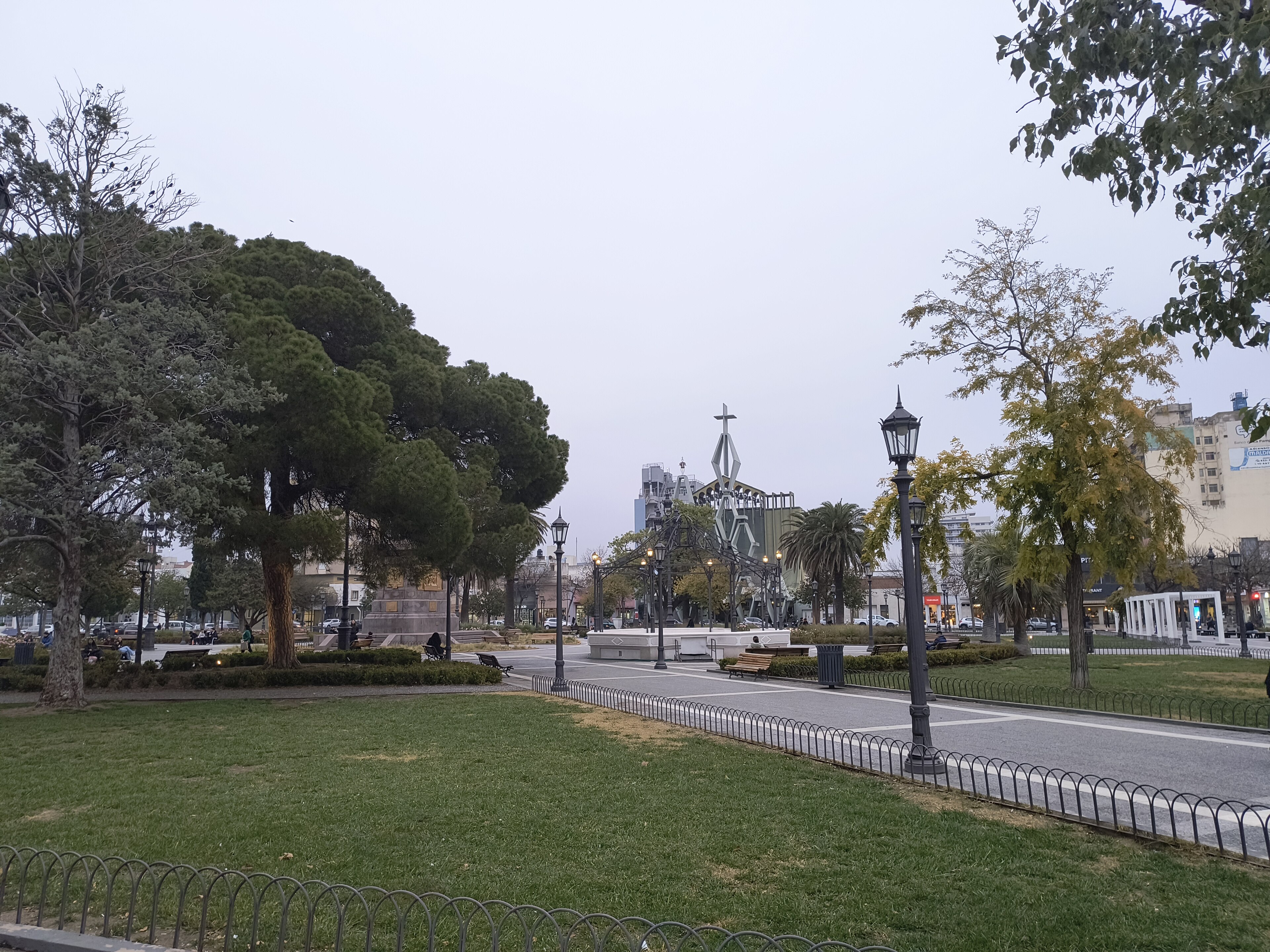
Context · La Pampa province (Argentina)
Plaza San Martín, Santa Rosa, La Pampa, Argentina, 2026.jpg · Wikimedia Commons · CC BY-SA 4.0 · open original
SENASA press release, "Official report regarding injuries and mutilations to bovine carcasses" (1 July 2002), English translation
Full text of the release in which SENASA presented the report it commissioned from the Universidad Nacional del Centro (Tandil), in the translation by Alejandro Agostinelli circulated by Scott Corrales. It says the deaths of 20 animals from Olavarría, Tandil, Tres Arroyos, Coronel Pringles, Coronel Dorrego and Balcarce were due to "natural causes", metabolic or infectious diseases, and that the injuries were made by predators, among them the "red muzzle" rodent (Oxymycterus) and foxes; that there was no radiation, no narcotics and no cauterization; and that freshly dead animals left in the field suffered identical lesions. Copyrighted translation: it is linked.
SENASA (Argentina), traducción del Institute of Hispanic Ufology, vía ufology.patrickgross.org · view source
The night in question
From April 2002, in central Argentine provinces (La Pampa, Buenos Aires, Santa Fe, Córdoba, among others), dead cows appeared (over a hundred cases in more than eight provinces according to Página/12 in July, with cases in Uruguay too) with a striking pattern: clean, precise-looking cuts, a notable absence of blood, and missing soft tissues (eyes, tongue, ears, anus, genitals). The phenomenon, matching the international 'cattle mutilation' pattern known in the United States since the 1970s, caused intense public alarm in the Argentine countryside and was quickly linked to UFOs; some residents also reported strange lights in the affected areas, and national media covered the wave for weeks.
At first, the National Service of Agri-Food Health and Quality (SENASA) said scavengers could not be the cause and that the mutilations were 'intentional': a first study by the Universidad Nacional del Centro (Unicen), on animals dead for five to seven days, had pointed to human action. On 1 July 2002, Unicen and INTA Balcarce presented with SENASA the report the agency had commissioned from the university. According to Página/12, it was based on 30 cows from 15 farms in Olavarría, Tandil, Tres Arroyos, Coronel Pringles, Coronel Dorrego and Balcarce, ten of them dead for less than 48 hours, which allowed clearer necropsies; SENASA's official release of that day speaks of 20 animals studied in those same districts. The verdict was that there was nothing anomalous. The release quotes Unicen's rector, Néstor Auza: the deaths were due to 'natural causes' attributable to metabolic or infectious diseases frequent at that time of year; technical reports from the University of Buenos Aires ruled out radiation and narcotics at the sites, and histological tests showed no cauterisation. According to Unicen's dean of veterinary sciences, Alejandro Soraci, the deaths were due to 'infectious or deficiency diseases or pneumonia', and no narcotics indicating human action were found; afterwards the bodies were attacked by scavengers: foxes, armadillos and others and, famously, a small rodent, the red long-nosed mouse of the genus Oxymycterus. Under the magnifying glass, Soraci said, 'the cuts are irregular and there is no cauterisation', and SENASA's president, Bernardo Cané, added that rodent marks could be seen on the bones. The species had until then been believed to be insectivorous; the episode revealed that, faced with a carcass, it eagerly consumed the soft tissues, leaving edges that putrefaction and dehydration make clean.
To close the causal chain, the Unicen and INTA Balcarce researchers staged a 'mutilation simulation': according to Página/12, they left a freshly dead cow in the field and filmed the scavengers, the mouse among them, eating from it; the release says newly dead, unmutilated animals were placed at selected locations and that the lesions were 'exactly the same' as those on the animals found dead. They also captured mice which, in captivity, devoured cow remains. The explanation was, even so, as debated as the phenomenon: the universities of Río Cuarto and La Pampa were still investigating, doubted the rodent could explain similar cases in other countries and had so far established that the deaths were 'not related to infectious diseases'; Cané himself stressed that the study limited its results to the cases analysed, and Página/12 concluded that for the rest 'many unknowns still remain'. The release, by contrast, quoted Cané as saying that all public agencies concurred in the assessment and mentioned an exchange of information with the veterinary schools of Río Cuarto and General Pico. But the general pattern (soft tissues first, no blood due to post-mortem lividity, 'clean' edges from desiccation) is exactly what forensic veterinary science documents for scavenging worldwide, and is the established scientific explanation for 'cattle mutilations' as a class. The 2002 Argentine case is valuable precisely for that: a massive, media-driven anomaly that, examined methodically, fits a natural process.
Why it matters
The 2002 mutilations are the textbook Argentine skeptical case. They have everything that fuels a wave: scale (hundreds of animals), a disturbing pattern, rural panic, reported lights, and an immediate attribution to UFOs. And they have what few waves achieve: an institutional investigation (SENASA) that reached a concrete, verifiable natural explanation. It does not matter that the explanation was debated in its details; what matters is that the general mechanism, post-mortem scavenging, is the forensic consensus for 'mutilations' worldwide. It is the necessary counterweight: when a massive anomaly is examined methodically, it tends to resolve. Apparent anomaly, documented natural explanation. Argentina's methodological skepticism, represented by investigators such as Heriberto Janosch (CAIRP), converges with that forensic scavenging conclusion. The case also illustrates a key psychological mechanism of waves: a correct perception of a real fact (dead animals with soft tissues consumed) is interpreted through an available cultural template (the extraterrestrial 'mutilation' imported from the United States) and media coverage feeds the panic, multiplying the reported findings. The strength of the Argentine file is not that it proved nothing anomalous was happening, but that it showed the full pattern, when subjected to necropsy, histology and field experiment, resolves without invoking the extraordinary. It is precisely the kind of counterweight needed so as not to confuse the unexplained with the inexplicable.
What's left on paper
Documented evidence
- Over a hundred cases in more than eight provinces (2002) with missing soft tissues and 'surgical'-looking cuts
- Public alarm and attribution to UFOs; reports of strange lights in some areas
- Unicen-INTA-SENASA report (1 Jul 2002), on 30 cows from 15 farms according to Página/12 and 20 animals according to SENASA's release: natural death + scavenging by wildlife (incl. the red long-nosed mouse, Oxymycterus); SENASA had earlier held they were 'intentional'
- The pattern matches the international forensic consensus on 'cattle mutilations' as post-mortem scavenging; the specific attribution was debated
Sources
- SENASA (Argentina), press release “Official report regarding injuries and mutilations to bovine carcasses”, 1 Jul 2002 (English translation by Alejandro Agostinelli circulated by Scott Corrales) — Official conclusion: 20 animals studied, natural death and predator lesions; no radiation, narcotics or cauterisation.
- Visión OVNI — 'Argentina sacudida por mutilaciones de ganado' — Coverage of the phenomenon and the field investigation.
- Página/12 — 'Un sospechoso rojizo y hocicudo' (2 Jul 2002) — Contemporary report on the Unicen and SENASA report, with statements by Bernardo Cané and Alejandro Soraci.
Related cases
Associated actors (1)