1963·Trancas, Tucumán
Argentina.The Trancas Case
On the night of 21 October 1963, the Moreno family reported six luminous objects at their farm in Trancas (Tucumán) which, according to La Gaceta's first report, hovered very low around it for some forty minutes, almost all the time over the railway embankment, while one came to about 30 metres from the gallery of the house; Creighton's compilation speaks of 45 minutes and of one object that never left the tracks.
Read the rest of the summary
A beam of light was directed at the house, and a residue was collected from the site. It has many witnesses and a laboratory analysis of the residue (mostly calcium carbonate). It retains dramatically toned reported elements and never had a formal resolution.
Tier B · IndicativeWhat do they mean? →
Limited evidence: a single witness, testimony gathered years later, or an account without contemporary primary documentation.
What it was
58%natural or human cause
Most likely explanation: human light or activity
See the split across the six explanations
Natural or human cause
No known cause
Primary documents
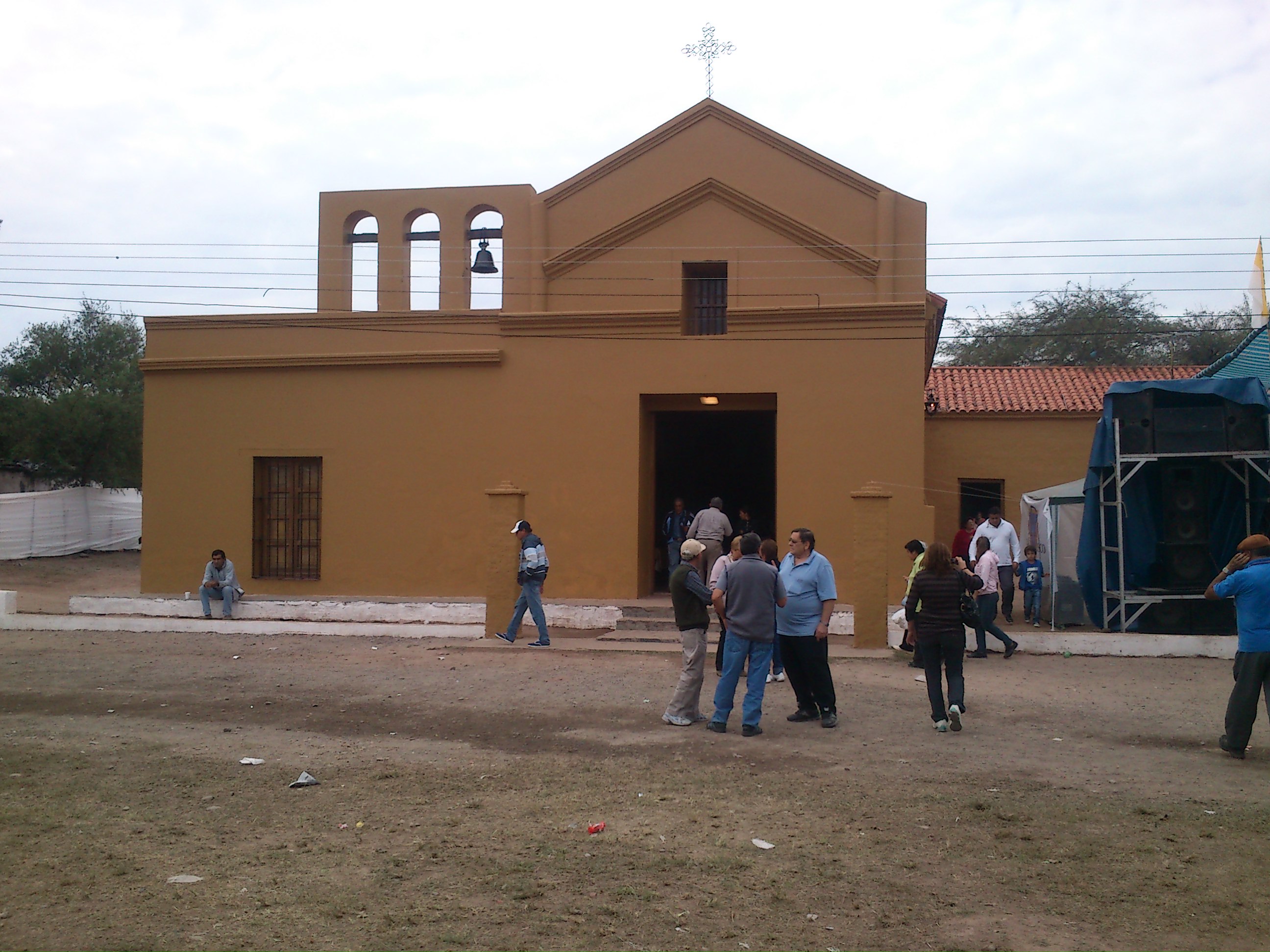
Context · Trancas (Tucumán, Argentina)
Iglesia de Trancas.jpeg · Wikimedia Commons · CC BY-SA 3.0 · open original
La Gaceta (Tucumán), "Strange appearance of a group of 'ufos'" (23 October 1963)
First report of the event, by the paper's special correspondent, datelined Trancas, 22 October, with photos of the house and of the Moreno sisters. It says a "squadron" of six objects hovered very low around the farm for forty minutes; that the maid, Dora Martín Guzmán, aged 15, saw lights on the railway embankment around 21:30, with figures that looked like "a gang of track workers"; that three objects stood in front of the farm and two further north; that one advanced to about 30 metres from the gallery and shone a violet beam that made the women feel hot; and that in the end they moved off toward the Medina hills. Copyrighted clipping: the copy in Agostinelli's dossier is linked.
La Gaceta (Tucumán), copia reproducida en Factor el Blog (Alejandro Agostinelli) · view source
The night in question
On the night of 21 October 1963, at a Moreno family farm in the town of Trancas, Tucumán province (Argentina), the residents (the elderly couple Antonio and Teresa Moreno, three adult daughters, the children of one of them and the domestic worker; the husbands of two of the daughters, army officers, were away) reported the appearance of luminous objects. The chain of events, according to the accounts, began when a teenage domestic worker insisted she saw lights over the embankment of the Belgrano railway, in front of the house, some 200 meters away by some accounts and about 300 yards by Creighton's compilation. The first report, by La Gaceta de Tucumán's correspondent and published on 23 October, says a "squadron" of six objects stayed very low near the farm for some forty minutes, almost all the time over the railway embankment: three in front of the farm and two a little further north, more than a kilometre away; another came to about 30 metres from the main gallery, behind the garden and over the entrance gate, and from the gallery, where the heat had driven them, the women saw in front, over the tracks, three illuminated objects. After forty minutes, the report says, they moved off at low altitude toward the Medina hills. Gordon Creighton's 1966 compilation gives 45 minutes instead and holds that one of the objects stayed over the embankment the whole time and was the first to rise before the rest followed. The people described a beam of light projected toward the house, a penetrating smell, and a sensation of heat and confinement as they sheltered inside. The wire report the Corriere della Sera published on 25 October already summed up the accounts this way: six discs about eight metres across, hovering some 40 minutes a few tens of metres up, with a smell of sulphur, a rise in temperature and two beams, one white and one purplish-red; and it added that the witnesses were "seemingly victims of a collective hallucination". La Gaceta's correspondent had written the opposite: that a collective hallucination was "very improbable given the personality and sensitivity of those involved". According to Creighton's compilation, the maid and one of the daughters, whom he calls Julia Moreno de Colotti, saw by the track "something like a small train, intensely illuminated" with figures moving about it; La Gaceta names her Yolie Moreno de Colotti, Agostinelli's dossier calls her Yolié, and the 1963 report likens those figures to "a gang of track workers". La Gaceta also says that Don Antonio, aged 72, was ill and even so tried to approach the object in the garden, and that his daughter Argentina, Mrs de Chávez, who went after him to bring him back to the house and saw the object from very close, maintains she saw six circular windows of changing brightness; according to Creighton, Don Antonio said he saw silhouettes at the portholes. Gordon Creighton's press compilation also records that some neighbours, José Acosta and the Huanca family, saw the illumination on the embankment from a distance, and that Francisco Tropiano, some two kilometres away, saw six discs cross the sky between 10:15 and 10:20 p.m., the time the siege of the house ended. La Gaceta's report, written the next day, says something more modest: that very few neighbours saw anything and that Tropiano managed to see, after ten o'clock, "the east sector of the place strangely lit", opposite his house. A journalist who came to the house the next day wrote that the abnormal heat and sulphurous smell were still noticeable in the rooms.
The case stood out from other sightings for the number and consistency of the testimonies, the long duration of the phenomenon and, above all, because the next day a residue was collected at the site: small white pellets that crumbled to the touch, found within a radius of nearly 30 meters, and similar material on the railway tracks. At the police's request, Dr. Walter Gonzalo Tell, of the Institute of Chemical Engineering at the National University of Tucumán, analyzed the sample and reported a composition of about 96.48% calcium carbonate and 3.51% potassium carbonate; later analyses (National University of the South) confirmed calcium and potassium carbonates, and small spheres of calcium and magnesium were also reported on the tracks.
Trancas became one of the most famous cases in Argentine and Latin American ufology, cited for its testimonial richness and for the rare fact of having a physical residue analyzed at a university. It should, however, be read with caution. On one hand, the bulk of the account comes from a core of witnesses from one family, under conditions of nighttime fear, and the neighbours only saw lights from a distance; on the other, part of the story grew in later versions with dramatically toned details absent from the initial reports. And the residue's composition (calcium and potassium carbonates) is not in itself exotic: it appears in common organic and mineral materials, so what was deemed striking was its purity, concentration and distribution in that context, not an impossible chemical signature. Decades later, serious investigators of the phenomenon (such as Alejandro Agostinelli) have revisited the case skeptically, noting that its fame exceeds what the file actually supports. In 1988, Roberto Banchs proposed that the family mistook anti-aircraft searchlights and an armoured vehicle wrapped in camouflage smoke during military manoeuvres that were never acknowledged; Agostinelli's dossier notes that the husbands of two of the witnesses were army officers who had left that same night for manoeuvres in the north of the country. Banchs added that the calcium carbonate residue might come from Sperry searchlights. Oscar Galíndez rebutted that reading in 2009: the Salta manoeuvres took place between 24 October and 6 November 1963, after the 21 October event, and were a rural anti-guerrilla operation that used no armour or anti-aircraft searchlights, although the Belgrano railway had been moving troops toward Salta. The case never had a closed, formal explanation.
Why it matters
Trancas matters for a combination uncommon in South American casework: many sustained witnesses, long duration, and a physical residue that reached a university laboratory and was documented in writing. That lifts it above the anecdotal sighting and explains why, sixty years on, it remains the most cited Argentine case inside and outside the country.
But it is, above all, a good exercise in evidentiary discipline, and that is what makes it valuable. The lab datum (calcium and potassium carbonates) sounds impressive until one notes it is not an exotic signature but a mixture found in many ordinary materials; without the original sample preserved under chain of custody, contamination, confusion, or a mundane origin for the dust cannot be ruled out. Add to that the fact that the account accumulated embellishments in later versions and that the core of witnesses was related and frightened. Trancas serves, then, as a teaching case: a genuine classic, with a real testimonial kernel and a serious analytical attempt for its time, to be appreciated for what it has that is documented without letting fame fill the gaps. Strong testimonial anomaly, prudent material conclusion.
What's left on paper
Documented evidence
- Multiple witnesses of the Moreno family (21 Oct 1963): six objects for some forty minutes, mostly over the railway embankment and one about 30 m from the gallery, according to La Gaceta of 23 October; 45 minutes according to Creighton's compilation
- Beam of light directed at the home; marks and residue collected at the site the next day
- Laboratory analysis (Dr. Walter G. Tell, National University of Tucumán): ~96.5% calcium carbonate, ~3.5% potassium carbonate; later confirmed by the National University of the South
- Caveat: the composition is not exotic and the account added dramatic details in later versions; no formal resolution
Sources
- La Gaceta (Tucumán), “Extraña aparición de un grupo de ‘ufos’”, 23 Oct 1963 (clipping reproduced in Agostinelli's dossier) — First press report, by the paper's special correspondent: six objects for some forty minutes, one about 30 metres from the gallery, and what the neighbour Tropiano saw.
- La Gaceta (Tucumán) — 'Caso Trancas: la única testigo viva recuerda los ovnis'
- Agostinelli, A. — 'Dossier: El caso Trancas. ¿Asedio platillista o militar?' (Factor) — Critical analysis of the case.
- «The Argentine: Squadron of flying saucers» (traducción de la crónica del Corriere della Sera del 25 oct 1963), Flying Saucer Review 10(1), enero-febrero 1964, p. 29 — Press of the time: six discs, 40 minutes, smell of sulphur, two light beams, and the mention of a «collective hallucination».
- Gordon Creighton, «Argentina 1963-64, Part II», Flying Saucer Review 12(1), enero-febrero 1966, pp. 23-25 — Compilation of the 1963 Argentine press: the nine occupants of the house, the neighbours Acosta, Huanca and Tropiano, and the collection of materials by the University of Tucumán.
Related cases
same explanation · same country
Bariloche · Flight AR 674
1995 · Tier A
same country · same period
Deception Island · lights over the Antarctic bases (1965)
1965 · Tier A
same explanation · same period
Haynesville · pulsating light and scorched bark
1966 · Tier B
same country · same period
Campo de Mayo · the Gendarmería Cessna's coloured sphere
1972 · Tier A
Associated actors (2)
