Case No. 95·Chile
1997·DGAC, Santiago, Chile
Chile.CEFAA · Chilean DGAC/Air Force committee
After two nights of sightings at Chacalluta airport (Arica) in March 1997, the General Directorate of Civil Aeronautics (DGAC) created CEFAA (Committee for the Study of Anomalous Aerial Phenomena) that year, under Chilean civil aviation. It brings together a multidisciplinary panel (astronomers, physicists, psychologists, aeronautical experts) to analyze FANI reports with a scientific method. Under the direction of General (ret.) Ricardo Bermúdez (2009–2016) it investigated and publicly acknowledged cases such as El Bosque (2010) and the naval helicopter (2014). It completes the quartet of Latin American official commissions alongside CRIDOVNI, OIFAA and CIAE.
Year
1997
Tier
A
Probability
48%
Category
Document
Institutional evidence: multiple verifiable witnesses or official documentation. Three independent axes: the «tier» measures the strength of the evidence; the «probability» estimates how genuinely unexplained the case is —a natural phenomenon can remain unexplained, so it does not equal «non-prosaic»—; and the partition of explanations (below) says what it most plausibly was. So a well-documented case can have a possible hoax as its most plausible cause, and a Tier B is not, for that reason, a hoax.
Primary documents · viewer
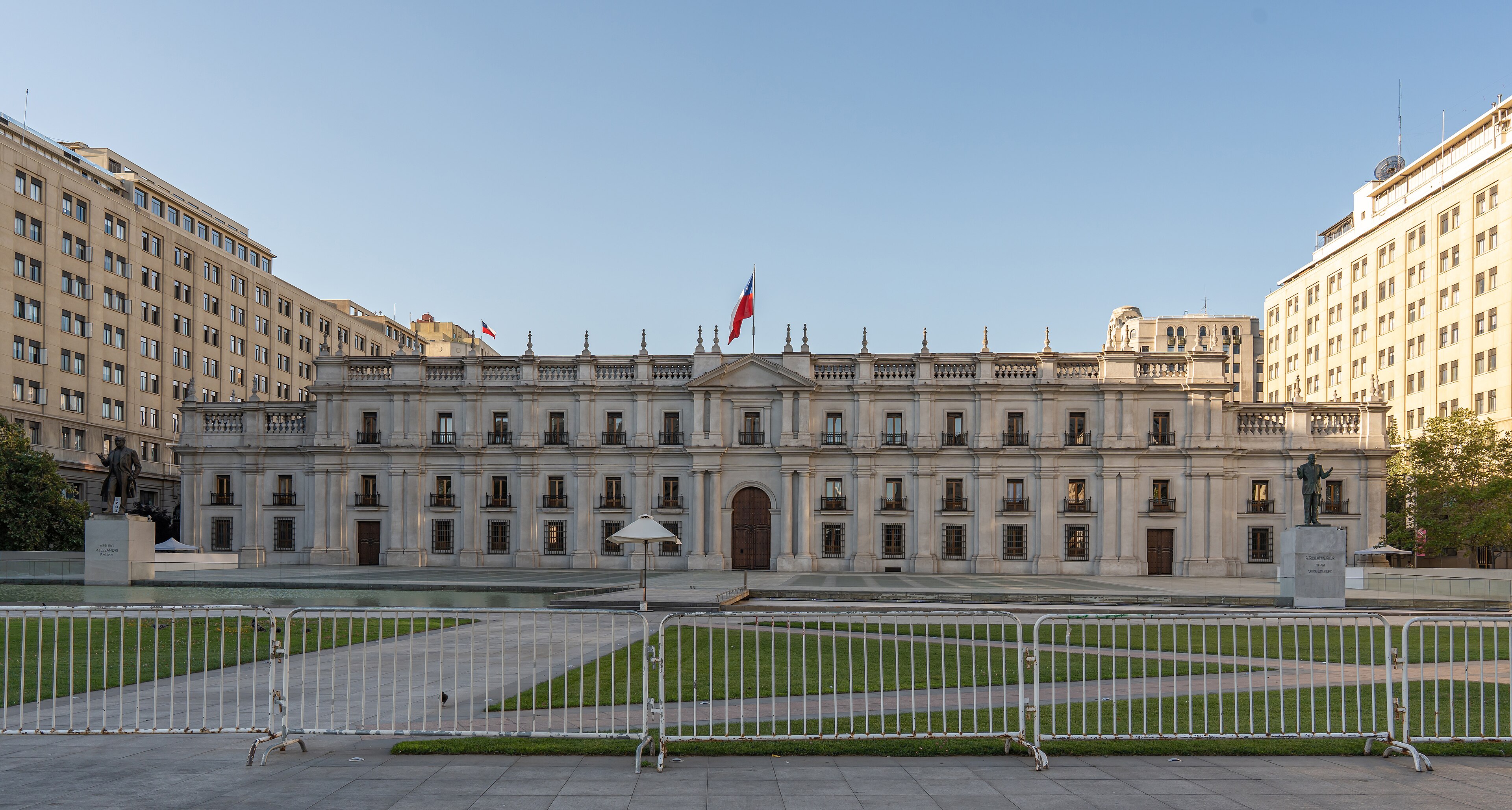
Context · Santiago de Chile, seat of the DGAC and CEFAA
Palacio de la Moneda I.jpg · Wikimedia Commons · CC BY-SA 4.0 · open original
Part 01
The file in question
In late March 1997, controllers and observers of the General Directorate of Civil Aeronautics (DGAC) at Chacalluta airport, in the border city of Arica, witnessed anomalous aerial phenomena over two consecutive nights. The episode —reported by civil-aviation technical staff, not casual witnesses— prompted the creation, that same year, of CEFAA (Committee for the Study of Anomalous Aerial Phenomena), formalized by DGAC resolution. Its mandate: to collect, analyze and study reports of Unidentified Aerial Phenomena (FANI, the nomenclature Chile prefers over 'UFO') occurring in the national territory and airspace.
CEFAA's distinctive feature is its multidisciplinary panel. Rather than relying on a single analyst, it convenes astronomers, physicists, meteorologists, psychologists and aeronautical experts, who assess each case by comparing reports against recorded air traffic, astronomical ephemerides, the prevailing weather conditions and technical analysis of any available images or video. That collegial structure aims to keep the conclusion on a case from depending on the bias of a single evaluator. After an initial period and a phase under other directors, the body was reorganized on 15 December 2009 to report directly to the DGAC Secretary-General, and at that stage the retired Air Force general Ricardo Bermúdez Sanhueza took over its direction, leading it until 2016.
Under Bermúdez's leadership the committee reached its greatest international visibility. It investigated and publicly disclosed two cases that would become reference points: the El Bosque air base case (2010), in which many attendees of a military parade filmed objects over the Santiago sky, and the Navy helicopter case (2014), in which an infrared camera on a naval aircraft recorded an object that, after technical analysis, the committee could not identify. Both were classified as genuinely unidentified after study. That willingness to leave cases open when the evidence does not allow a conventional explanation distinguishes CEFAA from the region's more markedly identificatory bodies. Chilean Army captain and pilot Rodrigo Bravo Garrido, named the Army's representative to the committee in 2009, brought the body an aeronautical-methodological approach and an explicit interest in the formal study of the phenomenon. Over the years the body was renamed SEFAA (Section for the Study of Anomalous Aerial Phenomena), keeping its role within the DGAC.
Part 02
Why this case moved the needle
CEFAA matters because it is the Chilean —and one of the most open— version of the state apparatus before the phenomenon, and it completes the corpus's quartet of Latin American official commissions: CRIDOVNI (Uruguay), OIFAA (Peru) and CIAE (Argentina). That four states in the region have set up formal offices to receive and study reports is itself an institutional datum the corpus records: the phenomenon is handled not only in the U.S. nor only in secrecy, but also in Latin American civil and military windows with differing degrees of openness.
CEFAA's distinctive trait is an uncommon balance: multidisciplinary, scientific rigor —the panel of astronomers, physicists and meteorologists dismisses most reports as conventional objects or effects— but without the identificatory bias that leads to 'resolving everything' by default. When technical analysis falls short, the committee has been willing to publicly acknowledge cases as unidentified, El Bosque and the naval helicopter among them, something uncommon in a civil-aviation body that has institutional incentives to close files. That candor is precisely what makes it useful here. For the corpus, CEFAA is doubly valuable: as an institution that processes the phenomenon methodically and leaves a verifiable documentary trace, and as an explicit counterpoint to the Argentine CIAE. The contrast between the two —two neighboring forces applying comparable scientific criteria yet arriving at different temperatures, the Chilean one more willing to leave open, the Argentine more inclined to identify— is itself a calibration lesson: it shows how much of the final result depends not only on the data, but on the analyst's willingness to tolerate the unresolved.
Part 03
What's left on paper
Documented evidence
- Creation of CEFAA by the DGAC in 1997, after the Chacalluta (Arica) sightings
- Multidisciplinary panel (astronomers, physicists, psychologists, aeronautical experts) with a scientific method
- Reorganization of 15 Dec 2009 under the DGAC Secretary-General; directed by General (ret.) Ricardo Bermúdez (2009–2016)
- Public acknowledgment of unidentified cases: El Bosque (2010) and naval helicopter (2014); later renamed SEFAA
Location
DGAC, Santiago, Chile · -33.39°, -70.79°
Related cases
Associated actors (2)