Case No. 94·Argentina
2011·Argentine Air Force (Buenos Aires)
Argentina.CEFAe / CIAE · Argentine Air Force commission
The Argentine Air Force created CEFAe (Commission for the Study of Aerospace Phenomena) on 6 May 2011 to analyze reports of unidentified aerial phenomena. From 2014, under Commodore (ret.) Rubén Lianza, it adopted a scientific-technical approach and resolved most cases as prosaic phenomena (celestial bodies, drones, reflections, satellites). In 2019 it was reorganized as CIAE (Aerospace Identification Center). It is Argentina's official body, completing the Latin American quartet alongside CRIDOVNI (Uruguay), OIFAA (Peru) and CEFAA (Chile).
Year
2011
Tier
A
Probability
38%
Category
Document
Institutional evidence: multiple verifiable witnesses or official documentation. Three independent axes: the «tier» measures the strength of the evidence; the «probability» estimates how genuinely unexplained the case is —a natural phenomenon can remain unexplained, so it does not equal «non-prosaic»—; and the partition of explanations (below) says what it most plausibly was. So a well-documented case can have a possible hoax as its most plausible cause, and a Tier B is not, for that reason, a hoax.
Primary documents · viewer
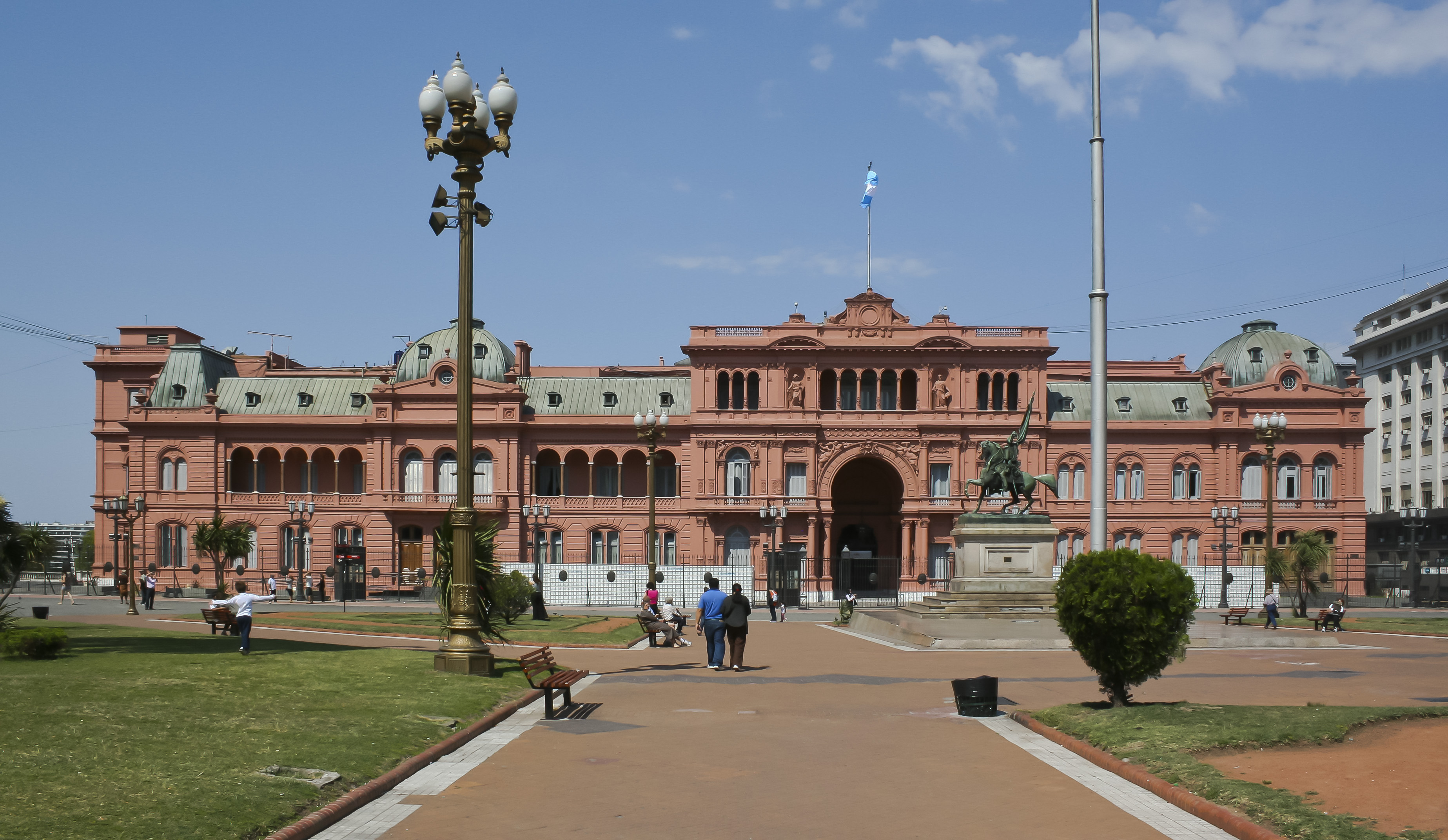
Context · Buenos Aires, seat of the Argentine Air Force (CIAE/CEFAE)
Casa Rosada, Buenos Aires, Argentina.jpg · Wikimedia Commons · CC BY-SA 3.0 · open original
Part 01
The file in question
On 6 May 2011, the Argentine Air Force (FAA) created CEFAe (Commission for the Study of Aerospace Phenomena), a body intended to receive and analyze reports of unidentified aerial phenomena in response to a rise in sightings reported by the public and by aviation professionals. The initiative did not appear out of nowhere: it had precedents going back to the late 1960s, when the Argentine aeronautical intelligence service took an interest in the subject, and to a period of reactivated studies between the late 1970s and the 1980s, partly prompted by episodes such as the fall of space debris in the territory of Entre Ríos. The 2011 creation institutionalized that intermittent concern into a stable official window.
The decisive turn in its methodological identity came around 2014-2015, with the incorporation of Commodore (retired) Rubén Lianza —a career military pilot, retired from the force in 2007 and called back years later to lead the body—, an image-analysis expert. Under his direction, the commission adopted an explicitly scientific-technical method: each report is treated as an identification problem, not as a mystery to be confirmed. The procedure systematically compares photos and videos against astronomy (bright planets, the Moon, conjunctions), air traffic and satellites —including the characteristic Starlink satellite 'trains', a massive source of reports over the past decade—, drones, weather balloons, lens flare, birds, insects and various optical and camera effects. The documented result, repeated in his public interviews, is that the vast majority of cases received end with a verifiable conventional explanation.
On 4 April 2019, through a resolution of the Chief of the Air Force General Staff, CEFAe was reorganized and renamed CIAE (Aerospace Identification Center), raising its institutional level and integrating more closely into the national airspace surveillance and control system; its formal mandate became to organize, coordinate and carry out the investigation and analysis of events of interest in the aerospace, to identify their causes and to report conclusions to the bodies that require them. CIAE is the Argentine equivalent of the region's official offices —Uruguay's CRIDOVNI, Peru's OIFAA and Chile's CEFAA—, but with a distinctive feature of tone: a markedly identificatory profile. Its value for the corpus lies not in confirming anomalies, but in showing how a state processes the phenomenon methodically and, most of the time, defuses it.
Part 02
Why this case moved the needle
CIAE/CEFAe matters because it completes an institutional piece of the corpus: alongside Uruguay's CRIDOVNI, Peru's OIFAA and Chile's CEFAA, it shows that several Latin American states created, across different decades, official offices to receive and study the phenomenon. That regional band of state commissions is itself a relevant datum —it refutes the idea that the subject is handled only in the U.S. or in secrecy—, and the corpus records it as such.
But the Argentine case adds something different from its peers: a deliberately identificatory profile, almost an internal counterpoint. Where Chile's CEFAA has been willing to leave cases open and to acknowledge an 'unidentified' residue, Lianza's leadership has tended to resolve case after case with verifiable technical explanations —Starlink, planets, drones, reflections—, to the point of becoming a regional skeptical reference. That stance is valuable in its own right for a calibrated site: it represents the sober face of the state apparatus before UAP, not the one that confirms craft but the one that shows how much of the phenomenon, examined rigorously, simply dissolves. The contrast with Chile's CEFAA —two neighboring air forces applying scientific method and arriving at different temperatures— is exactly what makes CIAE useful in the corpus: not as proof of anomaly, but as a reminder of how much the final result depends on the analyst's disposition to close a case or leave it open. For a project that tries to separate real anomaly from over-interpretation, having both poles documented is a methodological advantage.
Part 03
What's left on paper
Documented evidence
- Creation of CEFAe by the Argentine Air Force on 6 May 2011 (precedents in 1968 and 1979–1987)
- Scientific-technical approach from 2014 with Commodore (ret.) Rubén Lianza, an image-analysis expert
- Resolution of most reports as prosaic phenomena (celestial bodies, satellites/Starlink, drones, reflections)
- Reorganization as CIAE (Aerospace Identification Center) on 4 April 2019
Location
Argentine Air Force (Buenos Aires) · -34.60°, -58.45°
Related cases
Associated actors (1)