1977·Pampa Lluscuma, Putre (Arica y Parinacota), Chile
Chile.Valdés case
On 25 April 1977, seven conscripts and Corporal Armando Valdés, standing guard at a stable near Putre, saw two lights, one of them an ovoid violet object; no source has explained what they were. Valdés stepped away, reappeared fifteen minutes later as if in a trance, and the story gained a beard and a watch five days ahead. Years later he himself said he had been hiding and watching his men, and that he had not shaved.
Tier A · AcceptableWhat do they mean? →
Institutional evidence: several identified independent witnesses, or contemporary official documentation, without an instrumental record to corroborate them.
What it was
54%natural or human cause
Most likely explanation: possible hoax
See the split across the six explanations
Natural or human cause
No known cause
Read the full reasoning
It does not explain layer (a): no source proposes what the two lights were, and they are known only from an account recorded after Araneda showed the witnesses pictures of saucers 'to help them recognise the shape of the object'.Primary documents
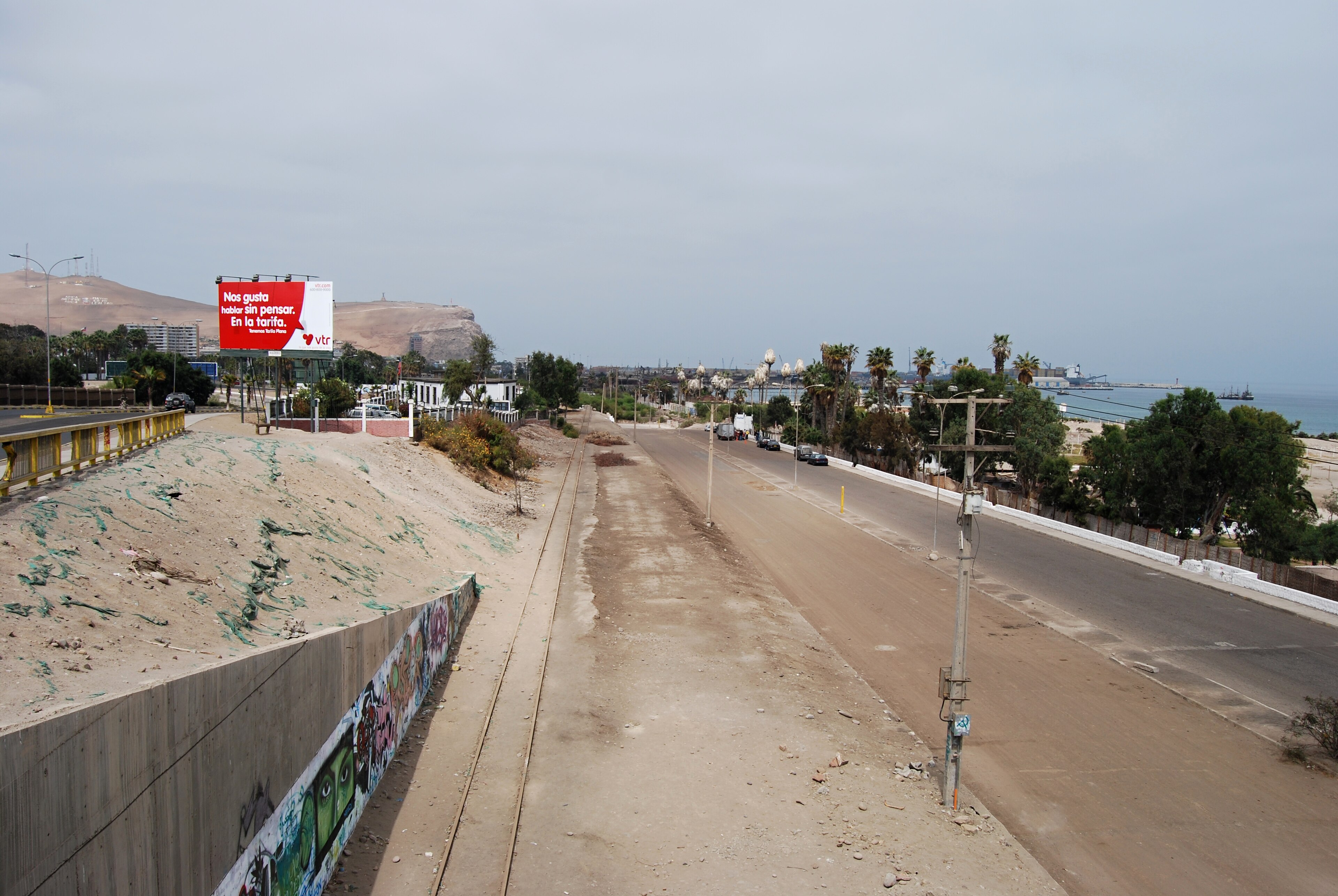
Context · Arica (northern Chile), near Corporal Valdés's sighting at Putre
Arica - Chile - panoramio.jpg · Wikimedia Commons · CC BY 3.0 · open original
Le Provençal, 18 May 1977, p. 22: "Abducted by a UFO for 15 minutes" (facsimile and translation)
Item from the French daily Le Provençal of 18 May 1977, page 22, reproduced in facsimile and translated on Patrick Gross's website: the press version closest to the event that survives online. It credits local Chilean newspapers, which ran the story the previous Monday, with the report that an army corporal was "sequestered" for fifteen minutes by a UFO on 25 April near Putre: a patrol of six soldiers and a corporal saw an intense light less than 500 meters away; Corporal Armando Valdés walked toward it and vanished, then reappeared a quarter of an hour later and collapsed, with a several-day beard and his watch fifteen minutes fast and showing 30 April.
Le Provençal (18 may 1977), en ufology.patrickgross.org · view source
The night in question
In the early hours of 25 April 1977, Second Corporal Armando Valdés Garrido, aged 22 (born 24 December 1954), and seven conscripts of the Huamachuco Regiment (Julio Rojas Suárez, Germán Riquelme Ovalle, Iván Robles Riveros, Humberto Rojas Véliz, Raúl Salinas Vásquez, Juan Reyes and Pedro Rosales Arancibia) were standing guard at a stable in Pampa Lluscuma, about five kilometres from Putre, on the altiplano near the borders with Peru and Bolivia. The press and the Army later spoke of a 'patrol'; according to journalist Patricio Abusleme, the Army delayed the release, 'demanded that what was really a stable guard be dressed up as a military patrol, and asked for the horses to be changed to sheep'. Valdés later said he was not supposed to be there that night: he had been sent as a punishment.
The case has two layers, and they are worth keeping apart. The first is what the whole group saw. Rosales, on guard with Reyes, saw a light come down behind some hills; Valdés first thought of a truck coming down the road or a meteorite, and as it fell, 'the light made an incandescent flash behind the hill'. Shortly afterwards a second object appeared about 500 metres away, ovoid and violet, with two red lights on its sides that Valdés compares to beacons. The horses, more than three hundred, bolted, and the group, unarmed according to NCO Antonio Flores, huddled together to pray. No source proposes an explanation for that second object: Valdés maintains that the phenomenon existed, says he still has no answer for those lights and adds that they 'have more of the human than of the outside about them'. This layer does not arrive clean either: the only record of that night is the collective account that teacher Pedro Araneda recorded hours later, and according to Alejandro Agostinelli, Araneda showed the soldiers pictures of flying saucers 'to help them recognise the shape of the object'.
The second layer is the one that made the case famous. Valdés stepped away from the group and his companions lost sight of him for about fifteen minutes; when he reappeared he collapsed, seemed to be in a trance and said: 'You will never know who we are or where we come from, but we will return soon'. At six in the morning he went to fetch NCO Antonio Flores in Putre and told him: 'It seems I fell asleep, and when the conscripts woke me it was chaos'; according to Flores, he did not mention having disappeared: 'The soldiers said that'. That same afternoon Araneda, a UFO enthusiast, recorded the only group interview with the soldiers, and in that collective account the beard of several days and the watch calendar showing 30 April emerged; it was Araneda who linked the beard and the watch to a 'time distortion'. According to the newspaper El Día, the Army tasked a Corporal Roca that same 25 April with interviewing all the conscripts to look for contradictions, and he found none; that file, described as 'secret', has not been published. The story ran in La Estrella de Arica in mid-May and from there spread worldwide; on Canal 13 in 1977, Valdés said he had shaved and that the watch was digital.
Over the years, Valdés wavered. In 1999, on TVN's De Pé a Pá, he said: 'I feel I went through the portal'. In 2002 he told Las Últimas Noticias: 'I was never abducted!'. In 2007, to Agostinelli and Diego Zúñiga, he said that during those fifteen minutes he had been watching the conscripts through gaps in the wall, that he had stepped away to urinate, and that he then came down from a stone wall, 'which is where they see me jump from', when he heard them talk of shooting: 'I was always watching them, always listening to them… They were more hallucinated than I was'. About the beard he said: 'I was not shaved'. About the watch, that it had hands and was not digital, and that after handing it in at headquarters he never even claimed it back; it was never studied or photographed. In an interview in early 2009 he called it 'a joke or histrionics born of stress', but in the interview he gave Iker Jiménez for Cuarto Milenio, aired in 2008 or 2009 depending on the source, he confirmed the original version of the disappearance and the amnesia; at the 2nd Maipú UFO Meeting in 2013 he said again that he had never been abducted. At the same time he holds that the soldiers 'do not lie': they lost sight of him and told what they believed they saw. One conscript had already hinted in Araneda's recording that the corporal had gone to urinate, and Flores said in 1999 that the soldiers thought the same at the time.
No source consulted records that the others have retracted, and almost none has spoken. In 2002 none of them agreed to meet Valdés. The only one willing to talk, Raúl Salinas, mixes his memories with later additions (a humanoid half lizard, an extraterrestrial he calls Amalia) and says the conscripts want nothing to do with Valdés because he 'has profited from a story he knows through us'. Iván Robles, who died in 2016, always refused an interview. Researcher Rodrigo Fuenzalida (AION) said in 2013 that 'the statement of the rest of the squad is more urgent than ever'.
Why it matters
The Valdés case is worth studying for the distance between its two layers, and for how little in either is firm. The one that made it famous (the disappearance, the phrase, the beard and the watch) now has an explanation from its own protagonist: he was hiding and watching his men, came down from a stone wall, had not shaved, and the watch was never examined. No conspiracy is needed: the conscripts told in good faith what they saw, and a UFO enthusiast gave them the 'time distortion' frame within hours. But that confession is not stable (Valdés gave it and withdrew it several times) and those who knew him read it in opposite ways. Psychologist Carlos Domínguez sees a histrionic scene born of an anxiety crisis ('everyone was under suggestion'); Flores recalls that his classmates had him 'pegged as a showman' and sums up: 'He could perfectly well have been faking. But it did not seem so to me'; the psychiatrist who saw him at the Military Hospital, Raúl Molina, says: 'I do not recall him faking'; and Patricio Abusleme 'does not rule out that Valdés's new version turns out to be an alibi', while holding that his lapses 'show that his shock was real'.
The other layer, the lights, has no explanation in any source, but it does not arrive clean either: the only record of that night is a collective account recorded hours later by an amateur ufologist who showed the witnesses pictures of saucers to help them recognise the shape, and Valdés himself believes those lights 'have more of the human than of the outside about them'. His first impression (a truck or a meteorite) referred only to the first light. There is no sensor record, the Army's file has not been published, and the 1977 press (La Estrella de Arica, El Mercurio) could not be consulted directly: what is known of it comes through the investigations of Abusleme and Agostinelli.
What's left on paper
Documented evidence
- Stable guard of seven Huamachuco Regiment conscripts and Corporal Valdés at Pampa Lluscuma (Putre), 25 Apr 1977; the Army presented it as a 'patrol' (Abusleme)
- Layer (a): the whole group saw two lights; the second, an ovoid violet object about 500 m away with two red lights on its sides; the horses bolted. No source proposes an explanation; Valdés's first impression of the first light: a truck coming down the road or a meteorite; Valdés on the red lights of the second object: they 'have more of the human than of the outside about them'
- Layer (b): a disappearance of about 15 minutes, a trance and the phrase 'You will never know who we are…'; the beard and the watch emerge in the group interview Pedro Araneda recorded that afternoon; Araneda, a UFO enthusiast, showed the soldiers pictures of flying saucers 'to help them recognise the shape of the object' and linked the beard and watch to a 'time distortion' (Agostinelli); The watch was never studied or photographed
- Valdés, 2007: he watched the soldiers through gaps in the wall and then came down from a stone wall, 'which is where they see me jump from'; 'They were more hallucinated than I was'; 'I was not shaved'; the watch had hands and he never claimed it back; Valdés, 1999: 'I feel I went through the portal'; 2002: 'I was never abducted!'; 2009: 'it was a joke or histrionics born of stress', yet on Cuarto Milenio (2009) he confirmed the original version; 2013 (Maipú and TVN): never abducted; the soldiers 'do not lie'
- One conscript hinted in the 1977 recording that the corporal had gone to urinate; NCO Flores (1999): the soldiers thought the same at the time; At 6 a.m. Valdés told Flores: 'It seems I fell asleep'; according to Flores he did not mention the disappearance: 'The soldiers said that'; Flores: 'He could perfectly well have been faking. But it did not seem so to me'; Abusleme does not rule out that the new version is 'an alibi' and holds that Valdés's lapses 'show that his shock was real'
Show 2 more items
- Seen at the Psychiatry section of the Military Hospital; his doctor, Raúl Molina: 'I do not recall him faking'
- The other conscripts: none agreed to meet Valdés in 2002; Raúl Salinas, the only one who talks, adds later elements; no source records a retraction; El Día (2013): the Army tasked a Corporal Roca on 25 April with interviewing all the conscripts; he found no contradictions; the file has not been published
Sources
- CEFAA / DGAC Chile — Comité de Estudios de Fenómenos Aéreos Anómalos — Official Chilean body created in 1997; institutional reference, not a contemporary source for the 1977 case.
- Caso Cabo Valdés — Wikipedia (ES) — Secondary source (encyclopedia). The quotes from Las Últimas Noticias (2002) and from the early-2009 interview come from it and have not been checked in their original.
- 24horas / TVN — 'Cabo Valdés: nunca fue abducido' (2013) — Interview in which Valdés denies the account.
- Agostinelli, Alejandro and Zúñiga, Diego — 'La “abducción” del cabo Valdés 40 años después', Factor 302.4 (25 Apr 2017; 2007 interview) — Interview with Valdés with audio, statements by Flores, Salinas and psychiatrist Molina, and Araneda's role. Source of the confession and of the lights layer.
- Diario El Día (La Serena) — 'Abducción del Cabo Valdés, el misterio sigue vivo' (24 Feb 2013) — Valdés's version at the 2nd Maipú UFO Meeting and Rodrigo Fuenzalida's (AION) reaction.
- Abusleme, Patricio — La noche de los centinelas (Terra Incógnita, 2011) — The most thorough journalistic investigation of the case; not consulted directly, cited through Agostinelli.
Related cases
same explanation · same country · same period
Friendship Island · Chilean contactee case
1984 · Tier B
same explanation · same period
Council Bluffs (molten metal)
1977 · Tier A
same explanation · same period
Gallarta · the La Florida landings
1977 · Tier B
same explanation · same period
The Allagash Abductions
1976 · Tier B
Associated actors (5)


