1977–1978·Colares, Pará
Brazil.Colares (Operação Prato)
In 1977 and 1978, residents of Colares and other municipalities in Pará reported night lights that fired beams at people, the so-called 'chupa-chupa'. The Brazilian Air Force's I Regional Air Command investigated in Operação Prato: it logged more than a hundred observations, many by its own team, and recorded burn-like injuries; the local doctor found no anaemia and the mission report closed without a conclusion. The documents passed to the National Archives from 2007.
Tier S · SolidWhat do they mean? →
Strong evidence: a contemporary instrumental record (radar, sensor, film or photo of known provenance) that corroborates several independent witnesses.
What it was
61%no known cause
The evidence is not enough to decide between the explanations
See the split across the six explanations
No known cause
Natural or human cause
Quote in the original language
«Os moradores confundiram os satélites artificiais existentes na região e os meteoritos que riscam os céus, com naves extraterrenas»Primary documents
I COMAR, 'Registro de Observações de OVNI' (Operation Prato): cover and first entries, with sketches and maps (extract, 14 of 160 pp.)
Arquivo Nacional (Brasil), ARX.0.0.184 · Public official document (Arquivo Nacional; Law 9.610, art. 8, IV) · open original
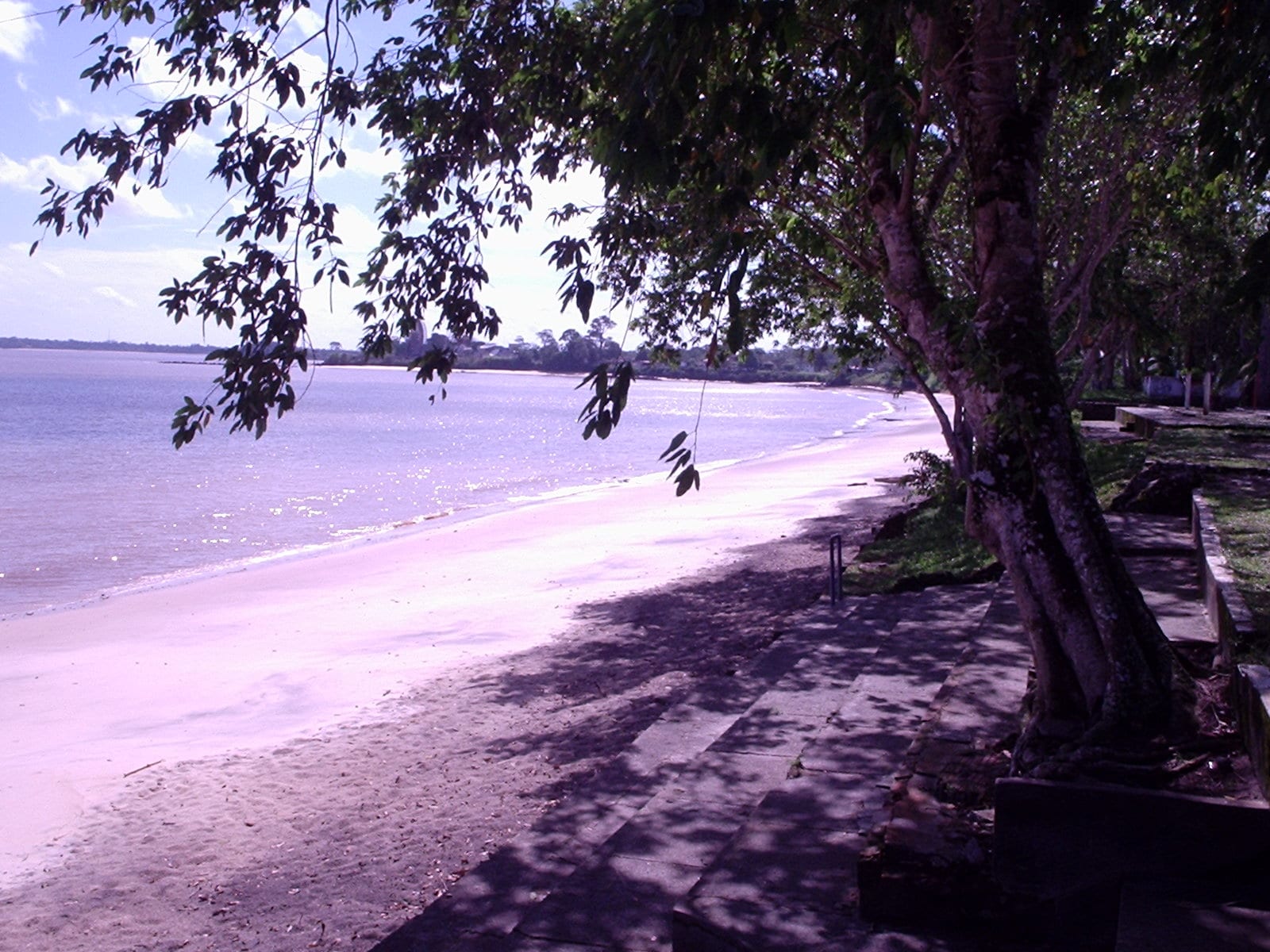
Context · the Pará coast (Brazil), region of Operação Prato in Colares
Ilha de Mosqueiro (Mosqueiro Island) - Belém - Pará - Brazil.jpg · Wikimedia Commons · Public domain · open original
The years in question
From late August 1977 and throughout 1978, residents of Colares island and of coastal municipalities in the State of Pará, in the Brazilian Amazon, reported night-time incidents with luminous objects that emitted beams of light aimed at people. Locals called them 'chupa-chupa', because they believed the beam drew blood or energy from the victims. The Operação Prato mission report (ACE 3252/83) records the cases seen by Dr Wellaide Cecim Carvalho, aged 24, in charge of the Colares health unit: she told the team she had seen four patients with paresis, headache, asthenia, dizziness and tremors, all with first-degree burns and marks of small perforations, on the neck in men and on the breast in the single case of a woman; she added that she had observed no changes indicating anaemia and did not believe the victims had been 'sucked', though she accepted they might have been struck by a beam of light of unknown nature. She herself appears in the Air Force register as a witness to a metallic cylindrical object over the town on 16 October 1977.
Faced with the panic, the I Regional Air Command (I COMAR), based in Belém, sent its intelligence section under Captain Uyrangê Hollanda. The team interviewed witnesses, examined injuries and watched the sky at night. The report describes, among others, the case of Claudomira Rodrigues da Paixão, who on 18 October felt a light moving over her body and settling on her left breast, where the forensic institute's examination recorded a light burn, and that of Raimundo Galvão Trindade, with an oval mark of about 20 by 12 centimetres on his thigh that looked like a burn. The I COMAR 'Registro de Observações', held at the National Archives, numbers more than a hundred sightings between 2 September 1977 and November 1978, with sketches, maps and photographs annexed to several entries, captioned with place, date, time, altitude, distance, exposure, camera and, in some, film stock; its pages are stamped 'Confidencial': dozens were observed by the team itself, by Hollanda or by the unit's sergeants, mostly distant lights crossing the sky, some at low altitude. Two civilian witnesses in the register said they had been hit by a beam of light, with paralysis or numbness lasting days.
The command's public response was prosaic: on 5 November 1977 Lieutenant Colonel Camilo, an assistant officer on the investigation, told A Província do Pará that residents were mistaking artificial satellites and meteors for craft and that the physical reactions were due to fear. The closing comments of the mission report, dated November 1977, state that no satisfactory conclusion had been reached, blame the press for spreading panic and describe a climate of hysteria in a poor and isolated population. The documents stayed classified; in 2005 the Air Force showed part of them to ufologists and from 2007 it handed them to the National Archives. Captain Hollanda, by then a retired colonel, gave a long interview in 1997 in which he defended the reality of what had been observed and spoke of hundreds of photographs and filmed footage; he took his own life that same year, and there is no evidence of a causal link with his experience. Part of the material he described has not appeared in the public holdings.
Why it matters
Colares brings together three elements: a wave of reports with injuries described by a doctor and by a military team, an Air Force field investigation that left a day-by-day register of more than a hundred observations, many made by its own officers and sergeants, and the later release of those papers. Trained military personnel logged for months lights they could not identify; the register describes them with dates, times, headings and sketches.
The limits of what can be verified must be marked. First, the victim figures in circulation (hundreds, even deaths) are local and journalistic estimates; in the primary record the doctor speaks of four patients with mild burns, and the team describes a few more named cases. Second, the anaemia often cited as proof was denied by the doctor herself in 1977: she said explicitly that she had observed no anaemic changes. Third, the Air Force did not close the operation claiming to have found an unknown technology: its spokesman attributed the sightings to satellites and meteors and the reactions to fear, and the mission report ended without a conclusion and with a diagnosis of mass hysteria, fed by the press, in a poor and isolated community. That reading explains the wave of reports and some of the symptoms well, and most entries in the register are distant lights compatible with satellites, meteors, stars or aircraft; what it does not easily explain are the burn-like injuries documented by the team and the low-altitude lights observed by the soldiers themselves. There is no favourable official conclusion; what exists is that contemporaneous field documentation, now public. The ufologist Marco Antônio Petit, who interviewed Hollanda in 1997, was among those who pushed for the opening of Brazil's military archives.
What's left on paper
Documented evidence
- I COMAR 'Registro de Observações' (National Archives, ARX.0.0.184, 160 pp.): more than a hundred sightings between September 1977 and November 1978, with sketches and photographs, many by the military team itself
- Photographs annexed by the team itself: entry 024 (Colares, 5 Nov 1977, 18:26; observers: 'Equipe do A2/I COMAR', with angles measured by theodolite) annexes 'Cópia de 05 (cinco) fotografias', captioned with a Minolta SRT 101 camera, Rokkor 100/200 mm zoom and RE-2475 1000 ASA film (pp. 28-29); entry 041 (Baía do Sol, 22 Nov 1977, 05:18) annexes photographs taken with a 'Yaschica Eletro TLS 35' and a 400 mm lens (pp. 48 and 51)
- Operação Prato mission report (ACE 3252/83): Dr Wellaide Cecim Carvalho describes four patients with first-degree burns and small perforations, and denies seeing anaemia
- Burn-like injuries examined by the team (Claudomira Rodrigues da Paixão, Raimundo Galvão Trindade)
- Statement by Lieutenant Colonel Camilo (5 Nov 1977): satellites, meteors and fear reactions; the report closes without a conclusion and speaks of mass hysteria
- Interview with Captain Uyrangê Hollanda (1997)
Sources
- Brazilian National Archives — I COMAR 'Registro de Observações' nos. 001-150 (Sep 1977 - Nov 1978), file ARX.0.0.184, 160 pp. — The Brazilian Air Force's register from Operation Prato, with sketches and photographs; the first entry is dated 2 Sep 1977 at Santo Antônio do Tauá.
- Brazilian National Archives — institutional portal; Operação Prato holdings transferred by the Air Force from 2007 — The Arquivo Nacional migrated to the gov.br portal; the historical arquivonacional.gov.br URL has returned 404 since September 2026.
- Pacaccini, D. — Operação Prato (documental, 2003) — Documentary; later journalistic reconstruction, a secondary source.
- Stratton, K. & Powell, R. — Colares UAP Event (SCU 2022)
- Fernandes, P. S. de P. and Barbosa, M. C., 'O pavor do desconhecido na Amazônia: os relatórios militares e os sobreviventes do fenômeno chupa-chupa', Revista Brasileira de História da Mídia 11(1), 2022 (copy on archive.org) — Academic article reproducing pages of the Operação Prato mission report (ACE 3252/83), including Dr Carvalho's statement, and quoting Lieutenant Colonel Camilo's November 1977 statement.
Referenced by 1 case
Related cases
same explanation · same period
Petrozavodsk (USSR)
1977 · Tier A
same explanation · same period
Canary Islands
1976 · Tier A
same explanation · same period
Morocco · wave + Royal Gendarmerie (US cables)
1976 · Tier A
same explanation · same period
Canary Islands · the luminous bell of 5 March 1979
1979 · Tier S
Associated actors (2)