Case No. 145·China
1979·Wuhan University, Hubei province · founding site
China.China · civil-academic UFO research society (1979)
On September 20, 1979, students and academics at Wuhan University established the 'China UFO Enthusiasts' Liaison Office' — the first organized Chinese structure dedicated to the study of the UAP phenomenon. In May 1980 it was rebranded as the 'China UFO Research Association' and in February 1981 it began publishing the 'Journal of UFO Research'. The Chinese National Academy of Social Sciences provided moderate institutional support. Its most internationally visible president was Sun Shi Li, a former Chinese diplomat in Mexico and Beijing professor. It is the corpus's oldest Chinese institutional piece and the only non-Western structure in the communist bloc with continuous decades-long academic periodical publication.
Year
1979
Tier
A
Probability
70%
Category
Document
Institutional evidence: multiple verifiable witnesses or official documentation. Three independent axes: the «tier» measures the strength of the evidence; the «probability» estimates how genuinely unexplained the case is —a natural phenomenon can remain unexplained, so it does not equal «non-prosaic»—; and the partition of explanations (below) says what it most plausibly was. So a well-documented case can have a possible hoax as its most plausible cause, and a Tier B is not, for that reason, a hoax.
Primary documents · viewer
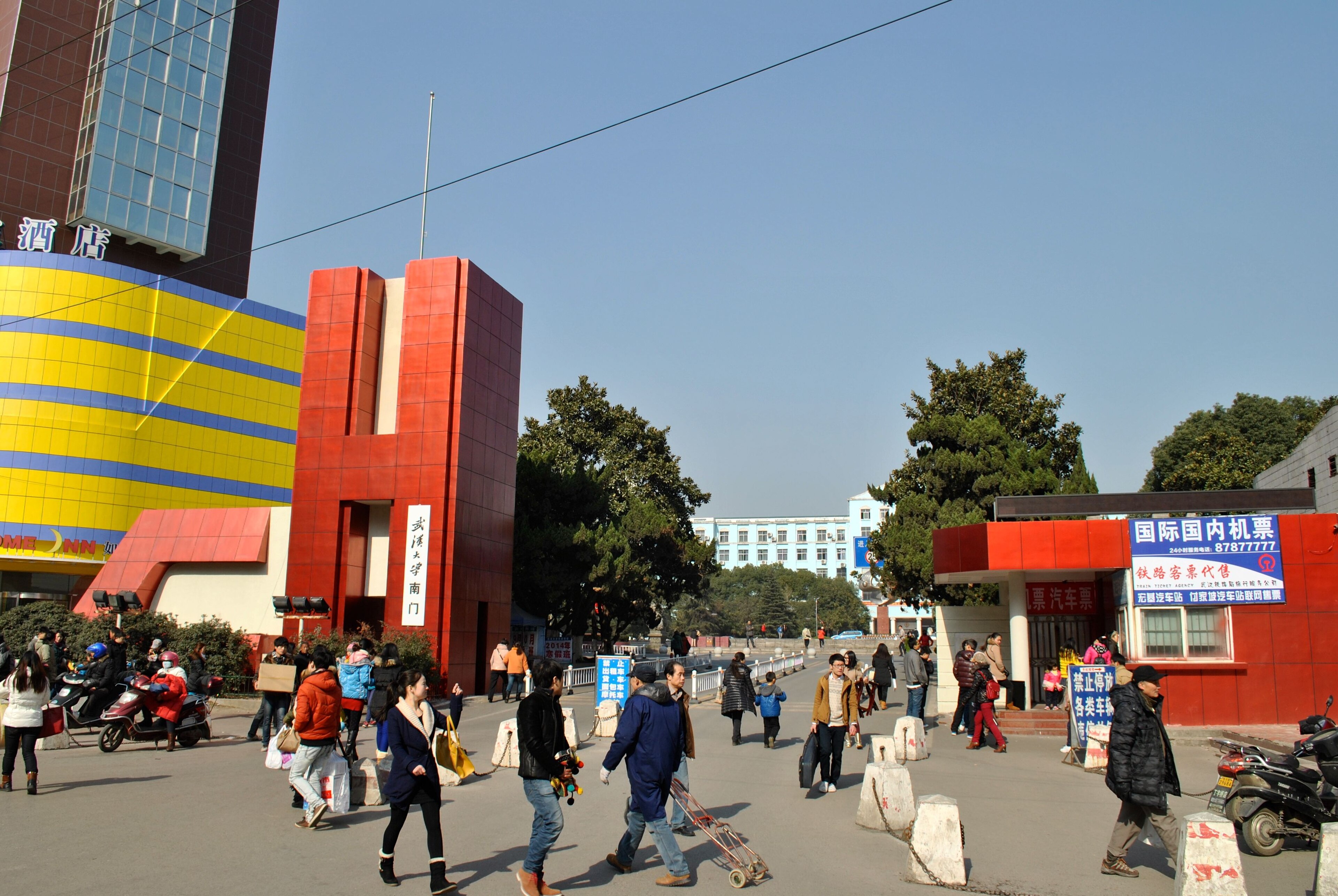
Context · Wuhan University, founding seat of Chinese UFO research
Wuhan University Gate Info Campus 2014.jpg · Wikimedia Commons · CC BY-SA 3.0 · open original
Part 01
The file in question
On September 20, 1979, a group of students and academics at Wuhan University (Hubei province) formally established the 'China UFO Enthusiasts' Liaison Office' (中国UFO爱好者联络站, Zhōngguó UFO Àihàozhě Liánluòzhàn). It was the first organized structure in the People's Republic of China dedicated to the study of the UAP phenomenon, in a post-Mao political context of early liberalization under Deng Xiaoping's first reforms. The founding nucleus was composed of physics, astronomy and philosophy-of-science students drawn by Chinese television coverage of Soviet UAP events (including Petrozavodsk 1977) and by the Chinese translation of Western ufology literature.
In May 1980, the organization was renamed 'China UFO Research Association' (中国UFO研究会, Zhōngguó UFO Yánjiūhuì) and moved its national coordination to Beijing, with moderate institutional support from the Chinese National Academy of Social Sciences (CASS). In February 1981 it began publishing the quarterly 'Journal of UFO Research' (飞碟探索杂志, Fēidié Tànsuǒ Zázhì) — the first Chinese-language periodical academic UAP publication, with print runs reaching 400,000 copies in the 1980s (China's best-selling science magazine of that period). The journal not only introduced the Chinese public to sightings documented in Western countries but also reported alleged sightings within China, functioning as a channel for dissemination and cataloging during the country's opening to international scientific exchange. By the mid-1980s the association had grown to more than 40 branch organizations across the country and counted thousands of members, a scale of civil mobilization without equivalent in the communist bloc.
Its most internationally visible president was Sun Shi Li (孙式立), Beijing professor and former Chinese diplomat at the People's Republic embassy in Mexico City (1980s). Sun Shi Li translated into Chinese the book 'Priests or Astronauts?' by the Spanish writer Andreas Faber-Kaiser and in 1980 gave an inaugural UAP lecture at the Beijing Astronomical Association attended by some hundred people — a modest number but culturally significant in a China where the topic was entirely new. The organization survived the decades of reforms and, although it has changed formal names several times and operates with a lower profile since the 2000s under stricter state regulation, it remains the oldest continuous Chinese institutional piece of organized UAP research.
Part 02
Why this case moved the needle
It is the corpus's institutional anchor piece for the People's Republic of China and closes a critical geographic gap: until now the only Chinese corpus case was Hangzhou 2010 (Tier B, airport closure). Its importance is threefold. First, geographic-cultural: it documents that organized attention to the UAP phenomenon in China precedes the modern Western disclosure cycle by decades and arises from the civil academic community, not the military apparatus — an origin distinct from SETKA (USSR) or AAWSAP (U.S.). Second, editorial: the 'China UFO Research Association' is the only 20th-century communist-bloc institutional actor that produced sustained periodical academic publication (1981 → present), with a circulation peak that made it China's best-selling science magazine of the 1980s. Third, geopolitical: the existence of a Chinese civil-academic structure with moderate state institutional tolerance contrasts with the dominant military pattern of the other major powers and shows an institutional asymmetry informative for calibrating any hypothesis about 'the state and the UAP phenomenon'. Tier A and not Tier S because the archive coverage is academic-civil, not state-military — institutional quality is real but structurally minor relative to SETKA or Project Blue Book.
Part 03
What's left on paper
Documented evidence
- Documented founding on September 20, 1979 at Wuhan University as 'China UFO Enthusiasts' Liaison Office'
- Renamed in May 1980 as 'China UFO Research Association' with national coordination in Beijing
- Moderate institutional support from the Chinese National Academy of Social Sciences (CASS)
- Quarterly 'Journal of UFO Research' (飞碟探索杂志) periodical publication started February 1981 — first Chinese-language academic UAP magazine
- Circulation peak ~400,000 copies in the 1980s, making it China's best-selling science magazine of that period
- Internationally visible presidency of Sun Shi Li, Beijing professor and former Chinese diplomat in Mexico City
- Operational continuity for four decades with formal name changes and a lower profile since the 2000s under stricter state regulation
Sources
- Encyclopedia.com — 'China and UFO Research' — Encyclopedic synthesis of the institutional trajectory.
- UFO Evidence — 'UFOs Behind the Great Wall: A report on the state of UFOlogy in China' — Primary document on the organization.
- Open Minds — 'Interview with China's leading UFO expert, Dr. Sun Shili' — Interview with the international president, with biographical detail.
- Enigma Labs — 'China's UAP Research Associations' — Institutional mapping of the Chinese associations.
- Made in China Journal — 'On UFOlogy with Chinese Characteristics and the Fate of Chinese Socialism' (2020) — Contextual academic analysis of the organized Chinese phenomenon.
Patterns it exhibits (2)
Location
Wuhan University, Hubei province · founding site · 30.54°, 114.37°
Related cases