Case No. 127·Denmark
2009·Denmark (Royal Air Force; Bornholm radar stations)
Denmark.Denmark · declassified Air Force UFO files
In 2009, the Royal Danish Air Force declassified and opened its UFO files to the public: 329 pages of reports (1978–2002) handed to the SUFOI association, with over 200 unresolved sightings out of ~15,000 reports accumulated over three decades. The official reason: 'there was nothing secret in the files.' Among the cases: a luminous triangular object north of Bornholm during the NATO Mainbrace exercise (1952) and unexplained radar echoes over the Baltic (1956). Denmark's first record: the value is the institutional declassification, framed honestly that most were explained.
Year
2009
Tier
A
Probability
45%
Category
Document
Institutional evidence: multiple verifiable witnesses or official documentation. Three independent axes: the «tier» measures the strength of the evidence; the «probability» estimates how genuinely unexplained the case is —a natural phenomenon can remain unexplained, so it does not equal «non-prosaic»—; and the partition of explanations (below) says what it most plausibly was. So a well-documented case can have a possible hoax as its most plausible cause, and a Tier B is not, for that reason, a hoax.
Primary documents · viewer
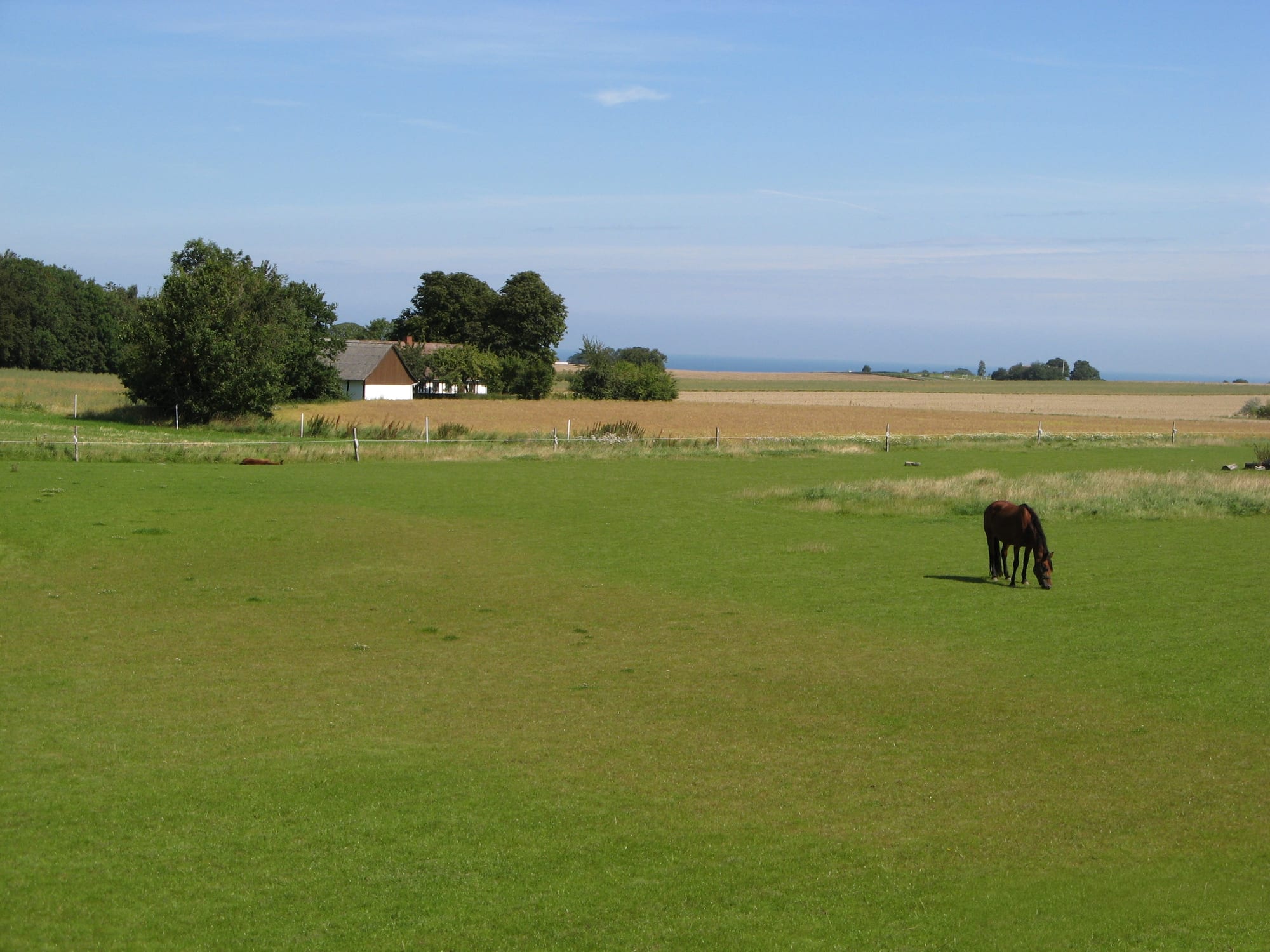
Context · Bornholm (Denmark), site of the Air Force radar stations
Bornholm agricultural landscape - panoramio.jpg · Wikimedia Commons · CC BY 3.0 · open original
Part 01
The file in question
In February 2009, the Royal Danish Air Force declassified the UFO files it had compiled over about three decades and made them available to the public. The core handed to the civilian association SUFOI (Scandinavian UFO Information) consisted of 329 pages of reports from the 1978–2002 period, part of a larger collection documenting around 15,000 reported sightings; more than 200 were classified as unresolved. The official justification was terse: the authorities considered that 'there was nothing secret in the files.'
The files include cases dating back to the 1950s. Two stand out for their institutional profile and their Danish geographic anchor, around the Baltic island of Bornholm: during the NATO naval exercise Operation Mainbrace, in September 1952, a luminous triangular object was reported north of Bornholm; and in 1956 radar stations on the island recorded unidentified echoes over the Baltic. The rest of the collection is a typical sample —many sightings were resolved as aircraft, weather phenomena and the like.
The corpus framing is deliberately balanced. What anchors Denmark is not an extraordinary phenomenon but the institutional chain: a national air force that for thirty years systematically logged reports, preserved them and finally opened them to a civilian association without withholding secrecy. Honesty requires noting that the Air Force itself explained most as mundane; the case's value is documentary transparency, not the elevation of the phenomenon to an anomaly.
Part 02
Why this case moved the needle
Denmark's first record and a clean example of institutional transparency: a national air force that logged on the order of 15,000 reports over three decades and fully opened its archive in 2009, handing it to a civilian association with the terse formula that 'there was nothing secret in the files.' That phrase, far from an anticlimax, is part of the value: it directly contradicts the total-cover-up narrative, showing that at least one Western air force could open its files without any state secret collapsing.
The case serves a rare and necessary statistical function within the corpus. The great majority of the ~15,000 Danish reports resolved as aircraft, weather phenomena, celestial bodies and similar confusions; only more than 200 were left unresolved. That proportion —a residue of a few percentage points over a complete national universe, not curated by enthusiasts— is exactly the baseline the misidentification hypothesis needs to be taken seriously: most UAP 'noise' is indeed mundane, and an honest system demonstrates it. That the few persistent cases (the triangular object north of Bornholm during the NATO Mainbrace exercise in 1952, the radar echoes over the Baltic in 1956) were not closed does not make them anomalous, but it does mark the size of the residue.
Alongside Brazil's National Archives and other national records, Denmark reinforces the corpus thesis that open military UAP documentation is not an exclusively American phenomenon but a replicable practice. It is included with deliberate honesty: what is weighed here is not an extraordinary sighting but the institutional chain —three decades of systematic logging, preservation and opening without withholding secrecy—. Its value is transparency, not anomaly, and the corpus treats it as such. For a small Baltic NATO member with no programmatic stake in promoting the phenomenon, the simple fact of opening everything —rather than quietly destroying or indefinitely retaining the files— is the analytically meaningful behavior the corpus records.
Part 03
What's left on paper
Documented evidence
- 2009: the Royal Danish Air Force declassified its UFO files; 329 pages (1978–2002) handed to SUFOI.
- ~15,000 reported sightings accumulated over three decades; over 200 classified as unresolved.
- Notable cases: triangular object north of Bornholm in the NATO Mainbrace exercise (1952); unexplained radar echoes over the Baltic (1956).
- Honest framing: the Air Force explained most as aircraft/weather; the value is transparency, not anomaly.
Patterns it exhibits (1)
Location
Denmark (Royal Air Force; Bornholm radar stations) · 55.14°, 14.92°
Related cases