2025·Sensitive government test installation — Western U.S. (link only through the official index; location redacted, approximate coordinates)
United States.FBI UAP still images · A series (linked by the official index to a Western U.S. test range, 2025)
The 'A series' is eight still images (A1–A8) from a reticle-equipped sensor that the FBI submitted to AARO, declassified in the first PURSUE tranche (May 8, 2026). The official captions say date and location 'have not been provided', yet war.gov's index dates them to 'Late 2025' and pairs them with the FBI-302 interview of the USPER case, linked to orb encounters at a test installation in the Western U.S. in 2025. They show, over arid terrain, a small rounded object by the reticle: dark in seven, light with a specular highlight in A7. The operator could not identify it; there is no published AARO resolution.
Tier B · IndicativeWhat do they mean? →
Limited evidence: a single witness, testimony gathered years later, or an account without contemporary primary documentation.
What it was
60%natural or human cause
Most likely an ordinary cause that no one has identified
See the split across the six explanations
Natural or human cause
No known cause
Read the full reasoning
The absence of a published analysis is not evidence against an ordinary cause: AARO's 2024 report finalized 'all 174 cases' as 'resolved to prosaic objects including balloons, birds, UAS, satellites, and aircraft', though 'many other cases remain unresolved'.Primary documents
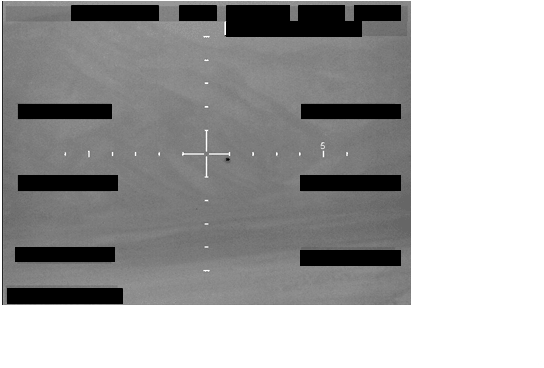
FBI Photo A001 — UAP still from a government system (date and location not provided)
FBI · AARO (PURSUE Release 01) · Public domain · US Government work · open original
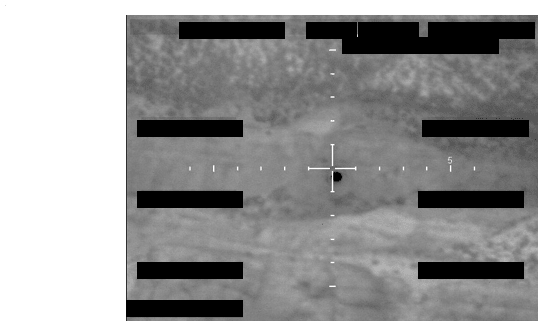
FBI Photo A002 — UAP still from a government system (date and location not provided)
FBI · AARO (PURSUE Release 01) · Public domain · US Government work · open original
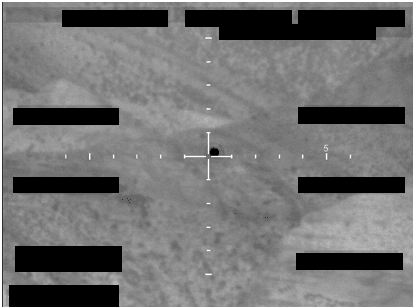
FBI Photo A003 — UAP still from a government system (date and location not provided)
FBI · AARO (PURSUE Release 01) · Public domain · US Government work · open original
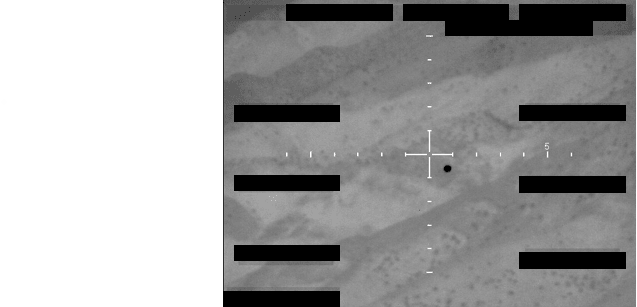
FBI Photo A004 — UAP still from a government system (date and location not provided)
FBI · AARO (PURSUE Release 01) · Public domain · US Government work · open original
Show the other 30 documents
FBI Photo A005 — UAP still from a government system (date and location not provided)
FBI · AARO (PURSUE Release 01) · Public domain · US Government work · open document
FBI Photo A006 — UAP still from a government system (date and location not provided)
FBI · AARO (PURSUE Release 01) · Public domain · US Government work · open document
FBI Photo A007 — UAP still from a government system (date and location not provided)
FBI · AARO (PURSUE Release 01) · Public domain · US Government work · open document
FBI Photo A008 — UAP still from a government system (date and location not provided)
FBI · AARO (PURSUE Release 01) · Public domain · US Government work · open document
USPER Statement — FBI-302 interview of the intelligence official (PURSUE R01, redacted)
An FBI-302 interview with a currently serving senior U.S. intelligence-community official, identity protected, declassified in the first PURSUE release and expanded in the second with his first-person narrative (ODNI-UAP-D001). It describes a 2025 encounter at a sensitive Western US test installation: a 'super-hot' orb hovering over the ground that traveled some 20 miles at a speed the pursuing helicopter could not match, then four or five orbs flaring up and down for half an hour, seen by the official, pilots on night vision and ground observers, who took photos through those devices. It is testimony: no radar or telemetry was published and the location is redacted.
FBI (PURSUE Release 01) · Public domain · US Government work · open document
ODNI-UAP-D001 — first-hand narrative by the same official (PURSUE R02)
ODNI (PURSUE Release 02) · Public domain · US Government work · open document
FBI Photo B001 — IR/night-vision contact from the event (Western US, 2025)
FBI (PURSUE Release 01) · Public domain · US Government work · open document
FBI Photo B002 — IR/night-vision contact from the event (Western US, 2025)
FBI (PURSUE Release 01) · Public domain · US Government work · open document
FBI Photo B003 — IR/night-vision contact from the event (Western US, 2025)
FBI (PURSUE Release 01) · Public domain · US Government work · open document
FBI Photo B004 — IR/night-vision contact from the event (Western US, 2025)
FBI (PURSUE Release 01) · Public domain · US Government work · open document
FBI Photo B005 — IR/night-vision contact from the event (Western US, 2025)
FBI (PURSUE Release 01) · Public domain · US Government work · open document
FBI Photo B006 — IR/night-vision contact from the event (Western US, 2025)
FBI (PURSUE Release 01) · Public domain · US Government work · open document
FBI Photo B007 — IR/night-vision contact from the event (Western US, 2025)
FBI (PURSUE Release 01) · Public domain · US Government work · open document
FBI Photo B008 — IR/night-vision contact from the event (Western US, 2025)
FBI (PURSUE Release 01) · Public domain · US Government work · open document
FBI Photo B009 — IR/night-vision contact from the event (Western US, 2025)
FBI (PURSUE Release 01) · Public domain · US Government work · open document
FBI Photo B010 — IR/night-vision contact from the event (Western US, 2025)
FBI (PURSUE Release 01) · Public domain · US Government work · open document
FBI Photo B011 — IR/night-vision contact from the event (Western US, 2025)
FBI (PURSUE Release 01) · Public domain · US Government work · open document
FBI Photo B012 — IR/night-vision contact from the event (Western US, 2025)
FBI (PURSUE Release 01) · Public domain · US Government work · open document
FBI Photo B013 — IR/night-vision contact from the event (Western US, 2025)
FBI (PURSUE Release 01) · Public domain · US Government work · open document
FBI Photo B014 — IR/night-vision contact from the event (Western US, 2025)
FBI (PURSUE Release 01) · Public domain · US Government work · open document
FBI Photo B015 — IR/night-vision contact from the event (Western US, 2025)
FBI (PURSUE Release 01) · Public domain · US Government work · open document
FBI Photo B016 — IR/night-vision contact from the event (Western US, 2025)
FBI (PURSUE Release 01) · Public domain · US Government work · open document
FBI Photo B017 — IR/night-vision contact from the event (Western US, 2025)
FBI (PURSUE Release 01) · Public domain · US Government work · open document
FBI Photo B018 — IR/night-vision contact from the event (Western US, 2025)
FBI (PURSUE Release 01) · Public domain · US Government work · open document
FBI Photo B019 — IR/night-vision contact from the event (Western US, 2025)
FBI (PURSUE Release 01) · Public domain · US Government work · open document
FBI Photo B020 — IR/night-vision contact from the event (Western US, 2025)
FBI (PURSUE Release 01) · Public domain · US Government work · open document
FBI Photo B021 — IR/night-vision contact from the event (Western US, 2025)
FBI (PURSUE Release 01) · Public domain · US Government work · open document
FBI Photo B022 — IR/night-vision contact from the event (Western US, 2025)
FBI (PURSUE Release 01) · Public domain · US Government work · open document
FBI Photo B023 — IR/night-vision contact from the event (Western US, 2025)
FBI (PURSUE Release 01) · Public domain · US Government work · open document
FBI Photo B024 — IR/night-vision contact from the event (Western US, 2025)
FBI (PURSUE Release 01) · Public domain · US Government work · open document
The night in question
In late 2025, at a sensitive U.S. government test installation in the western part of the country, a federal and state team was investigating several nights of orb sightings and dull thuds in the range's mountains. On the night described in the USPER case's FBI-302 interview, a listening post and observation post in the mountains, equipped with forward-looking infrared (FLIR) and night-vision goggles, reported a 'super-hot' orb hovering at ground level that then moved off at high speed, while a helicopter carrying a senior intelligence official tried to intercept it. This entry covers eight sensor still images linked by the official index to that event: the A series (A1 to A8), which the FBI submitted to the All-domain Anomaly Resolution Office (AARO) and which were published in the first release of the PURSUE system on May 8, 2026.
The official caption of each image is terse and nearly identical: the FBI gave AARO 'a still image derived from a U.S. government system'; the date and location of the event 'have not been provided'; the original imagery 'was altered with redactions' before submission; no mission report was attached, and the operator was 'unable to positively identify' the phenomenon. But war.gov's own official index partly contradicts that caption. It gives all eight images the incident date 'Late 2025', although its location field reads 'N/A' for all of them, and pairs them with two documents: the FBI-302 interview ('USPER Statement') and the same official's ODNI-UAP-D001 narrative, published on May 22. The official description of the 302 lists photos A001 to A008 and B001 to B024 and states that the linked photos 'are connected to a set of UAP encounters on a sensitive government testing installation in the Western US in 2025', observed by multiple personnel and sensors; the D001 narrative adds that it is accompanied by infrared imagery taken during the same exercise by other federal officials from the ground. The A series' link to that installation therefore comes from no location field, only from that pairing with the 302.
The images themselves are monochrome frames a few hundred pixels wide with an aiming reticle at the center, a graduated scale and black blocks over all the edge symbology, where the time, coordinates and sensor data would be. The background is terrain seen from above, with no horizon: arid slopes with scrub in A2 to A5 and smooth or streaked surfaces in the rest. In A1 and A8 the object is a small, dark, slightly irregular blot, just below and to the right of the crosshair; in A2 to A6 it is a sharper dark disc, at the center of the crosshair in A3, below and to the right in A2 and A4, and below and to the left in A5 and A6; in A7 it is a light object with a bright specular highlight, below the crosshair and slightly to the left. If the sensor was in 'black-hot' mode, common on FLIRs, dark would mean an object hotter than the ground, which would fit the 'super-hot' orb the observation post describes; but neither the polarity nor the platform, range or size has been published, so that reading is compatible rather than demonstrated.
This entry does not reproduce the FBI-302 interview, the ODNI-UAP-D001 narrative or the 24 B-series photos (B001–B024), which are in ↗; only frames A001–A008 are analysed here.
Why it matters
The A series was published as if it were a context-free set, and coverage treated it that way: eight FBI photos with no date or place. The official record says otherwise. War.gov's index, by pairing it with the 302 interview, links it to the same exercise as the USPER case, an event with several witnesses from the agencies involved, radar hits relayed by the operations center to the helicopter, an observation post with FLIR and fighter jets in the same airspace. That changes the weight of the images: they stop being orphan frames and become the sensor record of an incident described in detail in two official documents. The contradiction between each photo's caption ('date and location not provided') and the index that dates them and, through that pairing, places them is itself a finding about how the release was assembled, and should not be read as missing context: the context is published, spread across separate records.
Even so, what the eight images allow one to conclude is limited. A few-pixel dot next to a reticle, with no scale, range, time or sensor polarity, does not allow size, altitude or speed to be measured, and no frame shows shape, structure or propulsion. The setting of the event also brings serious prosaic and human candidates. It was a weapons range with years of rocket and projectile debris, where earlier that same day a test whose subject is redacted had been completed successfully; five military aircraft were flying a training mission in the area, and the orange orbs that flared up one after another in a row and dimmed in reverse order above the fighters resemble flares released in sequence. None of that on its own explains the hot object at ground level that the observation post tracked on FLIR, but it rules out treating the series as a confirmed anomaly.
On October 10, 2026, Representative Eric Burlison told the New York Post he would look into whether the intelligence witnesses to this late-2025 encounter, among them a career official from the Office of the Director of National Intelligence, could testify publicly before Congress, warning that bringing agency personnel forward 'may expose other things'. According to the same account, some witnesses had already met privately with members of Congress without handing over all the video recorded during the mission; as of that date no hearing has been announced and no witness confirmed.
What would move this entry is the release of the video the frames come from, or of the redacted symbology.
What's left on paper
Documented evidence
- Eight FBI still images (A series, A1–A8) submitted to AARO, declassified in the first PURSUE release (May 8, 2026)
- Official caption of each image: 'still image derived from a U.S. government system'; date and location not provided; imagery altered with redactions; no mission report; the operator was unable to positively identify the phenomenon
- Official war.gov index: incident date 'Late 2025', location 'N/A' and pairing of A001–A008 with the USPER case's FBI-302 interview and with the ODNI-UAP-D001 narrative
- Official description of the 302: the linked photos 'are connected to a set of UAP encounters on a sensitive government testing installation in the Western US in 2025', observed by multiple personnel and sensors
- Frame content: aiming reticle, redacted edge symbology, arid terrain seen from above; dark rounded object in seven images and a light one with a specular highlight in A7
Show 2 more items
- Context of the same exercise (302 and D001): 'super-hot' orb at ground level tracked on FLIR from an observation post, radar hits, five military aircraft training, and a redacted test completed earlier that day on the range
- No platform, range, sensor polarity or AARO resolution published: the frames do not allow size, altitude or speed to be measured
Sources
- war.gov/UFO — FBI Photo A series (A1–A8), PURSUE Release 01 — Official portal; captions and files of the FBI's submission to AARO. Not reachable from the review environment; the images were read from the copy hosted in /pursue.
- war.gov/UFO — USPER Statement (FBI-302 redactado, PURSUE Release 01) — Primary document from the same exercise: observation post with FLIR, 'super-hot' orb, military aircraft and a redacted test.
- war.gov/UFO — ODNI-UAP-D001, narrativa USPER (PURSUE Release 02) — First-person narrative; states that it is accompanied by infrared imagery taken from the ground during the same exercise.
- abigailhaddad/ufo-releases — espejo del índice oficial de war.gov (registros FBI Photo A001–A008 y USPER) — Mirror (secondary) of the official index: 'Late 2025' date, pairing with USPER and the text of each caption.
- NBC News — 'Pentagon releases declassified UFO files including videos and photos' (8 may 2026) — Coverage of the first release and the FBI still images.
- DefenseScoop — '‘Data alone is not disclosure’: UAP research community reacts to Trump’s first PURSUE file drop' (14 may 2026) — Critique of the channel's design: material without context does not amount to disclosure.
- AARO — Fiscal Year 2024 Consolidated Annual Report on UAP (Nov 14, 2024)
- IBTimes UK — 'US Intelligence Witnesses to 2025 UFO Orb Incident Could Testify Before Congress, Lawmaker Says' (Oct 11, 2026) — Reports Burlison's remarks to the New York Post of Oct 10, 2026 (nypost.com/2026/10/10/us-news/us-intel-community-witnesses-to-2025-ufo-orb-incident-could-testify-before-congress/), which could not be reached from the review environment; the 'may expose other things' quote matches in IBTimes UK and BroBible. It places the encounter on a late-2025 helicopter mission with orange orbs near a western military base, described in the FBI interview report released in May.
Related cases
same country · same period
Virginia Coast Swarm
2025 · Tier B
same country · same period
Middle East 2025 · six spheres, a white orb and a new UAP module
2025 · Tier S
same country · same period
Mystery Drones · East Coast (New Jersey + NY + bases)
2024 · Tier B
same country · same period
The mechanical watch that ran 25 minutes fast
2026 · Tier B