Case No. 79·United States
Projected2026·NSA / Fort Meade, Maryland
United States.NSA TOP SECRET UMBRA — FOIA Production (Disclosure Foundation, 2026)
The NSA produces over 300 pages of TOP SECRET UMBRA-classified UAP records following a successful Disclosure Foundation FOIA appeal. The first time material at the UMBRA compartmentation level has been publicly released in connection with UAP. The documents show the NSA treated the phenomenon as a serious signals intelligence matter for decades, including radar tracking and military intercept responses.
Year
2026
Tier
S
Probability
88%
Category
Document
Strong evidence: instrumental sensor record + multiple witnesses (typically military). Three independent axes: the «tier» measures the strength of the evidence; the «probability» estimates how genuinely unexplained the case is —a natural phenomenon can remain unexplained, so it does not equal «non-prosaic»—; and the partition of explanations (below) says what it most plausibly was. So a well-documented case can have a possible hoax as its most plausible cause, and a Tier B is not, for that reason, a hoax.
Primary documents · viewer
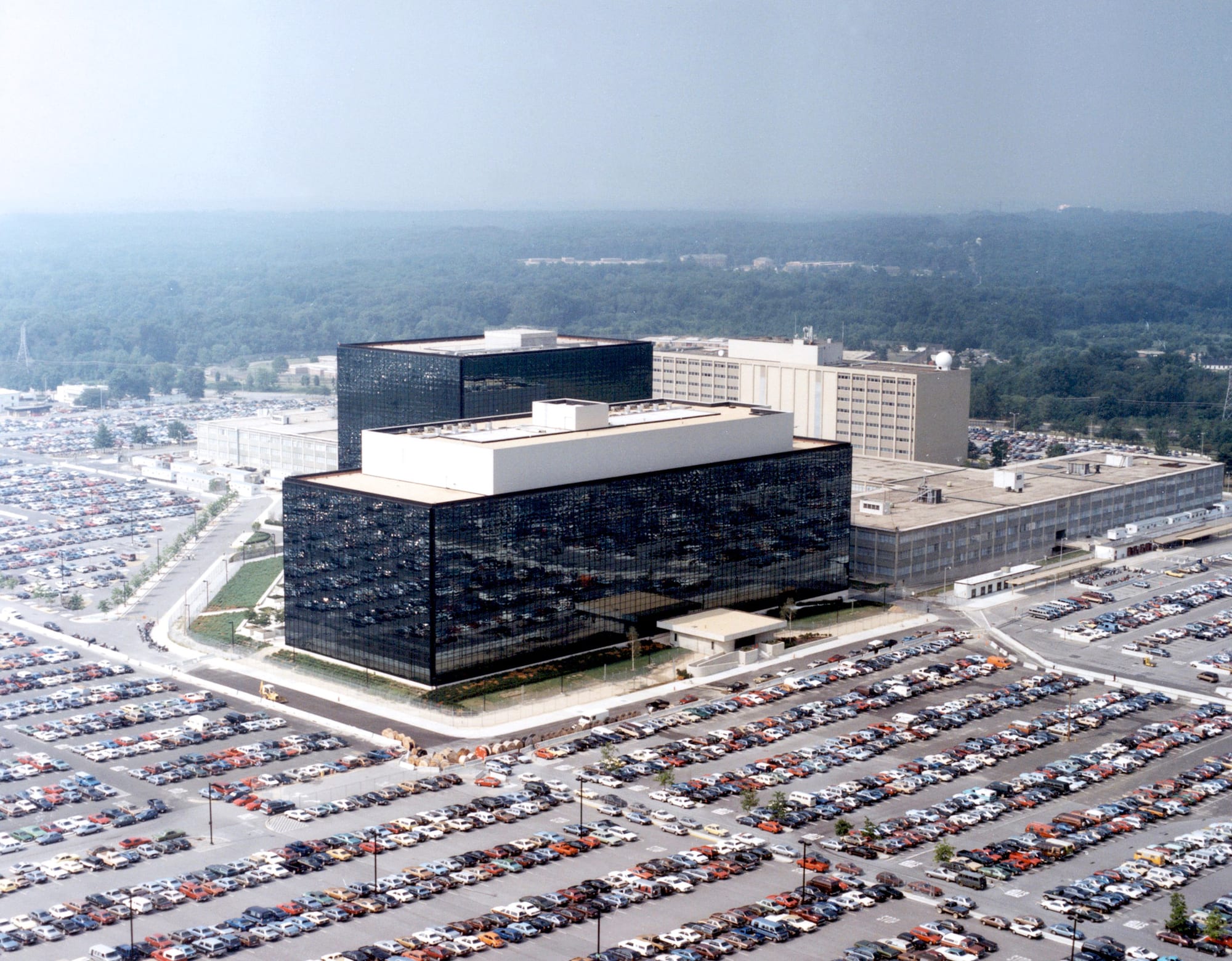
Context · NSA headquarters at Fort Meade (Maryland)
National Security Agency headquarters, Fort Meade, Maryland.jpg · Wikimedia Commons · Dominio público · open original
Part 01
The file in question
On May 18, 2026, the National Security Agency (NSA) produced over 300 pages of historical UAP records marked TOP SECRET UMBRA in response to a Freedom of Information Act (FOIA) administrative appeal by the Disclosure Foundation. This is the first time in history that material classified at the UMBRA compartmentation level has been publicly released in connection with the UAP phenomenon. UMBRA is one of the most sensitive classification markers associated with U.S. signals intelligence (SIGINT), historically reserved for the most sensitive communications intelligence (COMINT) products — the category under which the NSA grouped, during the Cold War, reports derived from interceptions directed against foreign-government communications systems.
The legal origin of the case dates to 1980, when the organization Citizens Against UFO Secrecy (CAUS), represented by attorney Peter Gersten, filed a FOIA lawsuit against the NSA (Civil Action 80-1562) to compel production of UFO-related information in the agency's possession. In that proceeding, the NSA's Chief Policy Officer, Eugene F. Yeates, submitted an in camera affidavit to the court stating that approximately 239 UFO-related documents existed in agency files but that their release would compromise intelligence methods and sources. A key point of the Yeates affidavit —declassified and known publicly in redacted form years later— is that most of those 239 records were communications intelligence reports, the product of intercept operations directed against foreign-government communications systems within their own borders; that is, not direct observations of objects but foreign communications traffic that mentioned the phenomenon. On November 18, 1980, the court accepted the NSA's argument and denied release. Decades later, the Disclosure Foundation appealed that denial, and the NSA's own appeals authority determined that the original denial had been improper. The May 18, 2026 production is the result of that ruling.
The produced documents, according to the Disclosure Foundation's characterization and specialized press coverage (NewsNation, Unknown Country), include records describing radar tracking of objects with physical characteristics, speeds, and behaviors inconsistent with conventional explanations, as well as military intercept responses triggered by those contacts. Analytical caution is warranted, of the kind the 1980 record itself imposes: the Yeates affidavit frames the bulk of the material as COMINT —foreign communications traffic analyzed by the NSA— so part of what was released may consist of what foreign powers were saying about UFOs, rather than the agency's own detections. The NSA maintains significant redactions over additional documents dating from the 1960s onward, and the Disclosure Foundation's legal team continues to challenge those withholdings. The case retains a 'projected' epistemic status in the corpus: the existence of the production is documented, but the full content of the pages and their definitive reading remain under public analysis.
Part 02
Why this case moved the needle
The NSA UMBRA 2026 documents are structurally analogous to the Twining Memo 1947 and the Bolender Memo 1969 in the corpus: internal institutional records documenting that the agency treated the phenomenon as an intelligence matter, produced under legal compulsion rather than voluntary transparency. The UMBRA classification adds a dimension without precedent in the corpus: it indicates that the NSA categorized at least part of the UAP material within its most sensitive COMINT channels. This admits two readings worth distinguishing rigorously. The first, strong one: that the phenomenon generated interceptable signals or that intelligence about it derived from highly sensitive communications sources. The second, more parsimonious and better supported by the 1980 Yeates affidavit: that the UMBRA sensitivity derives not from the phenomenon itself but from the collection method — the NSA protects with its highest classification any product that could reveal which foreign communications systems it was intercepting and with what capability, whatever the subject of the message. Under this second reading, the UMBRA marking says more about the U.S. SIGINT apparatus than about the ontology of the phenomenon.
The piece matters, then, on three levels. First, as institutional confirmation: an agency that for 46 years judicially defended the withholding of these records, and whose own appeals authority eventually ruled that denial improper, embodies the information-management pattern the corpus tracks —maximalist resistance to legal production, acknowledgment only under pressure. Second, as a methodological caution: the corpus must resist the temptation to read 'maximum classification' as 'maximum evidence of anomaly', when the primary documentation itself suggests that the classification protects sources and methods, not necessarily an object. Third, as an open case: with redactions still in dispute and the full content under analysis, its definitive weight in the calibration will depend on what the pages actually say, not on what their classification marking insinuates.
Part 03
What's left on paper
Documented evidence
- Formal NSA production of 300+ pages of TOP SECRET UMBRA-marked UAP records (May 18, 2026), via FOIA appeal
- NSA internal appeals authority ruled the original 1980 denial was improper — institutional admission of prior improper withholding
- Records include radar tracking of objects with speeds and behaviors inconsistent with conventional explanations
- Military intercept responses documented in the produced records
- 1980 NSA Chief Policy Officer in camera affidavits acknowledging ~239 UAP documents in agency possession — corroborated by the 2026 production
Sources
- Disclosure Foundation — 'NSA Releases Hundreds of Pages of Formerly Top Secret UMBRA UAP Records After FOIA Appeal' (18 mayo 2026)
- Disclosure Foundation — Documentos producidos (PDF directo)
- NewsNation — 'UFO files released: New UAP documents from NSA obtained by Disclosure Foundation' (mayo 2026)
- Unknown Country — 'FOIA Appeal Forces Release of Highly Classified NSA UAP Records' (mayo 2026)
Patterns it exhibits (2)
Location
NSA / Fort Meade, Maryland · 39.11°, -76.77°
Related cases