2004·Samudra Tapu valley, near Chandratal lake (Himachal Pradesh)
India.Samudra Tapu, India · ISRO scientists see a white object
On September 27, 2004, at dawn, a team of glaciologists from the Space Applications Centre of the Indian space agency (ISRO), camped in the Samudra Tapu valley in the Himalayas, saw a white object about a meter tall coming down the slope toward the camp. According to its leader, Anil Kulkarni, it had balloons attached to its top; it backed away, changed color in the sunlight, stayed over the camp for a few minutes and vanished to the north. The team photographed it. Kulkarni ruled out a weather balloon, though he admitted it looked like one.
Tier B · IndicativeWhat do they mean? →
Limited evidence: it falls short of what Tier A requires. Any one of these is enough: a single testimony (or several witnesses who saw it together), testimony gathered years later, or an account without contemporary primary documentation.
What it was
62%balloon
The most likely explanation.
- 62% balloon
- 14% other earthly causes
- 24% no known cause
See the split across the six explanations
Earthly origin (human or natural)76%
No known cause24%
Ordinary cause the sources propose: balloon
What happened
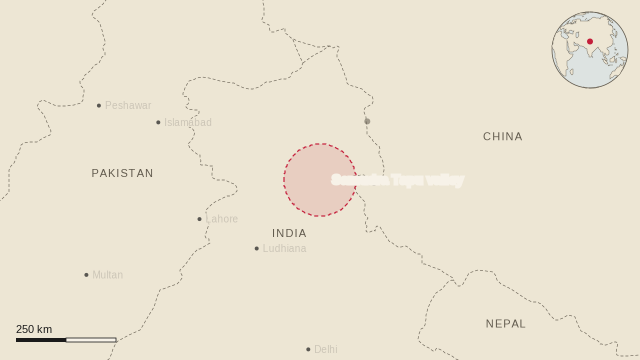
In late September 2004, a team from ISRO's Space Applications Centre, based in Ahmedabad, was studying the glaciers of the Chandra River basin in the Lahaul and Spiti district of Himachal Pradesh, checking the ground against satellite imagery. It was led by glaciologist Anil Kulkarni and camped at Samudra Tapu, a valley left bare by a retreating glacier, an eight-hour walk from Chandratal lake. The "Hindustan Times" puts the area at about 14,000 feet (4,300 m); "India Today" puts the camp at about 17,000 (5,200 m).
On September 27, around 7 in the morning according to Kulkarni (at 6:45 according to "India Today," which adds that a porter saw it first and shouted that "the snow man" was coming), a white object appeared on top of a neighboring ridge. Since it was early, the slope was in shadow, and the object stood out clearly against the rock. "We saw a bright white object moving towards our camp," Kulkarni told the "Hindustan Times" five days later. It was, he said, 3 to 4 feet tall, had balloons attached to its head, one red and the rest white, and something that looked like two legs, and it seemed to float a few inches above the ground. Eight members of the party moved toward it and the object kept coming down, until some porters made a noise and it retreated the way it had come without turning around. After a while it turned and started up toward the top.
When the sun reached it, still according to Kulkarni, it turned black, rose vertically and followed the ridge to the south for three or four minutes. It then turned white again, came back toward the camp, stayed over it for three or four minutes and vanished to the north. Kulkarni and geologist Sunil Dhar photographed it with digital cameras. Kulkarni said it was unlikely to be a weather balloon, though it looked like one, because it came down at a slant without touching the slope, retreated the same way, changed color and moved in a direction different from the prevailing wind. Another member of the team thought it could be a spying device.
According to the government's answer to Parliament, the team also included scientists from the Government College in Dharamsala. The scientists sent their report to ISRO, to Army headquarters, to the Snow and Avalanche Study Establishment (SASE), part of the Defense Ministry's research organization, and to the Kullu district authorities. In 2006, "India Today" returned to the case. SASE director R. N. Sarwade told it: "I thought it was a helium balloon, but Kulkarni's description indicates an object with ahead-of-age technology." Geologist Rajesh Kalia said "it didn't look like a man-made object," and Dhar said "it seemed to be walking."
Where it happened
Why it matters
Kulkarni's 2004 description fits a cluster of balloons: a white body with balloons tied on top, one of them red, and something that looked like two legs. "India Today" wrote in 2006 that, in the photographs, the object looks like "a bunch of balloons caught in a mountain draft," although a Space Applications Centre report credits it with complex maneuvers. The sources do not say how the team determined the direction of the prevailing wind. One possibility they do not raise is slope wind: in mountain valleys, air usually flows down at night and up once the sun warms the slopes, and near the ground it shifts direction easily. That could explain the descent at dawn and the later climb, but less well the object's return over the camp afterward.
The accounts grew over time. In 2004, Kulkarni spoke of an object with balloons and something like two legs that floated; in 2006, "India Today" adds a cylindrical head, a body and hands, and Dhar says it seemed to walk, although the same article still says it floated. The sources also differ on the time (7 or 6:45) and on how long it stayed over the camp (three or four minutes, or five).
The matter reached Parliament: on December 1, 2004, in a written answer to a question from member of Parliament Prabhunath Singh, Prithviraj Chavan, minister of state in the Prime Minister's Office, confirmed the sighting of a 3- to 4-foot object "which had a set of balloons attached to it," in view for about 40 minutes in all. He said the team photographed it, but that because it was "at a very high altitude," "the exact nature of the device" could not be concluded. The answer mentions no maneuvers and does not say whether it was a spying device, although the question asked. "India Today" published one of the photos; the rest could not be seen.
In the Himalayan border region, other sightings left unidentified at the time were resolved later, such as the lights that the Indo-Tibetan Border Police recorded in Ladakh in 2012 and that astronomers identified as Jupiter and Venus ↗ Ladakh.
Documents and sources
Documented evidence
- "Hindustan Times," October 2, 2004 (Dinesh C. Sharma): Kulkarni describes a 3- to 4-foot object with "balloons were attached to its head. One was red and the rest were white."
- The same article: the object came down toward the camp around 7 a.m., retreated when the porters made a noise, turned black in the sunlight, followed the ridge for 3 or 4 minutes, came back and stayed over the camp for 3 or 4 minutes before leaving to the north.
- Kulkarni: "it was unlikely that the object was a weather balloon (though it looked like one)," because it moved "in a direction different to that of the prevailing wind" and changed color; a team member thought of "an espionage device."
- "India Today," February 6, 2006 (Ramesh Vinayak): "From the photographs, the UFO looks like a bunch of balloons caught in a mountain draft, but an SAC report claims the object displayed complex manoeuvrability."
- The same article: SASE director R. N. Sarwade, "I thought it was a helium balloon, but Kulkarni's description indicates an object with ahead-of-age technology"; the report went to ISRO, Army headquarters, SASE and the Kullu authorities.
Show 2 more facts
- The two sources differ on the time (7 or 6:45), the altitude (14,000 or 17,000 feet) and how long it stayed over the camp (3 or 4 minutes, or five); in 2006 the description adds a head, a body and hands.
- Written answer by Minister of State Prithviraj Chavan to Lok Sabha question No. 133 (December 1, 2004): a 3- to 4-foot object "which had a set of balloons attached to it," in view for about 40 minutes; the police and military authorities were informed; "being at a very high altitude, the exact nature of the device could not be concluded."
Sources
- Lok Sabha, unstarred question No. 133, "UFO Sighting," written answer by the Minister of State in the Prime Minister's Office, Prithviraj Chavan (December 1, 2004) — Official record of the Indian Parliament, in the sansad.in question search (14th Lok Sabha, 3rd session); the link returns the question and answer as text. Question by member of Parliament Prabhunath Singh.
- Dinesh C. Sharma, "A balloon, a spy-sat, or a UFO?," Hindustan Times, October 2, 2004 (transcript on Patrick Gross's site) — Kulkarni's account five days after the event.
- Ramesh Vinayak, "UFO: Was it there?," India Today, February 6, 2006 (posted online in 2012) — Interviews with Kulkarni, Dhar, Kalia and the SASE director; the web page misdates the event to 2005.
- Ramesh Vinayak, "UFO: Was it there?," India Today, February 6, 2006 (UFO Casebook copy with the closing sidebars) — It includes the magazine date and the sidebars; the witness sidebar calls the geologist "Rajiv" Kalia, while the text calls him "Rajesh."
Context (not images of the event)
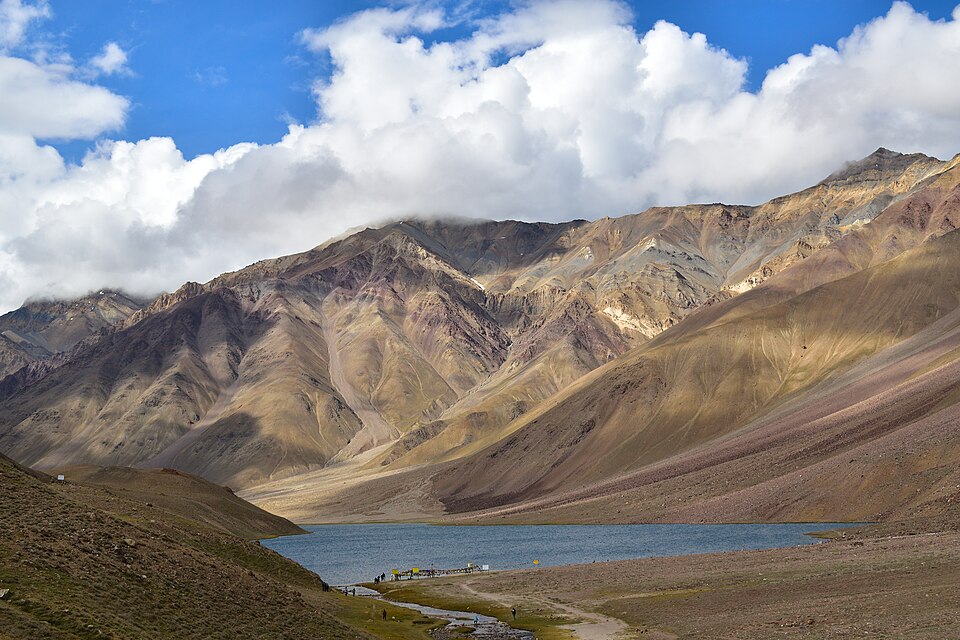
Context · Chandratal lake, an eight-hour walk from the Samudra Tapu valley
Photo of Chandratal lake and the surrounding mountains, taken in September 2021 at about 4,000 m. It illustrates the area and does not show the event. The photos of the object belong to the ISRO team and have no free license.
Chandra Taal (Lake), HP, India, D35 7265nx-01.jpg · Adarsh Patel, Wikimedia Commons · CC BY-SA 4.0 · open original
Related cases
Cases this case cites and cases with the same likely cause.
Cited in this case · Same country · Within 10 years
Ladakh · border guards log over a hundred sightings of lights
2012 · Tier A
Balloon · Within 10 years
Çandarlı · two Turkish Air Force pilots see an object circle them
2001 · Tier B
Balloon · Within 10 years
Aguadilla · a customs plane films an object on infrared
2013 · Tier A
Balloon · Within 10 years
Coulommiers · an Air France crew sees a reddish disc
1994 · Tier A