2001·Çandarlı, Aegean coast (Turkey)
Turkey.Çandarlı · Turkish Air Force pilots over the Aegean
In 2001, during a training flight in a T-37 off Çandarlı (Turkey's Aegean coast), two Turkish Air Force pilots reported a bright object shaped between a cone and a disc that approached at high speed and gyrated around the plane for about 30 minutes. They reported it to their controller and to the regional alert center of the Turkish army. Military pilot testimony reported up the chain of command.
Tier B · IndicativeWhat do they mean? →
Limited evidence: a single witness, testimony gathered years later, or an account without contemporary primary documentation.
What it was
60%natural or human cause
Most likely explanation: aircraft
See the split across the six explanations
Natural or human cause
No known cause
Primary documents
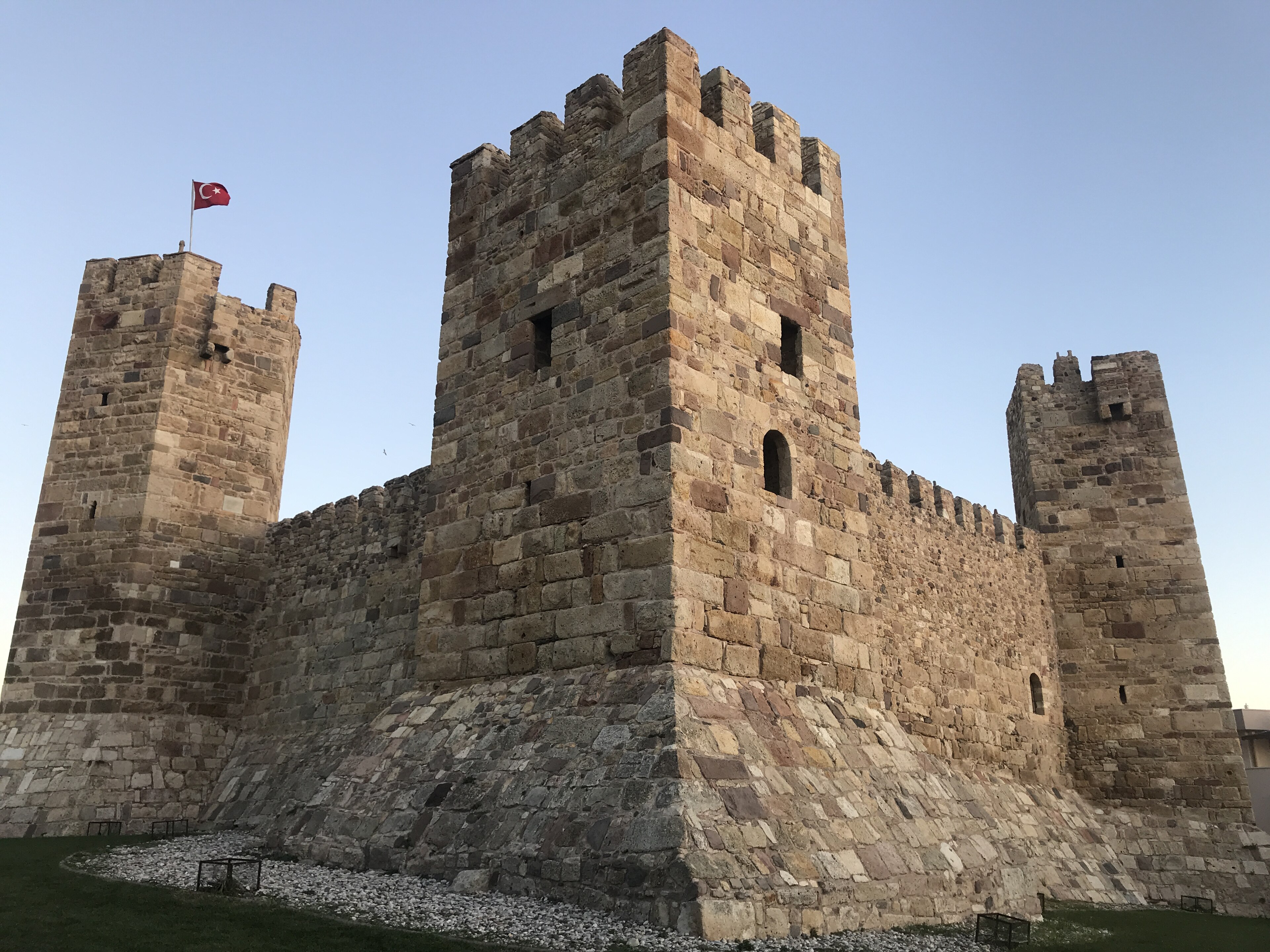
Context · Çandarlı (Aegean coast, Turkey)
Çandarlı Castle 09.jpg · Wikimedia Commons · CC BY-SA 4.0 · open original
ABC News, 'Turkish Pilots Encounter UFOs Over Aegean' (Athens, 8 Aug 2001)
The contemporary report. It says that two Turkish trainee pilots, on a routine training flight in a US-made T-37 off Çandarlı, called their base tower because a bright object approached the aircraft at high speed and reportedly gyrated around them for about half an hour; it quotes the call published by Hürriyet ('Object approaching the wings. Now it's behind the plane… now it's in front of us'), says they told the controller and the Turkish army's regional war alert centre that it looked like a cross between a cone and a disc, and that Turkish air force sources said they were investigating, as were the Greeks. A copyrighted article, so it is given as a link.
ABC News · view source
The night in question
On August 6, 2001, two young Turkish Air Force pilots (named in the press as First Lieutenant Ilker Dinçer and Lieutenant Arda Günyer) took off around 12:30 (Turkish time) in a T-37, a U.S.-made twin-engine trainer, for a routine instruction mission off the coastal town of Çandarlı, in the Aegean Sea, in restricted airspace near the Izmir-Çiğli air base. According to their report, a bright object appeared and approached the aircraft at high speed, then matched its altitude and speed to accompany and circle around the plane. The duration is unclear: sources speak of 2, 15 or 30 minutes.
The pilots described an unusual shape, like a cross between a cone and a disc; according to the tower dialogue leaked to the press from unidentified Air Force sources, Dinçer described it 'with support legs, extremely luminous and high speed', moved his aircraft closer to the object, which also moved closer, and remarked that it seemed to be going for a dogfight; the encounter ended when the object disappeared at an incredibly high speed. The newspaper Hürriyet quoted his call: 'Object approaching the wings. Now it's behind the plane ... now it's in front of us.' They reported the sighting in real time to their controller and to the regional war alert center of the Turkish army, thereby integrating it into the military chain of command. The episode was picked up by the international press (ABC News, 8 August 2001), which added that Turkish Air Force sources said they were investigating, that the Greeks were too, and that Turkey planned to report the encounter to international bodies such as NASA, and by ufological reports of the time.
The official explanation is an essential part of the case and must be presented with the same candor as the testimony. The Turkish Air Force spokesman, Major Orhan Tamer, stated that the episode had been misinterpreted by the media and that the object was in fact a swarm of birds or a weather balloon; he added that disciplinary measures would be considered to stop the pilots from making further public statements. According to the MUFON-CES press release that covered the case, the Turkish Meteorology Society told the newspaper Sabah it had no weather balloon in that area, that such balloons are launched only far from the military base and would be very easy to identify on military radar; confronted with this, Tamer replied that General Erol Özgil had been told it was a balloon, and that was the last official statement. According to the same release, in the tower conversation leaked to the press, control answered the request for radar confirmation that it detected the aircraft's maneuvering 'but no detection of a second object around'. That institutional response (reducing the incident to a mundane cause while discouraging the witnesses from speaking) is ambivalent: it can be read as a sober rebuttal or as corporate containment, and the available evidence does not resolve that ambiguity.
In short: it is testimony from military pilots (trained in aircraft identification) with an uncertain duration (between 2 and 30 minutes depending on the source) and a formal report up the chain of command, but with no radar return of the object according to the leaked conversation and no sensor record in the public material, and with a mundane official explanation on file. It adds a second Turkish point alongside Kumburgaz (2007), of a different nature: that one civilian-visual with video, this one military aviation.
Why it matters
A Turkish case with an institutional profile distinct from Kumburgaz: instead of a civilian video, here Air Force pilots report up the chain of command to the tower and the army alert center. It shows that Turkey (considered a sightings 'hotspot') also has military aviation encounters in the public record.
Moreover, the case is a good example of how an institution manages an uncomfortable report from its own pilots. The official explanation (birds or a weather balloon) is plausible and should be taken seriously: a flock or a drifting balloon can, against the sun and at a distance, produce an impression of a compact shape and of 'accompaniment' through parallax. But the threat of disciplinary measures against the witnesses introduces a bias in the opposite direction, because it discourages future reporting and muddies the traceability of the original datum. That tension (mundane rebuttal versus institutional pressure on the witness) is a pattern worth documenting without overinterpreting: the case stands as a Turkish institutional point and as an illustration of the report/containment dynamic, not as evidence of physical anomaly. On balance, the 'accompaniment' at the jet's altitude and speed (up to 30 minutes according to some sources) and the Meteorology Society's denial of having launched a balloon are what most strain the official explanation, but they do not refute it, and without radar or imagery the episode remains an inconclusive professional testimony. It remains recorded, geographically relevant and evidentially open.
What's left on paper
Documented evidence
- Two Turkish Air Force pilots (Lt. Ilker Dinçer and Lt. Arda Günyer) in a T-37, training flight over the Aegean (Çandarlı, Aug 6, 2001).
- Bright cone/disc-shaped object that matched altitude/speed and circled the aircraft; uncertain duration (2, 15 or 30 minutes depending on the source).
- Reported in real time to the controller and the regional alert center of the Turkish army.
- International press coverage (ABC News); according to the leaked conversation, radar detected the aircraft's maneuvering but no second object.
- Official explanation (Major Orhan Tamer, TAF): a swarm of birds or a weather balloon, later only a balloon; the Turkish Meteorology Society denied having balloons in the area; disciplinary measures were threatened against the pilots.
Sources
- ABC News — 'Turkish Pilots Encounter UFOs Over Aegean' (2001) — Contemporary report (John K. Cooley, 8 Aug 2001), with the call quoted by Hürriyet.
- Hürriyet Daily News — 'UFOs continue to fascinate Turkey and the world'
- MUFON-CES — comunicado de prensa 'Military pilots encounter UFO in prohibited Turkish airspace' (6 sep 2001) — Records spokesman Orhan Tamer's explanation, the Turkish Meteorology Society's denial and the tower conversation leaked to the press.
Related cases
same explanation · same period
Tinley Park Lights · mass wave investigated by MUFON (USA, 2004)
2004 · Tier A
same explanation · same period
Phoenix Lights
1997 · Tier A
same explanation · same period
Howden Moor · rescue operation for a phantom object
1997 · Tier A
same country · same period
Kumburgaz (Yalman)
2007 · Tier A