1967·Shag Harbour, Nova Scotia
Canada.Shag Harbour
On 4 October 1967, several witnesses at Shag Harbour (Nova Scotia) saw a row of lights descend towards the sea; RCMP officers arrived in time to see a light floating on the water and found foam. The Halifax rescue centre checked aircraft and flares with nil results, and Navy divers searched the seabed for two days without finding anything. The Condon Report notes that apparently no one actually saw the object enter the water.
Tier A · AcceptableWhat do they mean? →
Institutional evidence: several identified independent witnesses, or contemporary official documentation, without an instrumental record to corroborate them.
What it was
65%no known cause
The evidence is not enough to decide between the explanations
See the split across the six explanations
No known cause
Natural or human cause
Primary documents
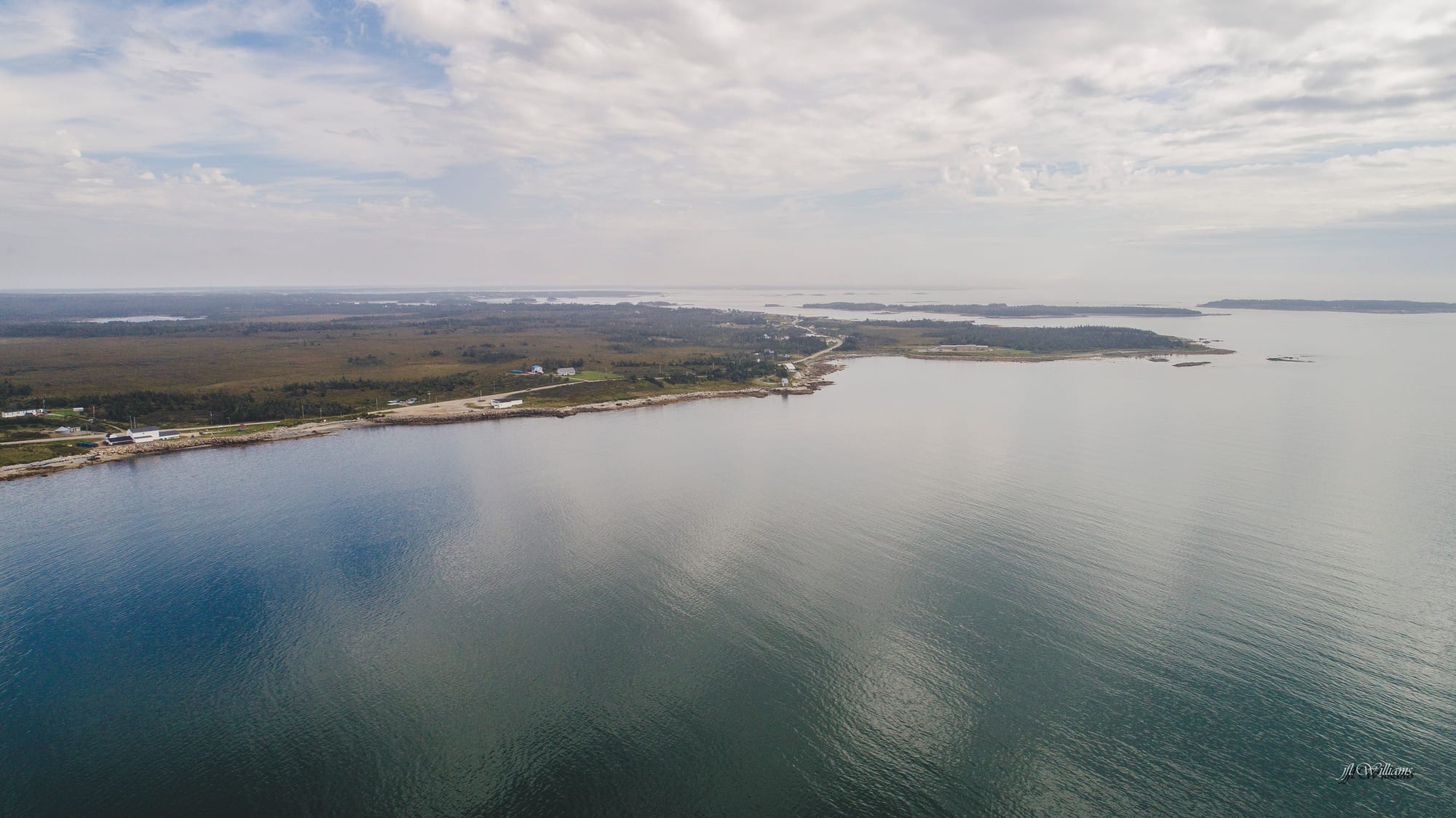
Context · Shag Harbour (Nova Scotia, Canada)
Shag Harbour.jpg · Wikimedia Commons · CC BY-SA 4.0 · open original
RCC Halifax telex of 5 October 1967 and the underwater-search messages (RG 77, vol. 310), pp. 35–44 of part 17
Priority telex from the Rescue Coordination Centre Halifax to Canadian Forces Headquarters, dated 051320Z OCT 67, in UFO-report format: event at 0210Z on 5 October, night clear with no moon; observer, Cpl. Wercicky of the Barrington Passage RCMP, with six other witnesses. A dark object in excess of 60 feet with four white lights in a horizontal line "descended rapidly to water with high whistling sound" and gave a bright flash on hitting the water; the single light left floating remained for a long time and sank (handwritten correction "SANK") before the RCMP could get a boat to it. Aircraft, flares and other leads were checked with nil results. Maritime Command's messages on the diver search follow.
Consejo Nacional de Investigación de Canadá, RG 77, vol. 310 (Library and Archives Canada), vía archive.org · view source
The night in question
On the night of 4 October 1967, shortly after 23:00 local time (the rescue centre's telex puts it at 02:10 Z on the 5th; a headquarters memorandum, at 23:45), several residents of Shag Harbour and Lower Woods Harbour (Nova Scotia, Canada) saw a horizontal row of three or four lights descend at an angle towards the sea, some 200 to 300 yards offshore. According to the RCMP corporal who spoke with the Colorado Project, the first report came from five young people aged 15 to 20 driving along the shore: they saw three or four yellow lights in a row, comparable in size to a 'fair-sized' aircraft, descending at about 45 degrees; they lost sight of them for some ten seconds while passing a small hill and, on regaining the view, saw a single white light on the water about where they reckoned the object should have gone in. Another witness, about two miles away, described three red-orange lights descending at 'aircraft speed' with a whistling sound like a falling bomb, and thought it was an aircraft; two young women driving on the island saw the lights tilt and descend and then a yellow light on the water. The general impression was that an aircraft had crashed into the sea.
The corporal from the Barrington Passage detachment and two officers arrived about fifteen minutes later, in time to see the light on the water, which persisted about five minutes longer and seemed to drift with the ebbing tide. Ten minutes after it went out, the officers were at the site in a rowboat, together with Coast Guard lifeboat 101 and six fishing boats. They found only patches of foam 30 to 40 yards wide that the fishermen did not consider normal tide foam; later witness accounts describe it as yellowish and smelling of sulphur, details that do not appear in the official 1967 documents. No survivor or debris of any kind was found. The corporal told the Colorado Project that the light did not belong to any boat, that search and rescue had no missing aircraft, and that a nearby RCAF radar station recorded no Canadian or U.S. air operations in the area and no unusual return. The night was clear and moonless.
The priority telex from the Rescue Coordination Centre (RCC) in Halifax, sent at 13:20 Z on the 5th and preserved in the National Research Council fonds (RG 77, vol. 310), summarises the RCMP report, with Cpl. Wercicky of Barrington Passage as observer and six other witnesses: a 'dark object' over 60 feet long with four white lights in a horizontal line, which 'descended rapidly to water with high whistling sound' and a 'bright flash' on hitting it, after which a light stayed floating 'for long time' and 'sank' before the RCMP could reach it by boat (the word is a handwritten correction on the telex); it adds that all other possible leads, aircraft and flares included, were checked with nil results. A Canadian Forces Headquarters memorandum records that the RCC discounted an aircraft, flares, floats 'or any other known objects' as the source; the telex, however, does not say how they were ruled out: it only records that the check found nothing, and it is the memorandum that turns this into a dismissal. That same day the RCC asked Maritime Command to consider an underwater search, and Maritime Command sent one diving officer and three men of the Atlantic diving command to Clark's Harbour, with HMCS Granby among the addressees and the support of Coast Guard cutter 101; on 7 October a helicopter flew three more divers in from Shearwater. The report of the 8th states that two days of underwater search 'under good conditions', over an area half a mile by a mile and a half, 'has produced nil results', and the next one declares the search terminated that evening. The naval messages mention no sonar, magnetometers or disturbances on the seabed.
The subsequent documentation has its nuances. The Colorado Project (Condon Report, Case 34) did no more than telephone the Maritime Command watch officer and the RCMP, and it recorded two facts the popular version leaves out: that 'apparently no one actually saw anything enter the water', and that the nearby radar detected no unusual return. The RCC telex, by contrast, describes the descent to the water and the flash of impact, and the watch officer read the project an RCMP report according to which a 60-foot object 'exploded' on hitting the water: the accounts from the same police chain do not agree. The telex, the headquarters memorandum and the Director of Operations letter count the RCMP corporal himself among the observers, along with six other witnesses, and say the floating light sank before his boat could reach it, whereas the Colorado Project recorded that the light went out and the officers reached the spot about ten minutes later. That letter from the Director of Operations, dated October 1967, sums up that neither the surface nor the underwater search found any 'material evidence' that would explain or identify the object. A later letter from the same Director of Operations, for the Chief of the Defence Staff, to the University of Toronto Institute for Aerospace Studies explains that headquarters first set aside the reports that fitted fireballs and meteorites, which it forwarded to the National Research Council's meteorite centre, and graded the rest by importance: of the 190 UFO reports received between 1 January and 30 November 1967, only nine warranted a formal investigation (Class A), and the Nova Scotia report of 5 October is among the five it singles out, with this conclusion: the investigation, which included an underwater search by military divers, 'failed to locate anything which could be related' to the sighting and was 'terminated without conclusive findings'. In the press of those days, the Halifax Herald quoted an RCAF spokesman in Ottawa as saying this might be one of the extremely rare cases where 'something may be found'. The Colorado Project also recorded the report of a fishing-boat captain some 16 miles away who had seen three stationary, flashing red lights on the water and four returns on his radar, which he took for naval vessels, and a light rising that he took for a helicopter; since the position he gave was about 175 nautical miles from the site, the report concluded the two episodes did not appear to be related. There is no firm conventional explanation. A meteor does not leave a light floating for several minutes, headquarters did not class the report among those consistent with fireballs, and the observers on the mainland shore and the two young women on the island, with the presumed point of entry between them, described the descent and then a light on the water, which points to a nearby source rather than a distant fireball. No aircraft were missing and the radar recorded no air operations. That leaves the hypothesis of one or more flares, the first explanation raised on the scene in 1967: the RCC checked it at the time with nil results, and in 2017 it was defended by the skeptical writer Brian Dunning, who notes that a flare cartridge would hardly have left a trace. Against it stand the whistling, the lights in a row and how long the light lasted on the water: the officers arrived about fifteen minutes after the youths saw it and still watched it for about five minutes more, some twenty in all, and the telex says it remained 'for long time'. That fits poorly with a short-burning pistol flare, but does not exclude a floating marine marker light, one of the objects, the 'floats', that the memorandum records as discounted. But the complete absence of debris, the disagreement over whether anyone saw the impact, and the fact that the foam was judged only by the fishermen leave open the possibility that the light on the water and the lights in the air were not the same thing.
Why it matters
The multi-agency government response is documented in contemporaneous messages the government itself has made public: the rescue centre's telex, Maritime Command's operations messages, a headquarters memorandum and letter, all in the National Research Council fonds. The underwater search, with Navy divers over two days in a defined area, turns the episode from civilian testimony into a recorded, verifiable military operation.
About the object's nature, the documents allow no claim. Its limits are clear: no physical material was recovered, so the case provides no direct material evidence; the documents themselves disagree on whether anyone saw the impact; and the area radar recorded nothing unusual. In its favour is the convergence of independent civilian witnesses with RCMP officers who saw the light on the water, a rescue centre that checked aircraft and flares with nil results, a headquarters memorandum recording in writing that the RCC discounted aircraft, flares and floats, a headquarters that counted the report among the nine 1967 reports worth a formal investigation, and an archive that records it as closed 'without conclusive findings'.
What's left on paper
Documented evidence
- Priority telex from RCC Halifax to headquarters (13:20 Z, 5 Oct 1967): observer, Cpl. Wercicky of the RCMP, with six other witnesses; 'dark object' over 60 ft, four white lights, descent with whistling and flash; the floating light sank before the boat arrived; aircraft and flares checked with nil results (NRC, RG 77, vol. 310)
- Maritime Command operations messages (5-8 Oct 1967): one diving officer and three men, plus three divers flown in by helicopter; two days of search over half a mile by a mile and a half with nil results; search terminated 8 Oct
- Headquarters Director of Operations memorandum and letter (Oct 1967): they repeat the corporal among the observers and that the light sank; the RCC discounted aircraft, flares, floats or other known objects; no material evidence
- Letter from the headquarters Director of Operations, for the Chief of the Defence Staff, to the University of Toronto (Dec 1967): the Nova Scotia report of 5 October, outside the fireball and meteorite category, is among the nine Class A reports of 1967; the investigation, with an underwater search, was 'terminated without conclusive findings' (NRC, RG 77, vol. 311)
- Condon Report, Case 34: RCMP officers saw the light on the water for about five minutes; foam 30 to 40 yards wide; the RCAF radar recorded no unusual returns; 'apparently no one actually saw anything enter the water'
Sources
- National Research Council of Canada, RG 77, vol. 310 — RCC Halifax telex, Maritime Command CUROPS messages and CFHQ memoranda (Oct 1967), in '8,000 pages of Declassified Canadian UFO Documents', part 17 (archive.org) — Primary source: scan of the Library and Archives Canada documents with its OCR layer; the Shag Harbour block runs from the RCC telex to the final search report.
- National Research Council of Canada, RG 77, vol. 311 — letter from Col. W. W. Turner, CFHQ Director of Operations, to the University of Toronto Institute for Aerospace Studies (Dec 1967), with the RCC telex as Annex D, in '8,000 pages of Declassified Canadian UFO Documents', part 18 (archive.org) — Primary source: describes headquarters' grading method and summarises the Nova Scotia case as an investigation closed without conclusive findings.
- Condon, E. U. (dir.) — Scientific Study of Unidentified Flying Objects (1968), Case 34, 'North Atlantic, Fall 1967' — Primary source: investigator Levine's telephone interviews with the Maritime Command watch officer and the RCMP.
- Library and Archives Canada — «1967 Shag Harbour UFO Sighting and Related Research» — LAC guide: points to microfilm T-1744 (RG77, vol. 310) and the Herzberg Institute reports.
- Shag Harbour Incident Society — Official Account — Local secondary source; includes details from later interviews that are not in the 1967 documents.
- Ledger, Don & Styles, Chris — Dark Object (2001) — Secondary source: research based on witness interviews decades later.
- Brian Dunning — «The Shag Harbour UFO», Skeptoid, episodio 565 (2017) — Skeptical secondary source: proposes flares or a fireball and notes that the RCC telex only says the check found nothing.
Related cases
Associated actors (1)