Case No. 188·United States
1998·Pocantico Conference Center, Tarrytown, New York
United States.Sturrock Panel · scientific review of physical evidence (1998)
In 1997 Stanford astrophysicist Peter Sturrock convened a panel of scientists to review the physical evidence associated with UAP cases. The report (1998) concluded that some cases present unexplained physical data deserving scientific study — without asserting extraterrestrial origin, but breaking the taboo that the subject is not investigable.
Year
1998
Tier
A
Probability
60%
Category
Document
Institutional evidence: multiple verifiable witnesses or official documentation. Three independent axes: the «tier» measures the strength of the evidence; the «probability» estimates how genuinely unexplained the case is —a natural phenomenon can remain unexplained, so it does not equal «non-prosaic»—; and the partition of explanations (below) says what it most plausibly was. So a well-documented case can have a possible hoax as its most plausible cause, and a Tier B is not, for that reason, a hoax.
Primary documents · viewer
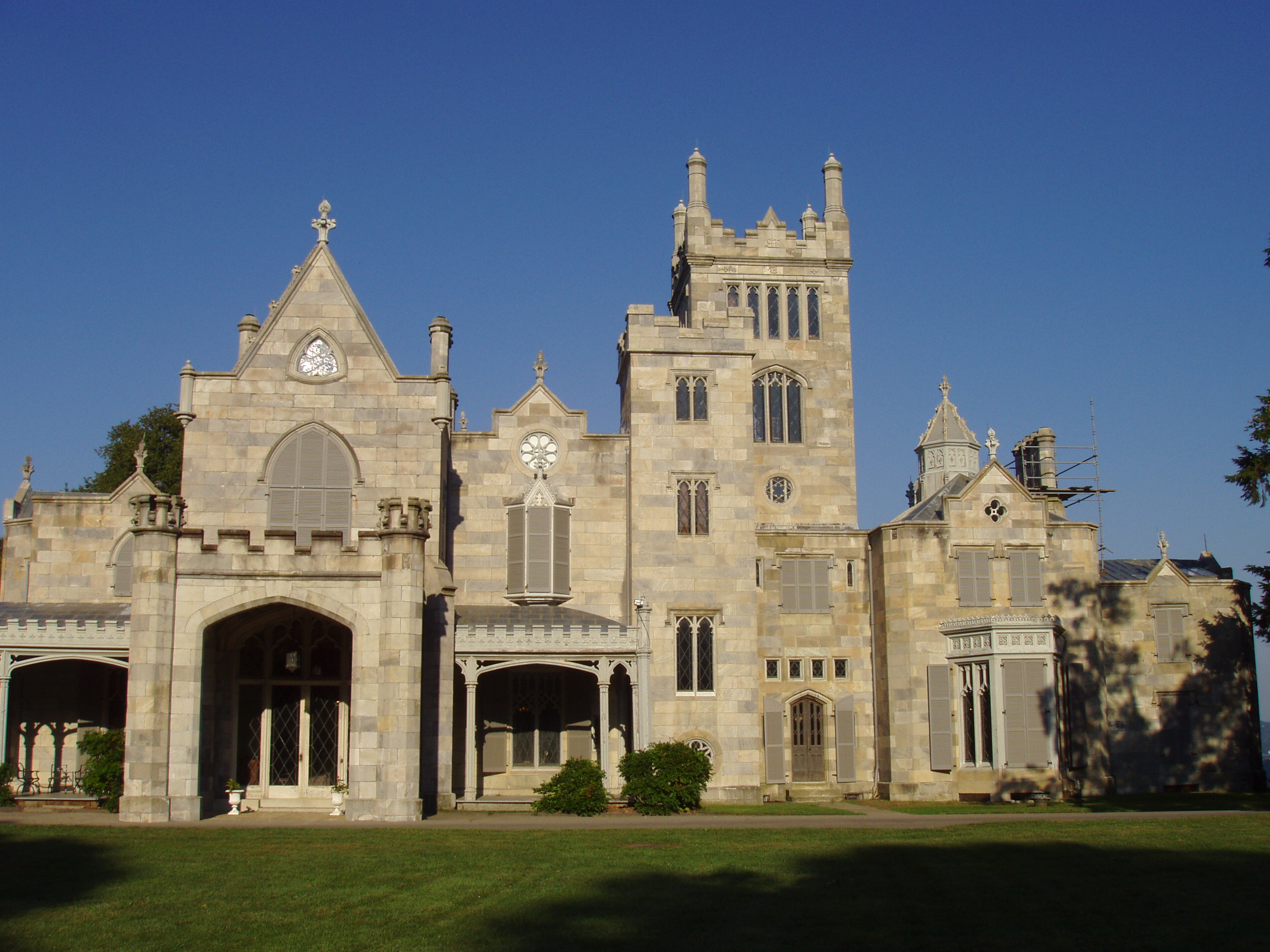
Context · Tarrytown (New York), venue of the Sturrock panel at Pocantico
Lyndhurst Tarrytown NY - front facade.jpg · Wikimedia Commons · CC BY-SA 3.0 · open original
Part 01
The file in question
Stanford University astrophysicist Peter A. Sturrock organized, under the auspices of the Society for Scientific Exploration and with funding from philanthropist Laurance Rockefeller, a workshop held at the Pocantico Conference Center in Tarrytown, New York, from September 29 to October 4, 1997. The workshop gathered a panel of nine impartial scientists —physicists for the most part— to examine, for the first time in decades and independently, the physical evidence reported in UAP cases. Over four days, investigators presented to the panel cases with material traces of various kinds: ground marks, effects on vehicles (malfunctions in automobiles), damage and alterations to vegetation, burns to witnesses, photographs, radar detections and recurring lights over certain locales.
The workshop's explicit purpose was not to decide whether UFOs exist, but to assess whether the further acquisition and investigation of this class of physical evidence was likely to help solve the problem. The resulting report, published in 1998 and later in the Journal of Scientific Exploration, concluded that, although no case constituted proof of extraterrestrial origin, a subset presented physical phenomena without conventional explanation that warranted serious and continued scientific study. It recommended the scientific community treat the subject as a legitimate empirical problem and improve the instrumental quality of the data. The Sturrock panel is the direct precursor, more than two decades earlier, of the approach NASA would adopt in its 2023 report: neither exotic assertion nor dismissal, but a call for rigor on the physical data. It enters the corpus as a scientific-method document, not as evidence of the phenomenon.
Part 02
Why this case moved the needle
It is the bridge between folklore and science: the first panel of physicists in decades to review UAP physical evidence in a structured way and conclude that part of it merits study — breaking the taboo inherited from the Condon Report (1969), whose official conclusion that the subject did not justify further investigation had frozen institutional scientific interest for a generation. The Sturrock panel's gesture is deliberately modest and therefore powerful: it claims no case as proof, asserts no extraterrestrial origin, enters no speculative ground. It merely holds that a residue of physical evidence resists conventional explanation and that, in science, such a residue is a reason to investigate, not to close.
Its importance is methodological and legitimizing, not probative. The document's value to the corpus is not what it says about the phenomenon —it says little, and cautiously— but what it says about how the subject should be treated: as an open empirical problem whose resolution runs through better instruments and better data, not through a priori discredit. It anticipates by a quarter century the framework NASA would adopt in 2023 and the logic of the corpus itself: weigh the evidence, do not proclaim conclusions. Its limit is evident and the panel accepts it: it reviewed pre-existing evidence of heterogeneous quality, without collecting new data, and its product is a recommendation of method, not a finding. That is why its weight is minimal and operates only by slightly eroding the mundane/natural narrative —the reading that the whole phenomenon reduces to misidentification—, because qualified scientists, looking at the set, could not dismiss the entire physical residue. Tier A for the solidity of the process (named scientific panel, peer-reviewed publication), not for a conclusion about the nature of the phenomenon.
Part 03
What's left on paper
Documented evidence
- Pocantico Workshop (1997) convened by astrophysicist Peter A. Sturrock (Stanford), funded by Laurance Rockefeller
- Panel of physicists/scientists reviewed physical evidence: ground marks, vehicle effects, vegetation, photos, radar
- Report (1998), later in the Journal of Scientific Exploration
- Conclusion: no case proves ET origin, but a subset presents unexplained physics meriting serious study
- Recommendation: treat the subject as a legitimate empirical problem; improve instrumental data quality
Sources
- Sturrock, P. et al. — 'Physical Evidence Related to UFO Reports' (Pocantico Report, 1998), Journal of Scientific Exploration — Primary document. · Original (dead link): https://www.scientificexploration.org/docs/12/jse_12_2_sturrock.pdf
- Pocantico / Sturrock Panel — entrada enciclopédica — Original (dead link): https://en.wikipedia.org/wiki/Sturrock_panel
Patterns it exhibits (2)
Location
Pocantico Conference Center, Tarrytown, New York · 41.09°, -73.86°
Related cases