Case No. 190·United Kingdom
1950·Ministry of Defence · London
United Kingdom.Flying Saucer Working Party · first official MoD study (UK)
The first official flying-saucer study by a Western government: the Flying Saucer Working Party, set up by the UK Ministry of Defence under Henry Tizard in 1950. Its secret report (1951) concluded all sightings are explained by misidentification, illusion or hoax, and recommended no further investigation. Declassified in 2001.
Year
1950
Tier
A
Probability
55%
Category
Document
Institutional evidence: multiple verifiable witnesses or official documentation. Three independent axes: the «tier» measures the strength of the evidence; the «probability» estimates how genuinely unexplained the case is —a natural phenomenon can remain unexplained, so it does not equal «non-prosaic»—; and the partition of explanations (below) says what it most plausibly was. So a well-documented case can have a possible hoax as its most plausible cause, and a Tier B is not, for that reason, a hoax.
Primary documents · viewer
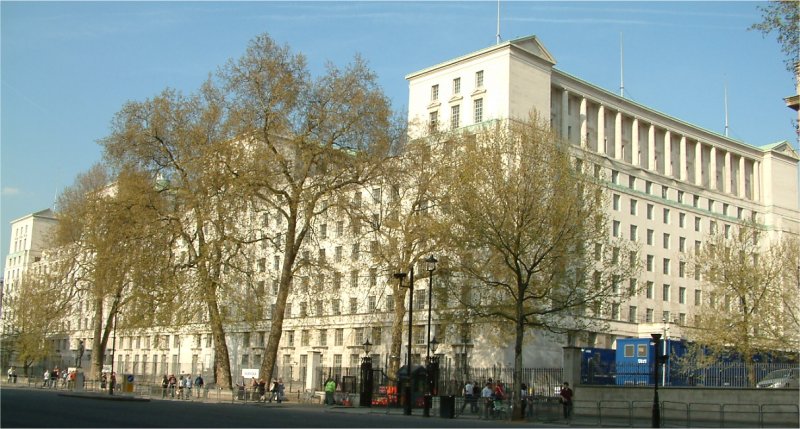
Context · the UK Ministry of Defence in London, home of the Flying Saucer Working Party
Ministry of Defence building - Whitehall - London.jpg · Wikimedia Commons · CC BY-SA 3.0 · open original
Part 01
The file in question
In October 1950, at the instigation of the UK Ministry of Defence's influential chief scientific adviser, Sir Henry Tizard —who held that 'flying saucer' reports should not be dismissed without some serious study— a small secret working group was formed within the Directorate of Scientific Intelligence / Joint Technical Intelligence Committee (DSI/JTIC). The Flying Saucer Working Party (FSWP) brought together about five intelligence officers from the three armed-services branches and was the first official study of the phenomenon by a Western government, predating the American Project Sign's work in its conclusive-report form and long predating the Condon Report (1968).
The FSWP worked discreetly for several months. It examined a handful of prominent British cases of the period —including sightings reported by personnel with aeronautical experience— and also considered the American picture. Its final report, just five pages long and dated June 1951, was categorical: all incidents studied could be explained by one or more of four categories —astronomical or meteorological phenomena; misidentification of aircraft, balloons, birds and the like; optical illusions and psychological delusions; and deliberate hoaxes. The recommendation was unequivocal: devote no further official resources to the matter and open no permanent investigation.
The document remained classified for half a century. It was handed to researchers David Clarke and Andy Roberts in 2001 under the government information-access code, and the only surviving copy of the final report was released by The National Archives at Kew in January 2002. It enters the corpus as the founding skeptical document of the British institutional stance, valuable for its documentary solidity and historical role, not for the depth of its analysis: its sample was deliberately small and its implicit mandate was to determine whether the subject merited resources, not to investigate it thoroughly.
Part 02
Why this case moved the needle
The FSWP is the documentary root of the British official skeptical stance and the first Western institutional verdict on the phenomenon. Its importance is structural rather than analytical: it shows that, already in 1950 —barely three years after the 1947 wave and in the thick of the Cold War— the default response of a Western state was to classify the problem, settle it with a minimal sample, and close it. That 'conclusion-by-mandate' pattern would recur almost identically in the American Condon Report of 1968, which also concluded firmly after a selective examination.
The internal British contrast is what makes the case instructive. Half a century later, the UK itself produced Project Condign (completed in 2000), a far more extensive study that, far from reducing everything to hoax and illusion, proposed a non-trivial physical mechanism (poorly understood atmospheric plasmas) and acknowledged the phenomenon held defense interest. That two official studies by the same government, fifty years apart, reached differently-toned conclusions about the same object is the real datum for the corpus. The FSWP reinforces the mundane/natural narrative as early institutional backing, but its weight is limited: that reading is already amply documented and the sample was too small to move anything. Tier A for the document's solidity (a declassified, traceable MoD report), not for its scope.
Finally, the FSWP matters as a benchmark for reading institutional skepticism honestly. A negative official verdict is itself evidence —about how a state allocates attention, not necessarily about the phenomenon. The Working Party's flat dismissal was driven as much by Cold War priorities and limited resources as by the merits of any single case, and its half-century of secrecy shows that 'nothing to see here' and 'classified' coexisted comfortably. The corpus therefore treats the report as a genuine but bounded data point: strong on provenance, weak on investigative depth, and most valuable as the first node in a long chain of official British engagement that would later change its own tone.
Part 03
What's left on paper
Documented evidence
- Flying Saucer Working Party set up by the UK MoD (at Sir Henry Tizard's instigation) in 1950
- Secret report completed June 1951
- Conclusion: all sightings = misidentification, illusion or hoax; recommended no further investigation
- First official study of the phenomenon by a Western government
- Declassified in 2001
Sources
- The National Archives (UK) — Flying Saucer Working Party report (desclasificado 2001) — Official release. · Original (dead link): https://www.nationalarchives.gov.uk/ufos/
- Flying Saucer Working Party — entrada enciclopédica
Patterns it exhibits (2)
Location
Ministry of Defence · London · 51.50°, -0.13°
Related cases
same country · 2 patterns
West Freugh · RAF radar + Air Ministry silence
1957 · Tier A · 55%
same country · 2 patterns
Project Condign · UK MoD UAP study
2000 · Tier A · 60%
same country · 2 patterns
RAF Manston · the order to fire (Milton Torres)
1957 · Tier S · 70%
2 patterns
Washington Flap
1952 · Tier S · 78%