1965·Valensole, Provence
France.Valensole
Farmer Maurice Masse said that at dawn on 1 July 1965 he saw an object resting in his lavender field and small occupants who went back into it before it took off; in his expanded statement to the gendarmerie on 18 August he added that he had been paralysed. The ground marks, already trampled by onlookers, were measured and photographed by the gendarmes. Military sources attributed it to a helicopter from the manoeuvres then under way, which Masse rejected. GEIPAN (CNES) classes it 'D' by default, on account of its strangeness, without having published an investigation of its own.
Tier A · AcceptableWhat do they mean? →
Institutional evidence: several identified independent witnesses, or contemporary official documentation, without an instrumental record to corroborate them.
What it was
66%no known cause
The evidence is not enough to decide between the explanations
See the split across the six explanations
No known cause
Natural or human cause
Primary documents
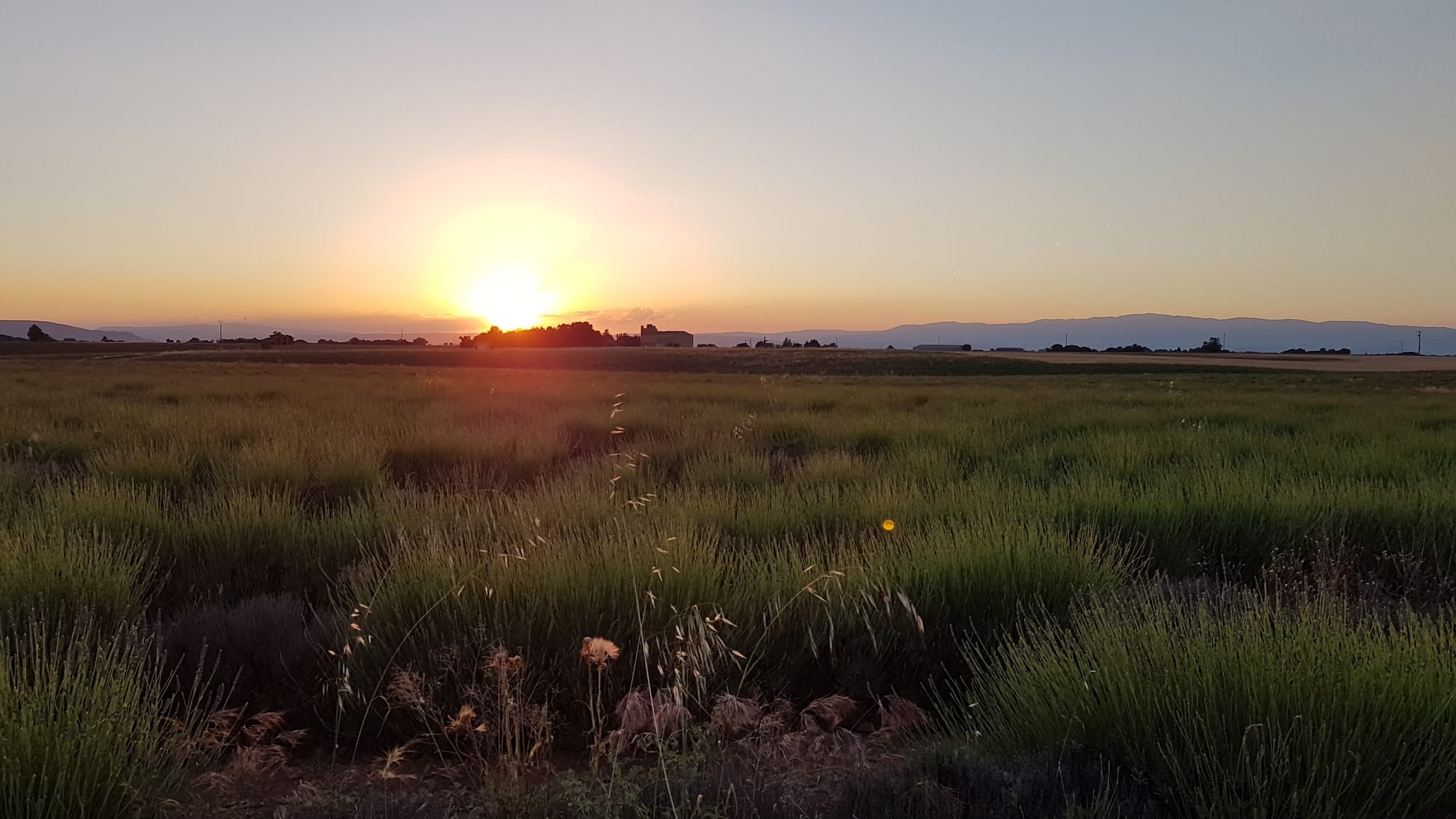
Context · Valensole (Provence), where Maurice Masse saw the object land
Coucher-de-soleil-plateau-Valensole-Provence-France.jpg · Wikimedia Commons · CC0 · open original
GEIPAN (CNES), case record 1965-07-00050, with gendarmerie report no. 445
Official French file on Maurice Masse's case: the chronology of the three gendarmerie reports, the record that there were no other witnesses or traces, and the 'D' classification GEIPAN gives it by default, without an investigation of its own. GEIPAN is a CNES service and its documents are copyrighted, so it is given as a link; the server limits repeated requests.
GEIPAN · Centre national d'études spatiales (CNES) · view source
The night in question
On July 1, 1965, around 5:45 in the morning, farmer Maurice Masse was working in his lavender field in Valensole (Alpes-de-Haute-Provence) when he heard a whistling sound. Investigating the noise, he saw an ovoid object, roughly the size of a Renault Dauphine car, resting in his field on several thin legs and a central pedestal. Beside the object he observed figures a little over a metre tall, the size of a child of about eight, dressed in one-piece coveralls. The account changed over time. In what Masse told the press in the first days, one being was outside the craft and another inside, the one outside jumped in as soon as it saw him and the object took off in a split second; he told Le Provençal that about 30 seconds passed between his discovery and the disappearance, and Le Méridional reported that the suit was orange. GEIPAN's case summary gives the final version: two figures watched for four or five minutes.
The paralysis, the most quoted element of the case, does not appear in those first accounts. Masse told it in the 'very detailed' supplement he gave the gendarmerie on 18 August 1965 (statement no. 145): when he approached, one of the figures pointed a small device at him and he was immobilised, conscious but unable to move, while the figures went back into the object, which took off at a slant and quickly disappeared toward Manosque. According to later accounts based on that statement, the immobility lasted about fifteen minutes, and Masse explained that he had withheld details at first for fear of being taken for a madman.
According to GEIPAN's case summary, some ten minutes later Masse found star-shaped marks at the spot with a cylindrical hole in the middle, in soaked earth, and when he came back around 8:30 p.m. with his daughter the ground was 'hard as cement'. The next day he talked about it, many onlookers went to see the marks and trampled them, and the gendarmerie learned of it around 7:30 p.m. through public rumour: Masse did not go to report it. He gave a statement that evening to the local brigade (statement no. 445), took the gendarmes to the spot and completed his statement; on 3 July another brigade drew up an on-site report with measurements and photographs (no. 105). In his statement of 2 July, Masse described a hole about 80 centimetres deep and 40 across at the centre of star-shaped marks, in soaked earth (the press of those days gave 20 centimetres across and 50 to 80 deep); the gendarmes, arriving at 10 p.m., found the hole but no other visible trace, because the ground had been trampled. In that same statement Masse spoke of a man on the ground, a metre tall and 'of fairly substantial build', in coveralls, bareheaded and bare-handed, and of another occupant inside; he said the skin looked to him 'of European type', that he was about sixty metres away and that the one outside went straight back into the craft; he mentioned no paralysis. No other testimony was collected and no other clue was found around the spot. Later investigators reported that lavender did not grow normally there for years. GEIPAN (a body of CNES, the French space agency), created in 1977, never published an investigation of its own; in 2015 it released the gendarmerie statements, which it regards as the most reliable documents, and it classes the case 'D' 'by default', on account of its strangeness, 'to make searching easier'.
The conventional explanation reached the press on the second day. On 3 July, 'military circles' in Marseille judged it to be an Alouette helicopter of the army's light aviation, taking part in the 9th Military Region's 'Provence 65' manoeuvres, under way since 29 June with aircraft based at Saint-Auban, and Le Monde's headline read 'La soucoupe volante était sans doute un hélicoptère' (the flying saucer was probably a helicopter). Masse himself had first thought of a helicopter because of the whistling. But he denied it firmly: 'The craft had neither rotor nor blades. I claim all the same to be able to recognise a helicopter. It wasn't one', he told Le Provençal, which objected as well that an Alouette does not leave a hole like that and has a three-wheel undercarriage, not six legs. Le Méridional suggested that the orange suit might have been one of the life jackets helicopter pilots wear, the 'Mae West'. In 1990, Dominique Caudron argued in the journal Communications (no. 52, p. 241) that the elements of the sighting point to an Alouette II helicopter, with its turbine's characteristic whistle. The other prosaic reading, invention, was hinted at by Le Méridional, which described Masse as a good storyteller and on 6 July wrote that all that remained in the field was 'a hole similar to that left by a torn stake'; the neighbours and the town clerk quoted in the press ruled it out, and the gendarmes merely said it was weird. Other readings put forward later, with no documentary source behind them, are a helicopter from the US Sixth Fleet, a neighbour's liquid-fertiliser tank to explain the marks, and an invention inspired by a 1950 comic story, 'Passagers de soucoupes volantes', which the psychologist Gilles Fernandez considers improbable given the many differences.
Why it matters
Valensole combines four elements: a report of entities, an immediate physical effect on the witness (the paralysis), a material trace that the gendarmerie measured and photographed within two days, and a 'D' classification in the national space agency's archive, although assigned by default and without an investigation of its own. Astronomer J. Allen Hynek classified it as a close encounter and researcher Jacques Vallée has cited it among the most singular cases he has studied.
The case, however, has clear limits. It is a single-witness case: there is no second observer of the object or the figures, and the entire entity-and-paralysis narrative rests on Masse. That narrative also grew: the paralysis and the device appear in his statement of 18 August, not in the accounts of the first days, which spoke of a being that fled on seeing him and a take-off in seconds; Masse put it down to fear of ridicule, which is plausible, but the version that is quoted is not the first one. The helicopter-from-the-manoeuvres explanation clashes with the witness's description and with the hole, and the invention reading with the opinion of the neighbours who spoke to the press; neither was ever tested. What third parties did measure are the ground marks, though trampled before the gendarmes arrived, and the inhibited growth of the lavender, which is attested only by later investigators; they are traces hard to attribute to a known cause in that geometry, but (unlike what GEPAN would do at Trans-en-Provence in 1981) were not subjected to a rigorous biochemical soil analysis by later standards. The material evidence is real, but the most extraordinary component (the entities) is not corroborable.
What's left on paper
Documented evidence
- Gendarmerie statements: Masse's statement of 2 July 1965 (no. 445), on-site report with measurements and photographs of 3 July (no. 105) and detailed supplement of 18 August (no. 145), released by GEIPAN in 2015
- Star-shaped marks around a hole about 80 cm deep and 40 cm across according to the 2 July statement (the press gave 20 cm by 50 to 80); trampled by onlookers before the gendarmes arrived, who found only the hole
- Statement of 2 July (no. 445): one man on the ground and another inside, skin 'of European type', witness about sixty metres away, no paralysis; the paralysis appears in the statement of 18 August
- Military explanation in 1965: an Alouette helicopter from the 'Provence 65' manoeuvres; rejected by the witness (no rotor or blades, six legs)
- Vegetation inhibited at the spot for years, according to later investigators
- GEIPAN 'D' classification assigned by default, on account of strangeness, with no investigation of its own published
Sources
- GEIPAN (CNES) — case file 1965-07-00050, with gendarmerie statement no. 445 — The official French file: timeline of the three statements, no other witnesses or clues, and the 'D' classification. The site rate-limits automated requests (429).
- GEIPAN — 'L'observation de Valensole 1965, cinquante ans après…', summary note (26 Jun 2015) — GEIPAN never published an investigation of its own; the case is classed 'D' 'by default'.
- Le Provençal, 3, 4 and 5 Jul 1965; Le Monde and Le Méridional, 4 Jul 1965; Le Dauphiné Libéré, 4 Jul 1965 (translations in Patrick Gross's archive) — Press of the first days: Masse's initial account, the marks, the helicopter explanation and his rebuttal.
- French Wikipedia — 'Rencontre de Valensole' — Secondary source: summarises the alternative readings (Caudron, 1990; Sixth Fleet helicopter; fertiliser tank; 1950 comic story).
- Bourret, J.-C. — La Nouvelle Vague des Soucoupes Volantes (1974) — Later French reconstruction
- Hynek, J.A. — The UFO Experience (1972) — Close-encounter chapter classifies Valensole as CE-III
- Le Monde, 4 Jul 1965, p. 18 (text in Patrick Gross's archive)
Related cases
same object · same country · same period
Cussac
1967 · Tier B
same object · same period
Loring AFB overflights · SAC nuclear bases
1975 · Tier S
same explanation · same country
Air France 3532 · disc + military radar (GEIPAN)
1994 · Tier A
same object
Morón · the C-101 pilot and the crazed canopy (1995)
1995 · Tier A
Associated actors (2)
