2013·Aguadilla, PR
Puerto Rico, EE.UU..Aguadilla Puerto Rico
Una aeronave DHC-8 de la US Customs and Border Protection filmó con su cámara infrarroja, durante casi tres minutos, un objeto pequeño que parece cruzar el aeropuerto de Aguadilla, entrar y salir del mar y dividirse en dos.
Seguir leyendo el resumen
El análisis civil de 2015 lo dio por inexplicable; la Fuerza Aérea Argentina (2017 y 2025) y la AARO (2024, con «alta confianza») concluyeron que eran dos objetos pequeños arrastrados por el viento (farolillos, según la Fuerza Aérea Argentina), con velocidad aparente por paralaje; según la reconstrucción de la AARO, sobre tierra y sin entrar nunca al agua. A abril de 2025, la AARO no había respondido las preguntas técnicas que le envió la coalición civil.
Tier S · Sólido¿Qué significan? →
Evidencia fuerte: un registro instrumental de la época (radar, sensor, película o foto con procedencia conocida) que corrobora a varios testigos independientes.
Qué fue
73%causa natural o humana
Explicación más probable: globo
Ver el reparto entre las seis explicaciones
Causa natural o humana
Sin causa conocida
Documentos primarios
'Puerto Rico Objects' — metraje FLIR original de CBP: cruce aire-agua y división en dos objetos (26 abr 2013)
US Customs and Border Protection, vía DVIDS · Dominio público · obra del Gobierno de EE. UU. · abrir original
Reconstrucción digital (Systems Toolkit) de la trayectoria de vuelo que sostiene la resolución de la AARO
AARO / socio de la comunidad de inteligencia, vía DVIDS · Dominio público · obra del Gobierno de EE. UU. · abrir original
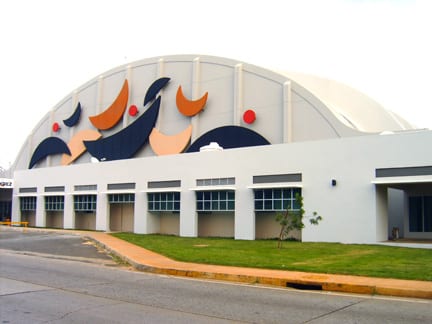
Contexto · el aeropuerto de Aguadilla (Puerto Rico), donde una cámara de CBP filmó el objeto
Aguadilla airport.jpg · Wikimedia Commons · Dominio público · abrir original
La noche en cuestión
En la noche del 25 de abril de 2013 (el 26 en hora UTC, la fecha que usa la AARO), una aeronave DHC-8 de la US Customs and Border Protection (CBP), con una cámara térmica Wescam MX-15D para patrullaje marítimo, despegó a las 21:16 del Aeropuerto Rafael Hernández, en Aguadilla, en el extremo noroeste de Puerto Rico. Según el relato que recoge el informe civil de la Scientific Coalition for Ufology (SCU) (transmitido por un testigo secundario, porque el piloto no quiso hablar directamente con los autores), el piloto vio sobre el mar, al noroeste, una luz rosada o rojiza que avanzaba hacia el aeropuerto; consultó a la torre, que confirmó verla sin saber qué era, y al acercarse la luz a la costa esta se apagó. Desde ese momento el objeto solo se siguió con la cámara infrarroja; el radar de a bordo, según el mismo testigo, no lo captó. El mismo informe recoge, de oídas, que otro piloto de la CBP había visto entre 15 y 30 minutos antes una formación de luces rosadas o rojas muy bajas sobre el aeródromo.
El vídeo dura 3 minutos y 54 segundos, de los cuales 2 minutos y 56 muestran el objeto. En la lectura de la SCU, este llega desde el océano, cruza dos veces el espacio aéreo del aeropuerto, vuelve al Atlántico, parece sumergirse y reemerger varias veces y, en un momento, se divide en dos partes que siguen juntas. En la imagen, en modo «negro caliente», el objeto aparece más caliente que el aire que lo rodea, aunque menos que los motores de los vehículos del vídeo. Esa noche soplaba viento del este a 13–21 km/h en superficie, y del este-noreste a 19–29 km/h entre 120 y 1.000 metros, según los datos que el propio informe de la SCU cita.
Un investigador vinculado al equipo recibió una copia del archivo original el 20 o 21 de octubre de 2013, de manos de un conocido de la tripulación. El informe de la SCU, firmado por Robert Powell, Morgan Beall, Daina Chaviano, Larry Cates, Carl Paulson y Richard Hoffman y fechado en 2015, dividió el vídeo en 7.027 fotogramas y estimó un tamaño de entre 0,9 y 1,5 metros, velocidades de 64 a 190 km/h en el aire (mediana cercana a 130 km/h) y un promedio de 133 km/h bajo el agua sin desaceleración apreciable al entrar. Con datos de radar de la FAA obtenidos por FOIA del 84.º escuadrón RADES de la Fuerza Aérea, validó la trayectoria del avión y halló ecos sin transpondedor sobre el mar, a entre 3 y 5 kilómetros al norte y noroeste del aeropuerto. El radar militar de Punta Borinquen, junto a la pista, fue denegado por FOIA, y según el jefe de la torre las grabaciones y registros se destruyen a los 90 días. El informe concluyó que ningún ave, globo, aeronave ni dron conocido tenía esas capacidades. Durante once años el vídeo circuló sin versión oficial; la AARO lo publicó en DVIDS en noviembre de 2024 con su propia resolución.
Por qué importa
Durante una década se citó como ejemplo de objeto sumergido no identificado (USO): un vídeo infrarrojo de origen gubernamental, largo, con metadatos de posición en pantalla, que parecía mostrar una transición aire-agua y una división en dos. Tres equipos distintos (uno civil, uno de una fuerza aérea extranjera y uno del gobierno estadounidense) lo reconstruyeron cuantitativamente con métodos explícitos, algo que muy pocos vídeos UAP tienen, y se puede comparar dónde divergen, sea cual sea la lectura correcta.
El primer análisis oficial en contra lo firmó el comodoro (R) Rubén Lianza, de la comisión de fenómenos aeroespaciales de la Fuerza Aérea Argentina (CEFAE, hoy CIAE), en el informe anual de 2017, con un anexo del ingeniero François Louange (software IPACO). Sostiene que el objeto son dos farolillos de aire caliente en forma de corazón, atados, arrastrados por el viento del este-noreste, que la «inmersión» es una ilusión de perspectiva y de pérdida de señal (el objeto también se desvanece sobre tierra, sin árboles delante), y que al final los farolillos se apagaron y cayeron al mar. Identificó como posible origen las bodas de la playa de Villa Montana, a barlovento; su gerente confirmó que allí se lanzaban esos globos hasta 2015, aunque no pudo confirmar la fecha. Hay un punto débil en su propio expediente: el anexo de Louange advierte que la velocidad transversal «no puede evaluarse de ningún modo» sin suponer que el objeto iba cerca del suelo, y la distancia de 3,9 millas náuticas que lo sitúa sobre tierra en el fotograma 01:24:44 se obtiene suponiendo un farolillo de un metro. El informe de 2025 de la CIAE amplió el análisis (cuatro lóbulos visibles en un fotograma, dos globos desde el principio) y lo clasificó como caso «Tipo B» según la escala del GEIPAN: explicado con fundamento, sin prueba absoluta.
La AARO llegó a la misma conclusión por su cuenta. Según las láminas que su director presentó al Senado en noviembre de 2024 y la ficha publicada en DVIDS, la oficina, con socios de la comunidad de inteligencia, evalúa «con alta confianza» que el objeto no mostró velocidades ni comportamiento anómalos: eran dos objetos volando juntos, no uno que se divide; la división aparente se debe al cambio del ángulo de visión del sensor; la velocidad aparente, al paralaje de movimiento; el desvanecimiento, al cruce térmico; y la reconstrucción de trayectoria muestra que viajaron en línea recta hacia el suroeste a unos 3,6 metros por segundo, la velocidad del viento de 7 nudos del este-noreste, descendiendo hasta unos 200 metros, sobre tierra durante toda la observación y sin entrar nunca al agua. Es, en lo esencial, la tesis argentina, con los datos de trayectoria de la propia aeronave; difiere en el desenlace, porque Lianza hace caer los farolillos al mar y la AARO los mantiene sobre tierra hasta el final.
El desacuerdo no está cerrado del todo. Antes de abril de 2025, la SCU envió a la AARO preguntas técnicas concretas sobre lo que llama su «hipótesis del farolillo» (la reconstrucción tridimensional con coordenadas y márgenes de error, la fuente del dato de nubes a 3.000 pies, si hubo registros de la torre o del radar militar, el análisis de píxeles del paso junto a un poste) y la AARO respondió que por ahora no estaba en condiciones de contestarlas, aunque podría abordarlas en un informe posterior; a abril de 2025, la AARO no las había respondido. Su informe original, además, sostiene que el objeto desaparece un instante tras un árbol, lo que lo situaría a menos de 12 metros de altura, y los ecos de radar sin transpondedor al norte del aeropuerto no han sido explicados por nadie. Pero el peso de la evidencia se ha movido: dos reconstrucciones independientes, una de ellas con la geometría de la aeronave, coinciden en objetos pasivos que derivan con el viento, y una luz rosada que se apaga al acercarse a la costa es lo que cabría esperar de un farolillo. Solo que el relato de segunda mano (informe de la SCU de 2015, p. 8) la sitúa sobre el mar, al noroeste, avanzando hacia el sur en dirección al aeropuerto y más alta que el avión, que volaba a entre 1.600 y 2.100 pies (unos 490 a 640 metros), y eso no encaja con naturalidad con un farolillo que deriva desde Villa Montana, al este-noreste, empujado por un viento del este-noreste. Queda abierta la parte que la AARO no ha documentado en público.
Lo que queda en papel
Evidencia documentada
- Vídeo infrarrojo de la cámara Wescam MX-15D de un DHC-8 de la CBP, 3 min 54 s (2 min 56 s con el objeto), 25 abr 2013 hora local; publicado por la AARO en DVIDS en 2024
- Relato del piloto, transmitido por un testigo secundario: luz rosada o rojiza sobre el mar que la torre también vio y que se apagó al acercarse a la costa; el radar de a bordo no la captó
- Datos de radar de la FAA (84.º RADES, por FOIA): ecos sin transpondedor a 3–5 km al norte y noroeste del aeropuerto; el radar militar de Punta Borinquen fue denegado
- Informe SCU (Powell y otros cinco autores, 2015): 0,9–1,5 m, 64–190 km/h en el aire, aparente inmersión y división; concluye que es inexplicable
- CEFAE 2017 y CIAE 2025 (Fuerza Aérea Argentina): dos farolillos en forma de corazón arrastrados por el viento que acaban cayendo al mar, caso «Tipo B»; la distancia que lo sitúa sobre tierra supone un objeto de un metro
- AARO 2024, «alta confianza»: dos objetos a la velocidad del viento (3,6 m/s) en línea recta, sobre tierra, sin entrar nunca al agua; a abril de 2025 no había respondido las preguntas técnicas de la SCU
Fuentes
- Scientific Coalition for Ufology — '2013 Aguadilla Puerto Rico UAP' (Powell, Beall, Chaviano, Cates, Paulson y Hoffman, 2015) — Análisis civil completo, 162 páginas: relato de los testigos, datos de radar RADES obtenidos por FOIA, cálculos de tamaño y velocidad. No es una publicación con revisión por pares.
- DVIDS — 'Puerto Rico Objects', metraje FLIR original de CBP — Vídeo embebido en el visor de este caso, publicado por la AARO el 19 nov 2024 con su resumen de hallazgos.
- DVIDS — reconstrucción digital de trayectoria (Systems Toolkit) — Vídeo embebido en el visor de este caso; sostiene la resolución de la AARO.
- AARO — láminas presentadas al Subcomité de Amenazas Emergentes del Senado (19 nov 2024), «The Puerto Rico Object» — Hallazgos con «alta confianza», velocidad de 3,6 m/s, viento de 7 nudos, descenso hasta ~200 m y nubes al 50 % a 3.000 pies.
- AARO — Puerto Rico UAP Case Resolution (informe oficial de resolución de caso) — Informe completo; el dominio aaro.mil no es accesible desde el entorno de revisión, así que las cifras de esta ficha salen de las láminas del Senado y de DVIDS.
- Scientific Coalition for UAP Studies — anuncio sobre la investigación de la AARO del vídeo de Aguadilla (28 abr 2025) — Anuncio del 28 abr 2025: lista las cinco preguntas técnicas enviadas a la AARO sobre su «hipótesis del farolillo» y su respuesta de que por ahora no está en condiciones de contestarlas, aunque podría hacerlo en un informe posterior.
- Fuerza Aérea Argentina, CEFAE — Informe anual de resolución de casos 2017 (caso Aguadilla, pp. 52-67, con anexo IPACO de F. Louange) — Análisis oficial del comodoro (R) Rubén Lianza; concluye que los farolillos se apagan y caen al mar (p. 64). Licencia CC BY 4.0.
- Fuerza Aérea Argentina, CIAE — Informe anual 2025 (versión actualizada del caso Aguadilla, p. 104 y ss.) — Dos globos de aire caliente e ilusión de paralaje; conclusión «Tipo B».
Citado por 1 caso
Casos relacionados
mismo objeto · misma época
Diecisiete minutos de metraje, resueltos con análisis de píxeles
2017 · Tier A
mismo objeto · misma época
El objeto que parecía cruzar la nube de un volcán en erupción
2018 · Tier A
mismo objeto · misma época
'Un globo grande y algo deformado': el propio observador identifica el objeto
2020 · Tier A
mismo objeto · misma época
Cuatro avistamientos de orbes en el mismo radio de 25 millas, 2021-2025
2021 · Tier A
Actores asociados (1)