1980·Huffman, Texas (cerca Houston)
Estados Unidos.Cash-Landrum
La noche del 29 de diciembre de 1980, Betty Cash, Vickie Landrum y su nieto observaron cerca de Huffman (Texas) un objeto incandescente en forma de diamante que irradiaba calor, seguido por unos 23 helicópteros militares. Los tres enfermaron y Cash fue hospitalizada; el Ejército no pudo identificar los helicópteros, y la demanda contra el gobierno federal se desestimó en 1986. Los expedientes médicos nunca se publicaron y el punto exacto del encuentro no se localizó.
Tier B · Indiciario¿Qué significan? →
Evidencia limitada: un solo testigo, un testimonio recogido años después o un relato sin documentación primaria de la época.
Qué fue
60%sin causa conocida
La evidencia no alcanza para decidir entre las explicaciones
Ver el reparto entre las seis explicaciones
Sin causa conocida
Causa natural o humana
Documentos primarios
Inspección General del Ejército de EE. UU. (1982): solicitud FOIA de Whiting, carta de entrega del inspector general, respuesta al congresista Wyden y memorando del teniente coronel Sarran, 7 págs.
Papeles de la Inspección General del Ejército (DAIG) entregados por FOIA a Frederic L. Whiting. La carta del 19 de agosto de 1982, firmada por el teniente general Richard G. Trefry, libera el expediente salvo opiniones, datos personales y lo que procede de la Fuerza Aérea. La respuesta al congresista Ron Wyden dice que la acusación de que helicópteros del Ejército, la Guardia Nacional o la Reserva participaron «no está fundamentada». El memorando del teniente coronel George C. Sarran recoge los 23 helicópteros que contaron las testigos, la charla con el suboficial Culberson, el policía de Dayton que oyó helicópteros de doble rotor hacia las 00:30-01:00 y las negativas de cada unidad, juzga creíbles a las testigos y anota que la evidencia médica «parece casi irrefutable».
Inspección General del Ejército de EE. UU., liberado por FOIA (copia de Curt Collins) · Dominio público · obra del Gobierno de EE. UU. · abrir original
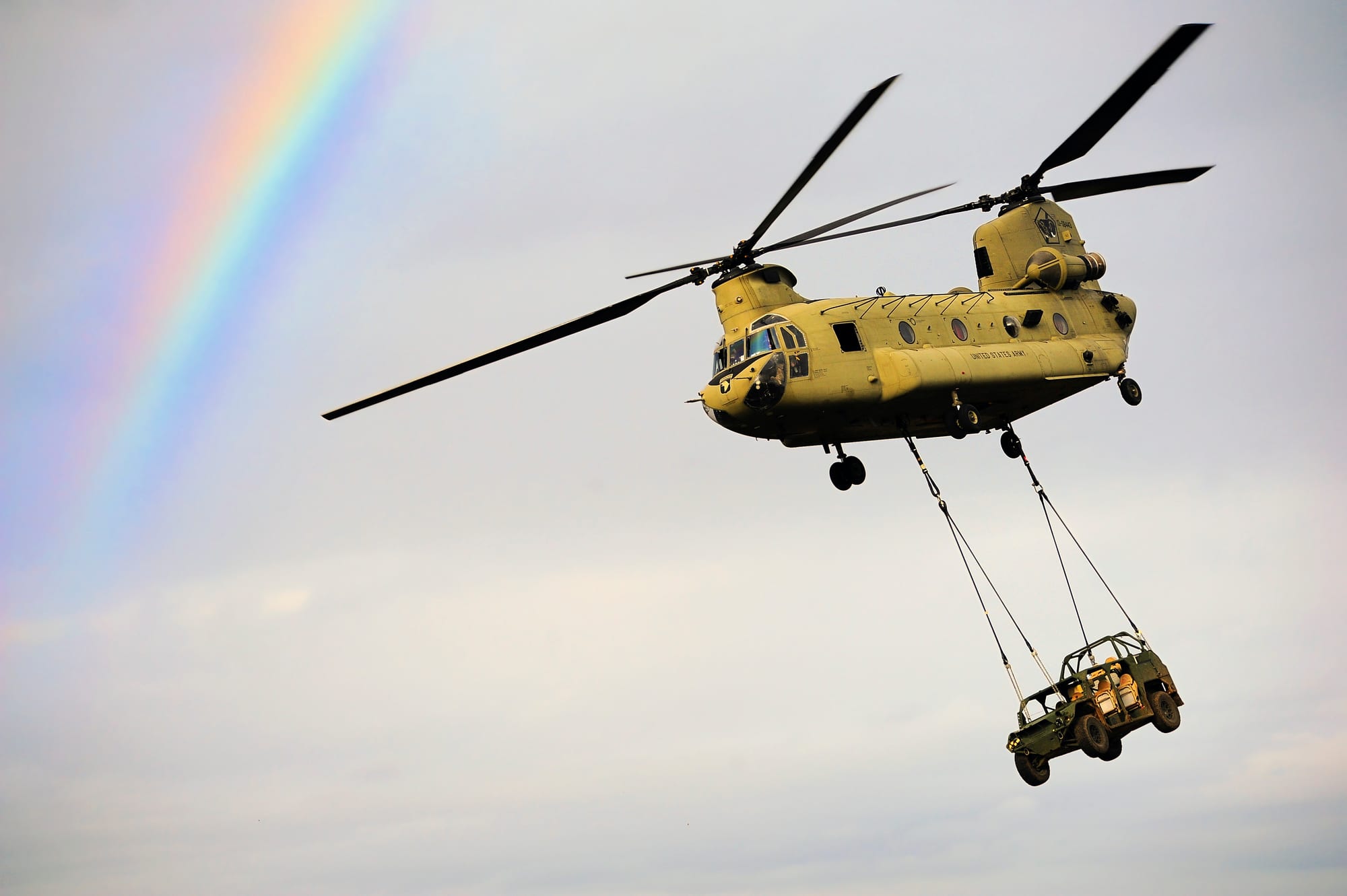
Contexto · helicópteros CH-47 Chinook, del tipo que escoltaba al objeto según los testigos
An Army CH-47 Chinook helicopter during a training exercise (210120-A-II094-096M).jpg · Wikimedia Commons · Dominio público · abrir original
La noche en cuestión
La noche del 29 de diciembre de 1980, alrededor de las 21:00, Vickie Landrum (57), su nieto Colby Landrum (7) y Betty Cash (51) regresaban en automóvil de cenar, por la carretera FM 1485 en una zona boscosa y poco transitada cerca de Huffman, Texas, al noreste de Houston. Detuvieron el vehículo al observar a baja altura sobre la carretera un objeto incandescente con forma de diamante o rombo, que emitía periódicamente llamas por su parte inferior con un sonido descrito como un rugido o un bramido intermitente. El calor que irradiaba era tan intenso que, según los testigos, calentó la carrocería del coche; Vickie relató que la manija de la puerta quemaba al tacto y que la salpicadera del tablero quedó con marcas. Betty Cash, conductora, permaneció fuera del vehículo varios minutos observando; Vickie se mantuvo dentro protegiendo a su nieto, que lloraba.
Cuando el objeto comenzó a elevarse, apareció en torno a él una gran cantidad de helicópteros militares (las testigos contaron alrededor de 23, varios identificados como CH-47 Chinook de doble rotor) que parecían escoltarlo o seguirlo. Es una de las particularidades del caso, y la que tiene más apoyo fuera de las tres víctimas: según las recopilaciones de John Schuessler y de Richard Hall, un vecino de Crosby vio pasar los helicópteros sobre su casa y el obrero petrolero Jerry McDonald, en Dayton, vio pasar un objeto grande con forma de diamante. El testimonio mejor documentado es el de un policía de Dayton y su esposa, a quienes entrevistó el investigador del Ejército: hacia las 00:30 o 01:00 del 30 de diciembre, unas tres horas después del encuentro y a menos de cinco millas del lugar, oyeron un ruido fuerte y vieron helicópteros de doble rotor que volaban bajo, en grupos de tres en formación de «V», encendiendo de vez en cuando focos o luces de aterrizaje. Otra persona que, según Schuessler, había visto helicópteros a la hora del encuentro se negó a ser entrevistada. Vickie Landrum contó que en mayo de 1981, en una exhibición en Dayton, el piloto de un CH-47 de la Guardia Nacional, el suboficial Culberson, le dijo que había volado esa noche; entrevistado por el Ejército, Culberson negó «enfáticamente» haber volado y dijo que solo le había comentado lo que oyó en los medios. En las horas y días siguientes, las tres víctimas desarrollaron náuseas, vómitos, diarrea, ardor en los ojos y la piel como quemada por el sol; Betty Cash, la más expuesta, ingresó el 3 de enero de 1981 en urgencias, con ampollas, calvas y sin poder caminar, y pasó doce días hospitalizada y luego otros quince. El radiólogo Peter Rank revisó los expedientes médicos de Cash por encargo de los investigadores, y el libro de Schuessler reproduce sus dictámenes en orden. El dermatólogo había diagnosticado una alopecia areata, un trastorno benigno de caída localizada del cabello, diagnóstico que la anatomía patológica confirmó en parte, y el oftalmólogo no halló daño en las estructuras internas del ojo atribuible a radiación. Rank, en abril de 1981, escribió que la pérdida de uñas de las dos mujeres puede deberse también al estrés emocional, como expresión psicosomática, «aunque creo que es poco probable», y que esa pérdida y la del cabello «favorecen la presencia de radiación ionizante»; después puso en duda la alopecia areata por el cuadro inflamatorio inicial y la biopsia. Su conclusión final fue más prudente: hubo daño por radiación limitado a la piel, «de tipo desconocido», probablemente «limitado en severidad» y «sin evidencia de afectación sistémica», y si fue ionizante estaba «por ahora poco claro». Esos expedientes, sin embargo, nunca se han hecho públicos: Schuessler los retuvo alegando la privacidad de las víctimas.
El 17 de agosto de 1981 las tres fueron entrevistadas en la biblioteca jurídica de la base aérea de Bergstrom, en Austin, por el jefe interino de la asesoría jurídica y dos oficiales de reclamaciones de la Fuerza Aérea, como paso previo a una reclamación de daños; la cinta la entregó después Betty Cash y su transcripción es pública. La Fuerza Aérea declaró a comienzos de 1982 que ninguno de sus helicópteros había participado, y la Inspección General del Ejército encargó una investigación al teniente coronel George Sarran, que consideró creíbles a las testigos pero no pudo atribuir los helicópteros a ninguna unidad del Ejército, la Guardia Nacional ni la Reserva, en plena pausa de fin de año. Su memorando, del que se liberaron las partes no reservadas, aclara que la indagación se limitó a esa pregunta y no intentó comprobar el suceso ni los problemas médicos, aunque anota que la evidencia médica del deterioro de salud «parece casi irrefutable»; consultó mandos del Ejército, los helicópteros de la Guardia Nacional de Ellington y los de la Reserva de Tomball, la policía de Houston, la FAA y al sheriff de Conroe, y nadie sabía de helicópteros en vuelo esa noche. Antes, un memorando de la asesoría jurídica de Bergstrom del 20 de agosto de 1981 había señalado que el lugar estaba a unas 13 millas del aeropuerto Intercontinental de Houston, dentro de su área de control terminal, y que el radar y los pilotos de las rutas que pasan por encima probablemente habrían visto un despliegue así; el informe de Schuessler recoge en cambio de la FAA que el radar de Houston no cubre por debajo de unos 2.000 pies en torno al lago Houston. Representadas sin cobrar por el abogado Peter Gersten, las víctimas demandaron al gobierno federal por 20 millones de dólares ante el Tribunal de Distrito del Distrito Sur de Texas (Cash et al. v. United States, H-84-348). El tribunal la desestimó el 21 de agosto de 1986 con una orden escueta, al amparo de las reglas 12(b)(1), 12(b)(6) y 56 del procedimiento civil federal, después de que el gobierno presentara declaraciones juradas de la NASA, la Fuerza Aérea, la Marina y el Ejército según las cuales ningún objeto como el descrito figuraba en sus inventarios; la orden no se pronuncia sobre las lesiones, y las demandantes habían objetado que la declaración del Ejército no negaba la propiedad de los helicópteros. Betty Cash falleció en 1998; su familia ha sostenido la conexión causal entre sus problemas de salud y el incidente.
Por qué importa
El caso reúne tres elementos: (a) tres víctimas con síntomas físicos agudos y hospitalizaciones, (b) una demanda federal contra el gobierno de Estados Unidos, desestimada en 1986, y una investigación de la Inspección General del Ejército, (c) testigos secundarios que vieron helicópteros militares en la zona esa misma noche, unas horas después. Es estructuralmente comparable a ↗ (FAB Operação Prato, víctimas médicas) y a ↗ (operación militar simultánea). La etiqueta cultural de 'abducción' no se ajusta a lo que contaron las víctimas, que no reportaron captura ni pérdida de tiempo.
La objeción médica más fuerte la formuló en 1999 el investigador Brad Sparks, que lo había revisado para APRO con el radio-oncólogo Richard Niemtzow: la rapidez del inicio de los síntomas y su cuadro completo no encajan con radiación ionizante a dosis subletal, porque una dosis capaz de producir quemaduras y caída de cabello tan veloces habría sido típicamente mortal, y las tres víctimas sobrevivieron años. El médico Gary Posner llegó a la misma conclusión y sugirió además que las quemaduras redondas de los brazos de Cash, vistas en televisión, podían ser autoinfligidas; Sheaffer lo relacionó con el síndrome de Münchausen, sin prueba documental y en contra de la valoración del investigador del Ejército, que no percibió en nadie intención de exagerar. El expediente tiene además dos agujeros que salieron a la luz en 2013, cuando el investigador Curt Collins publicó documentos que no se habían difundido: el Departamento de Salud de Texas no encontró radiación residual en la carretera, y su inspector anotó que ni las testigos ni Schuessler sabían dónde había ocurrido el encuentro, más allá de un tramo recto de la FM 1485 «entre una cantina y una señal de tráfico»; el informe de Allan Hendry de 1981 para el Fondo para la Investigación OVNI añade que no se hallaron marcas en el pavimento. No hay foto ni registro de radar del objeto, y la historia clínica que sostiene el daño sigue sin publicarse. La desestimación de 1986 no fue un pronunciamiento sobre qué pasó: el tribunal aceptó, sin juicio y con la fase de prueba suspendida, la moción del gobierno, apoyada en declaraciones juradas de que el objeto no era suyo. En balance: las lesiones y el despliegue de helicópteros tienen respaldo en el expediente; la atribución de esas lesiones a radiación de un objeto anómalo no está establecida, y la naturaleza última del objeto permanece indeterminada.
Lo que queda en papel
Evidencia documentada
- Entrevista de las tres testigos con la asesoría jurídica y la oficina de reclamaciones de la Fuerza Aérea en la base de Bergstrom, 17 de agosto de 1981 (transcripción pública)
- Investigación de la Inspección General del Ejército (teniente coronel George Sarran, 1982): testigos creíbles, helicópteros no atribuibles a ninguna unidad del Ejército, la Guardia Nacional ni la Reserva; la evidencia médica del deterioro de salud «parece casi irrefutable», pero no fue objeto de la indagación
- Demanda Cash et al. v. United States, H-84-348, Distrito Sur de Texas, desestimada el 21 de agosto de 1986 (reglas 12(b)(1), 12(b)(6) y 56) tras declaraciones juradas de la NASA, la Fuerza Aérea, la Marina y el Ejército de que ningún objeto como el descrito estaba en sus inventarios
- Testigos secundarios de helicópteros de doble rotor (un policía de Dayton y su esposa, hacia las 00:30-01:00, unas tres horas después, entrevistados por el investigador del Ejército; un vecino de Crosby, según Schuessler) y de un objeto con forma de diamante (Jerry McDonald, Dayton)
- Hospitalización de Betty Cash desde el 3 de enero de 1981; expedientes médicos revisados por el radiólogo Peter Rank pero nunca publicados
Ver 2 evidencias más
- Departamento de Salud de Texas: sin radiación residual en la carretera y sin punto exacto del encuentro; informe de Allan Hendry (1981): sin marcas en el pavimento
- Memorando de la asesoría jurídica de Bergstrom (20 de agosto de 1981): el lugar está dentro del área de control terminal del aeropuerto Intercontinental de Houston, a unas 13 millas; el radar y los pilotos probablemente habrían visto los helicópteros
Fuentes
- Transcripción de la entrevista en la base aérea de Bergstrom, 17 de agosto de 1981 (CUFON, copia en NICAP) — Cinta entregada por Betty Cash; entrevistan el jefe interino de la asesoría jurídica y la oficina de reclamaciones de la Fuerza Aérea
- Richard Hall, «The UFO Evidence», vol. II, pp. 226-229 (extracto en NICAP) — Resume la investigación del teniente coronel George Sarran para la Inspección General del Ejército y la conclusión del radiólogo Peter Rank
- Inspección General del Ejército de EE. UU. — memorando del teniente coronel George C. Sarran y notas de la investigación (1982), liberados por FOIA a Frederic L. Whiting el 19 de agosto de 1982 (copia de Curt Collins) — Fuente primaria: alcance de la indagación, entrevistas al policía de Dayton y a los mandos de helicópteros, y valoración de los testigos.
- Expediente FOIA de Bergstrom y la Inspección General del Ejército sobre Cash-Landrum, 22 de agosto de 1983 (copia de Curt Collins) — Fuente primaria: memorandos de la asesoría jurídica de Bergstrom de agosto de 1981, incluido el del 20 de agosto sobre el área de control terminal de Houston.
- Robert Sheaffer, «The ‘Classic’ Cash-Landrum Case Unravels», Skeptical Inquirer 38(2), marzo-abril de 2014 — Recoge la objeción médica de Sparks y Niemtzow y los documentos del Departamento de Salud de Texas y de Allan Hendry publicados por Curt Collins
- Cash et al. v. United States, H-84-348, Tribunal de Distrito de EE. UU., Distrito Sur de Texas (desestimada el 21 de agosto de 1986) — Expediente judicial federal (orden de desestimación, moción del gobierno y declaraciones juradas), en la recopilación de Quest Publications alojada por el archivo AFU
- John F. Schuessler, «The Cash-Landrum UFO Incident» (1998) — Investigación principal del caso para MUFON; fuente más completa y a la vez comprometida con la realidad del caso. Las pp. 107-111 reproducen los dictámenes del radiólogo Peter Rank y los informes del dermatólogo y el oftalmólogo
Casos relacionados
Actores asociados (1)