Caso Nº 144Case No. 144·Unión SoviéticaSoviet Union

1981·Órbita baja terrestre sobre el Atlántico Sur / Océano Índico, estación espacial Salyut-6Low Earth orbit over the South Atlantic / Indian Ocean, Salyut-6 space station

Unión SoviéticaSoviet Union.Cosmonauta Kovalyonok · estación Salyut-6 · objeto en órbitaCosmonaut Kovalyonok · Salyut-6 station · object in orbit

El 5 de mayo de 1981, hacia las 18:00 hora de Moscú, el cosmonauta Vladimir Kovalyonok —Mayor General, dos veces Héroe de la Unión Soviética— observó desde un puerto de la estación Salyut-6 un objeto que volaba a la par de la nave sobre el sur del continente africano. Inicialmente elíptico tipo 'pesa de mancuerna', el objeto se volvió translúcido revelando una estructura interna y luego mostró una emisión tipo gas en un extremo antes de desaparecer. Kovalyonok llamó a su compañero Viktor Savinykh, quien también lo observó. No se registró ese día ningún test de cohete ni de misil compatible. Es el caso del corpus con la cohorte de testigos más alta posible (dos cosmonautas en servicio) dentro del programa espacial soviético.On May 5, 1981, around 18:00 Moscow time, cosmonaut Vladimir Kovalyonok —Major General, twice Hero of the Soviet Union— observed from a porthole of the Salyut-6 station an object flying alongside the spacecraft over southern Africa. Initially elliptical like a 'barbell', the object became translucent revealing an internal structure and then showed a gas-like emission at one end before disappearing. Kovalyonok called his crewmate Viktor Savinykh, who also observed it. No rocket or missile test compatible with that day was recorded. It is the corpus case with the highest possible witness cohort (two cosmonauts on duty) within the Soviet space program.

AñoYear

1981

TierTier

A

ProbabilidadProbability

50%

CategoríaCategory

IncidenteIncident

Evidencia institucional: múltiples testigos verificables o documentación oficial. Tres ejes independientes: el «tier» mide la fuerza de la evidencia; la «probabilidad» estima cuán genuinamente inexplicado está el caso —un fenómeno natural puede seguir sin explicación, así que no equivale a «no-prosaico»—; y la partición de explicaciones (abajo) dice qué fue más plausiblemente. Por eso un caso bien documentado puede tener como causa más plausible un posible fraude, y un Tier B no es, por eso, un fraude.Institutional evidence: multiple verifiable witnesses or official documentation. Three independent axes: the «tier» measures the strength of the evidence; the «probability» estimates how genuinely unexplained the case is —a natural phenomenon can remain unexplained, so it does not equal «non-prosaic»—; and the partition of explanations (below) says what it most plausibly was. So a well-documented case can have a possible hoax as its most plausible cause, and a Tier B is not, for that reason, a hoax.

Documentos primarios · visorPrimary documents · viewer

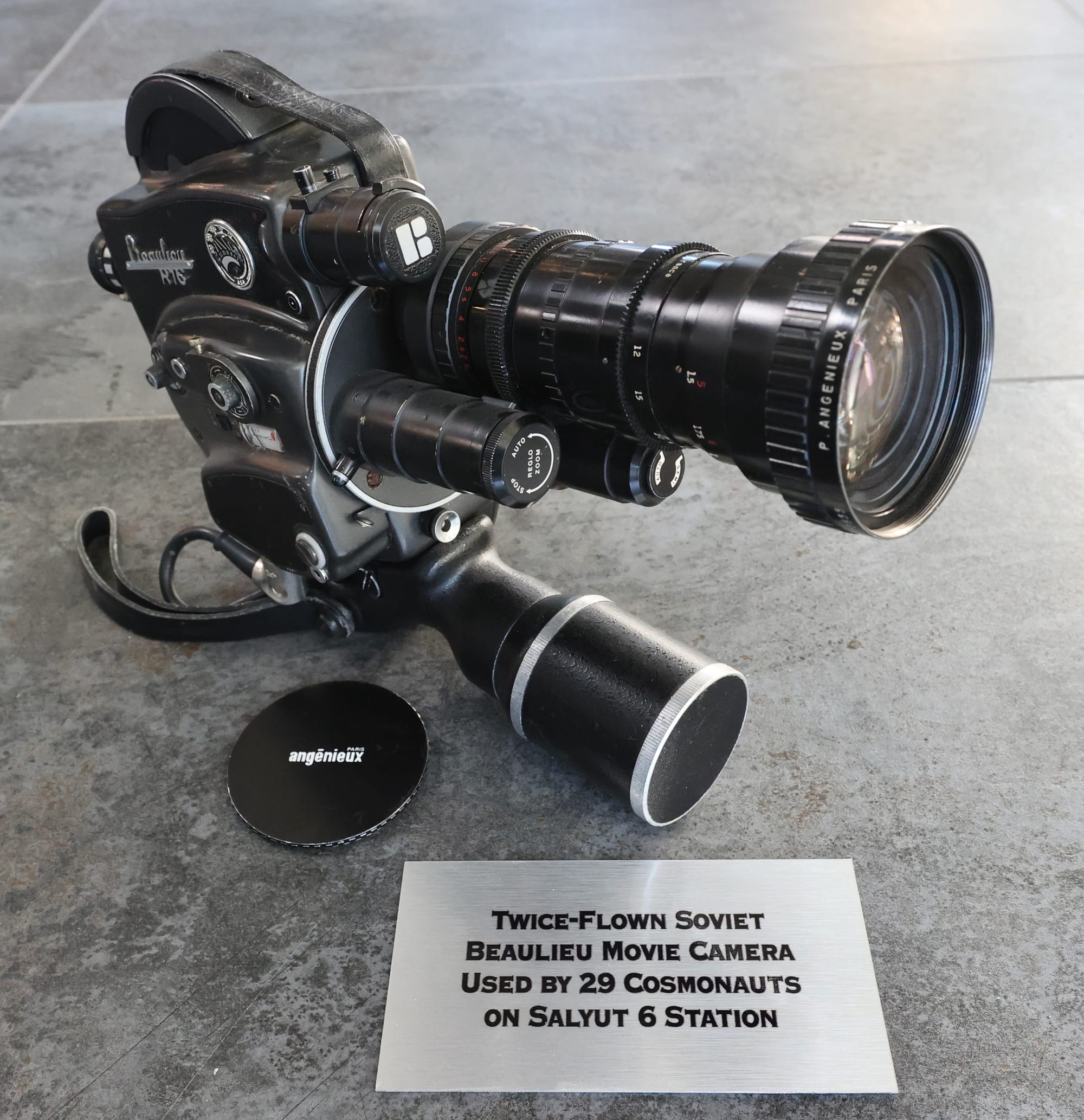
Contexto · la estación Salyut-6, desde donde el cosmonauta Kovalyonok observó el objeto

Contexto · la estación Salyut-6, desde donde el cosmonauta Kovalyonok observó el objetoContext · the Salyut-6 station, from which cosmonaut Kovalyonok observed the object

Salyut 6 cine camera (53594100081).jpg · Wikimedia Commons · CC BY 2.0 · abrir originalopen original

Parte 01Part 01

La noche en cuestiónThe night in question

El 5 de mayo de 1981, hacia las 18:00 hora de Moscú, la tripulación de la estación espacial soviética Salyut-6 ejecutaba operaciones de rutina en órbita baja terrestre durante la expedición tripulada Soyuz T-4. El comandante era Vladimir Vasilyevich Kovalyonok —cosmonauta de carrera, Mayor General de la Fuerza Aérea Soviética, dos veces Héroe de la Unión Soviética— acompañado por el ingeniero de vuelo Viktor Savinykh.

. Kovalyonok llamó a Savinykh, que dejó su puesto y se acercó al puerto. Según el propio comandante, intentaron fotografiar el fenómeno, pero mientras Savinykh iba a buscar la cámara el objeto

Kovalyonok había terminado una sesión de ejercicios cuando, a través de un puerto de observación, vio frente a la nave un objeto que volaba en trayectoria paralela. La estación se encontraba sobrevolando el sur del continente africano en dirección al Océano Índico. En sus relatos posteriores, Kovalyonok subrayó que el objeto era pequeño en apariencia angular —comparable al tamaño de un dedo extendido frente al ojo—, inicialmente de forma elíptica. Según su descripción, mientras lo observaba el cuerpo se volvió translúcido, mostró una estructura interna y luego se separó en dos partes conectadas, 'un poco como una pesa de mancuerna' (dumbbell/barbell). En uno de los extremos se manifestó una emisión semejante a gas o plasma — Kovalyonok la describió como 'tipo objeto reactivo'.

Kovalyonok llamó a Savinykh, que dejó su puesto y se acercó al puerto. Según el propio comandante, intentaron fotografiar el fenómeno, pero mientras Savinykh iba a buscar la cámara el objeto 'explotó' o se disipó dejando una nube de humo, y se desvaneció antes de poder registrarlo. Esa frustración de la captura instrumental es la razón por la que el caso —pese a la cohorte de testigos— carece de fotografía: no hubo negligencia, sino que el evento terminó demasiado rápido. Tras la misión, Kovalyonok reportó el incidente al programa SETKA-MO (), el programa soviético de investigación de UAP que en 1981 estaba en su tercer año operativo.

La interpretación escéptica más sólida proviene del periodista espacial estadounidense James Oberg, especialista en el programa soviético: Oberg argumenta que muchos 'avistamientos' de cosmonautas corresponden a lanzamientos lejanos de cohetes o pruebas de misiles, cuyas nubes de combustible y escape en el vacío y la luz rasante producen objetos translúcidos, cambiantes y que se disipan en minutos — exactamente el perfil descrito. El propio Kovalyonok, en entrevistas posteriores (notablemente en el documental ruso 'Космонавты и НЛО'), mantuvo que creía haber observado un objeto artificial terrestre no acreditado, no una entidad anómala, aunque no pudo identificarlo; la verificación cruzada de los cronogramas de lanzamiento soviético y estadounidense para esa fecha y trayectoria, según los relatos disponibles, no halló una prueba registrada compatible. El caso queda en récord como avistamiento sin resolver dentro del archivo SETKA y de la literatura cosmonáutica, con la hipótesis de escape de lanzamiento como candidato prosaico vivo pero no confirmado.

On May 5, 1981, around 18:00 Moscow time, the crew of the Soviet space station Salyut-6 was executing routine operations in low Earth orbit during the crewed Soyuz T-4 expedition. The commander was Vladimir Vasilyevich Kovalyonok —career cosmonaut, Major General of the Soviet Air Force, twice Hero of the Soviet Union— accompanied by flight engineer Viktor Savinykh.

Kovalyonok had just finished an exercise session when, through an observation porthole, he saw in front of the spacecraft an object flying on a parallel trajectory. The station was overflying southern Africa heading toward the Indian Ocean. In his later accounts, Kovalyonok stressed that the object was small in angular appearance —comparable to the size of a finger held up before the eye—, initially elliptical. By his description, as he watched, the body became translucent, showed an internal structure, and then separated into two connected pieces, 'a bit like dumbbells' (dumbbell/barbell). At one end a gas- or plasma-like emission appeared — Kovalyonok described it as 'reactive object'-like.

Kovalyonok called Savinykh, who left his post and approached the porthole. According to the commander himself, they tried to photograph the phenomenon, but while Savinykh went to fetch the camera the object 'exploded' or dissipated, leaving a puff of smoke, and vanished before it could be recorded. That thwarted instrumental capture is the reason the case —despite its witness cohort— has no photograph: not negligence, but an event that ended too quickly. After the mission, Kovalyonok reported the incident to the SETKA-MO program (), the Soviet UAP-investigation program then in its third operational year.

The strongest skeptical interpretation comes from U.S. space journalist James Oberg, a specialist in the Soviet program: Oberg argues that many cosmonaut 'sightings' correspond to distant rocket launches or missile tests, whose fuel and exhaust clouds in vacuum, lit at grazing angles, produce translucent, shape-shifting objects that dissipate within minutes — exactly the described profile. Kovalyonok himself, in later interviews (notably the Russian documentary 'Космонавты и НЛО'), maintained he believed he had observed an unaccredited artificial terrestrial object, not an anomalous entity, though he could not identify it; the cross-check of Soviet and U.S. launch schedules for that date and trajectory, per the available accounts, found no recorded compatible test. The case remains on the record as an unresolved sighting within the SETKA archive and the cosmonautics literature, with the launch-exhaust hypothesis a live but unconfirmed prosaic candidate.

Parte 02Part 02

Por qué este caso movió la agujaWhy this case moved the needle

Es el caso con la cohorte de testigos institucionalmente más alta del corpus: dos cosmonautas soviéticos en servicio, uno de ellos Mayor General de la Fuerza Aérea con dos veces Héroe de la Unión Soviética, observando un objeto desde una estación espacial del Estado durante una misión tripulada activa. La modalidad evidencial combina elementos que ningún otro caso del corpus reúne simultáneamente: (a) testigos con credenciales institucionales militares de máximo nivel, (b) sitio de observación que es infraestructura espacial nacional, (c) reporte ingresado al archivo SETKA estatal, (d) verificación cruzada de lanzamientos compatibles negativa. Su valor para el corpus es geográfico (cierra el gap soviético post-Petrozavodsk) y modal (testimonio cosmonáutico institucional sin equivalente occidental hasta los testimonios bajo juramento de pilotos navales Fravor/Dietrich en 2017). Tier A y no Tier S porque es testimonio sin instrumentación coordinada (cámara, radar) y porque el propio Kovalyonok no descartó explicación artificial terrestre — el caso queda abierto, no anómalo.

It is the corpus's case with the highest institutional witness cohort: two Soviet cosmonauts on duty, one of them a Major General of the Air Force twice Hero of the Soviet Union, observing an object from a state space station during an active crewed mission. The evidential modality combines elements no other corpus case assembles simultaneously: (a) witnesses with maximum-level military institutional credentials, (b) observation site that is national space infrastructure, (c) report entered into the state SETKA archive, (d) negative cross-check of compatible launches. Its value for the corpus is geographic (closes the Soviet gap post-Petrozavodsk) and modal (institutional cosmonaut testimony without Western equivalent until the sworn pilot testimonies of Fravor/Dietrich in 2017). Tier A and not Tier S because it is testimony without coordinated instrumentation (camera, radar) and because Kovalyonok himself did not rule out a terrestrial artificial explanation — the case remains open, not anomalous.

Parte 03Part 03

Lo que queda en papelWhat's left on paper

Evidencia documentadaDocumented evidence

  1. Cohorte de dos cosmonautas en servicio: Vladimir Kovalyonok (comandante, Mayor General Fuerza Aérea, dos veces Héroe URSS) + Viktor Savinykh (ingeniero de vuelo)Witness cohort of two cosmonauts on duty: Vladimir Kovalyonok (commander, Air Force Major General, twice Hero of the USSR) + Viktor Savinykh (flight engineer)
  2. Sitio de observación: estación espacial Salyut-6, expedición Soyuz T-4, sobre el sur del continente africano hacia el Océano Índico, 5 mayo 1981 ~18:00 hora MoscúObservation site: Salyut-6 space station, Soyuz T-4 expedition, over southern Africa heading toward the Indian Ocean, May 5, 1981 ~18:00 Moscow time
  3. Descripción técnica detallada por el propio Kovalyonok: forma 'pesa de mancuerna' (elíptica/bilobulada), volviéndose translúcida con estructura interna visible, emisión tipo gas/plasma en un extremo ('reactive object')Detailed technical description by Kovalyonok himself: 'barbell' shape (elliptical/bilobed), becoming translucent with visible internal structure, gas/plasma-like emission at one end ('reactive object')
  4. Reporte ingresado formalmente al programa SETKA-MO () en su tercer año operativoReport formally entered into the SETKA-MO program () in its third operational year
  5. Verificación cruzada negativa: ningún test soviético o estadounidense de cohete/misil/satélite registrado para esa fecha y trayectoriaNegative cross-check: no Soviet or U.S. rocket/missile/satellite test recorded for that date and trajectory
  6. Testimonio posterior sostenido por Kovalyonok en entrevistas (notablemente documental ruso 'Космонавты и НЛО'): mantiene la lectura de objeto artificial terrestre no identificado, no extraterrestreSustained later testimony by Kovalyonok in interviews (notably the Russian documentary 'Космонавты и НЛО'): maintains the reading of unidentified terrestrial artificial object, not extraterrestrial

FuentesSources

  1. Kovalyonok, V. — entrevistas posteriores y declaraciones documentadas (década 1990–2000) El propio cosmonauta sostuvo públicamente la descripción del evento.The cosmonaut himself publicly maintained the description of the event.
  2. UFO Evidence — 'Russian Cosmonaut sees UFO while in orbit aboard Salyut-6 Space Station' Reconstrucción documental del caso con cronología y fuentes.Documentary reconstruction of the case with chronology and sources.
  3. Oberg, J. — 'Have cosmonauts seen launches?' (análisis técnico) Revisión escéptica por especialista en cosmonáutica soviética — verificación cruzada con cronograma de lanzamientos.Skeptical review by a specialist in Soviet cosmonautics — cross-checked against the launch schedule.
  4. Documental ruso 'Космонавты и НЛО' (Cosmonautas y UFOs) Entrevista directa de Kovalyonok sobre el incidente.Direct interview with Kovalyonok about the incident.

UbicaciónLocation

Órbita baja terrestre sobre el Atlántico Sur / Océano Índico, estación espacial Salyut-6Low Earth orbit over the South Atlantic / Indian Ocean, Salyut-6 space station · -33.00°, 28.00°

Distribución de explicacionesDistribution of explanations

Este caso se clasifica entre las hipótesis del modelo: la barra reparte el 100% según cuánto pesa cada explicación (la incertidumbre se reparte entre las hipótesis que el caso apoya). Sumadas en todo el corpus producen la partición comparable. Es una pregunta distinta de la Probabilidad de arriba: aquella estima qué tan probable es que el caso sea un fenómeno genuinamente no explicado; esta reparte cuál sería la explicación.This case is classified among the model's hypotheses: the bar splits 100% by how much each explanation weighs (the uncertainty is spread across the hypotheses the case supports). Summed across the corpus they produce the comparable partition. It is a different question from the Probability above: that one estimates how likely the case is a genuinely unexplained phenomenon; this one splits which the explanation would be.

MisidentificaciónMisidentification59%
Tecnología humana clasificadaClassified human technology20%
Tecnología adversariaAdversary technology8%
No-humano + encubrimiento estatalNon-human + state cover-up7%
No-humano sin gestión estatalNon-human, no state management6%

Hipótesis modalModal hypothesis: MisidentificaciónMisidentification 59% · suma 100%sums to 100%

Se confundió conConfused with: Espacial (satélite/reentrada)Space (satellite/reentry)

Juicio analítico estructurado, no frecuencia calibrada. Clasificación forzada: la masa que la evidencia no permite asignar se reparte entre las hipótesis que el caso sí apoya.Structured analytical judgment, not a calibrated frequency. Forced classification: the mass the evidence cannot assign is spread across the hypotheses the case does support.

Casos relacionadosRelated cases