1946·Finland (nationwide reports; Defense investigation)
Finland.Ghost rockets · Finnish origin (Finnish Defence Forces)
The 1946 'ghost rockets' wave (fast projectile-shaped objects over Scandinavia) began in Finland: the first reports date to February 26, 1946, by Finnish observers.
Read the rest of the summary
Finland was part of a phenomenon whose firmest record is the Swedish Defence Staff's: about a thousand reports up to 1 October, 80% of them very probably attributed to meteors, with no confirmed projectile tracks and no material remains at the alleged impact sites. It complements the Swedish case (Försvarsstaben) by anchoring the phenomenon's origin and the Finnish context; the most-discussed explanation, Soviet tests of captured missiles, is inconclusive.
Tier B · IndicativeWhat do they mean? →
Limited evidence: a single witness, testimony gathered years later, or an account without contemporary primary documentation.
What it was
70%natural or human cause
Most likely explanation: meteor or fireball
See the split across the six explanations
Natural or human cause
No known cause
Read the full reasoning
It assesses the wave that included the Finnish reports, not a Finnish analysis, which has not been found; the communiqué admits cases with unambiguous observations it does not explain. Original: "ungefähr 80 Prozent reine Lichtphänomene betroffen, die mit großer Wahrscheinlichkeit auf himmlischen Ursprung (Meteore und Meteoriten) zurückgeführt werden könnten".Context image (not a document from the case)
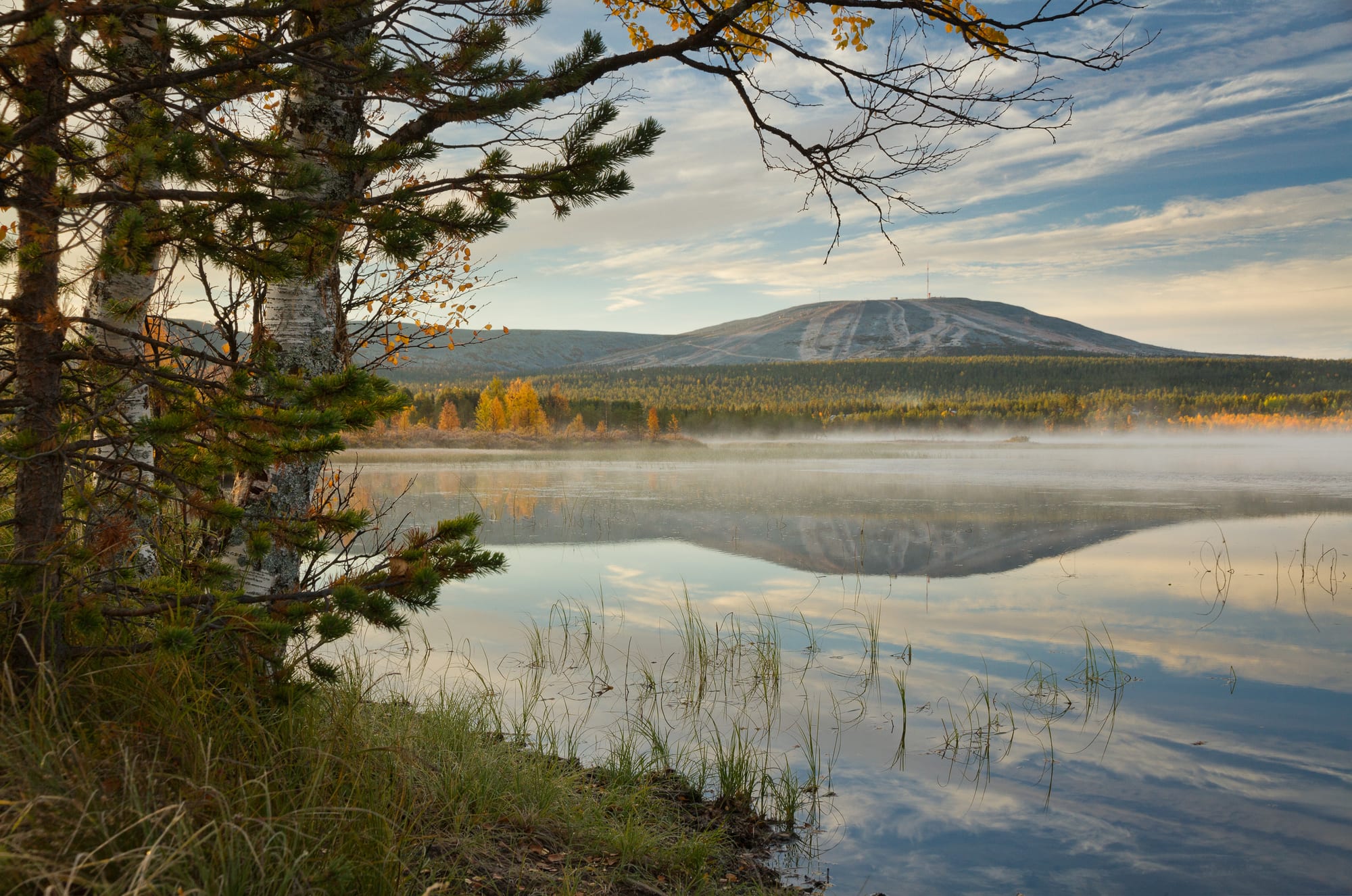
Context · Finland, scene of the 1946 'ghost rockets'
Äkäslompolo and Ylläs in Kolari, Lapland, Finland, 2018 September.jpg · Wikimedia Commons · CC BY-SA 3.0 · open original
The night in question
The phenomenon known as 'ghost rockets' (spökraketer) (fast objects, usually projectile- or cigar-shaped, seen crossing the Scandinavian sky in 1946) was first recorded in Finland: on February 26, 1946, Finnish observers reported the earliest sightings, months before the wave intensified over Sweden in summer. That date comes from later compilations, not from a Finnish file that has been located: the Finnish UFO association Fufora wrote in 1999 that ghost-rocket sightings in Finnish skies 'have not been properly researched' and that their data would be, besides in the press, in the War Archives (Sota-arkisto).
Through 1946, according to the usual compilations, about 2,000 sightings accumulated in the region, the bulk between May and December, with peaks on August 9 and 11. The firmest primary record is that of the Försvarsstaben (Swedish Defence Staff), whose communiqué of 10 October 1946 was reported the next day by the Neue Zürcher Zeitung: of the roughly one thousand reports received and checked by 1 October, 'about 80 percent' concerned purely luminous phenomena 'very probably' of celestial origin (meteors); most of the rest were very vague, but 'in individual cases' there were unambiguous observations that could be attributed neither to celestial phenomena, nor to imagination, nor to night flights of Swedish aircraft. The same communiqué admits, 'in contrast to earlier communications', that it had not been possible to establish projectile tracks over Sweden with certainty, and that no material remains allowing a judgement on their origin had been found at the alleged impact sites. Finland, given its border and its position between the USSR and the rest of Scandinavia, was one setting of the wave in the immediate postwar; on the Swedish side, a U.S. intelligence daily summary of 27 August 1946 records that, according to the British chargé in Moscow as reported by the U.S. military attaché, the Swedes were 'very apprehensive' of making any statement about the rockets that might 'provoke' the USSR.
This case complements the Swedish one (↗, the Försvarsstaben investigation): it anchors the Finnish origin of the phenomenon and the Finnish context. On its nature, two conventional explanations cover much of the wave without anything exotic. The first, most discussed in 1946 as a security matter, was that these were Soviet tests of captured German missiles (V-1/V-2 derivatives using the Peenemünde facilities and personnel taken by the USSR); but the Swedish Defence Staff itself ended up not confirming it, because it could establish no projectile tracks and found no material remains at the alleged impact sites, no period missile had the range or accuracy needed for so many overflights, and several reports described slow, horizontal, formation and silent flight, inconsistent with a ballistic rocket. The second, astronomical explanation is that a substantial fraction of the sightings were meteors and bolides: it is the reading the Swedish Defence Staff applied to 80% of the reports, and the two August peaks coincide with the Perseid maximum. Neither exhausts the full body of reports (especially those of slow horizontal flight or splashdown in lakes) so the episode was left without a single, conclusive explanation.
Why it matters
The 1946 ghost-rockets wave began in Finland; it was the first major national-security episode of the modern UFO era and, chronologically, prior to the term 'flying saucer' (which appears with Kenneth Arnold in June 1947). That shows that state processing of anomalous aerial objects was born before postwar American saucer culture and on another continent, driven by a security logic: the fear of another power's technology over national territory with no possible attribution.
It complements the Swedish case by showing the phenomenon was multinational and mobilized more than one state at once, and it contributes its dated start. It shares the Swedish case's open explanation: the two strong conventional readings are Soviet missile tests (never confirmed, weakened by the lack of fragments) and meteors/bolides (which cover the August peaks via the Perseids but not the whole casuistry). It is, in short, a good reminder that a sighting wave can be at once historically real, institutionally serious and mostly explicable by mundane causes, without any of those three things canceling the others.
What's left on paper
Documented evidence
- Wave's first reports: February 26, 1946, by Finnish observers (before the Swedish summer peak).
- ~2,000 sightings in the region during 1946 per later compilations (peaks Aug 9 and 11); the Swedish Defence Staff counted about a thousand reports up to 1 October.
- Swedish Defence Staff communiqué (10 Oct 1946, in the NZZ): ~80% meteors; individual unambiguous cases unexplained; no confirmed projectile track and no material remains at the alleged impact sites.
- The most-discussed explanation, Soviet tests of captured missiles, remained unconfirmed: the Swedish General Staff established no projectile trajectories and found no material remains; inconclusive.
Sources
- Wikipedia — Ghost rockets (primeros reportes finlandeses, feb 1946)
- PROJECT 1947 — Scandinavian Ghost Rocket Reports 1946
- Neue Zürcher Zeitung, 11 oct 1946, «Die Raketengeschosse über Schweden. Bericht des schwedischen Generalstabs» (fuente primaria, Internet Archive) — Swedish Defence Staff communiqué: about a thousand reports up to 1 October, ~80% luminous phenomena attributable to meteors; no confirmed projectile tracks and no material remains.
- CIG — Daily Summary, 27 ago 1946 (CIA Reading Room 01068524, Internet Archive) — Records that the Swedes were very apprehensive of making any statement about the ghost rockets that might provoke the USSR.
- Fufora — «Ufotutkimuksen vaiheita Suomessa» (fuente secundaria, 1999) — The Finnish association notes that the 1946 Finnish sightings have not been properly researched.
Related cases