Case No. 132·Canada
1950·Ottawa, Canada (Department of Transport / Defence Research Board)
Canada.Project Magnet / Second Storey · government UFO programs (Canada)
In December 1950, Transport Canada established Project Magnet, an official UFO study program directed by radio engineer Wilbert B. Smith, aimed at investigating the phenomenon and the possibility of harnessing geomagnetism for propulsion. In April 1952 the government also created Project Second Storey, a parallel Defence Research Board committee. Magnet was formally active until 1954. These are among the world's earliest state UFO programs; honest framing: the extraterrestrial conclusions were Smith's personal interpretation, not official policy — the value is the early institutionalization of the subject in a G7 government.
Year
1950
Tier
A
Probability
55%
Category
Document
Institutional evidence: multiple verifiable witnesses or official documentation. Three independent axes: the «tier» measures the strength of the evidence; the «probability» estimates how genuinely unexplained the case is —a natural phenomenon can remain unexplained, so it does not equal «non-prosaic»—; and the partition of explanations (below) says what it most plausibly was. So a well-documented case can have a possible hoax as its most plausible cause, and a Tier B is not, for that reason, a hoax.
Primary documents · viewer
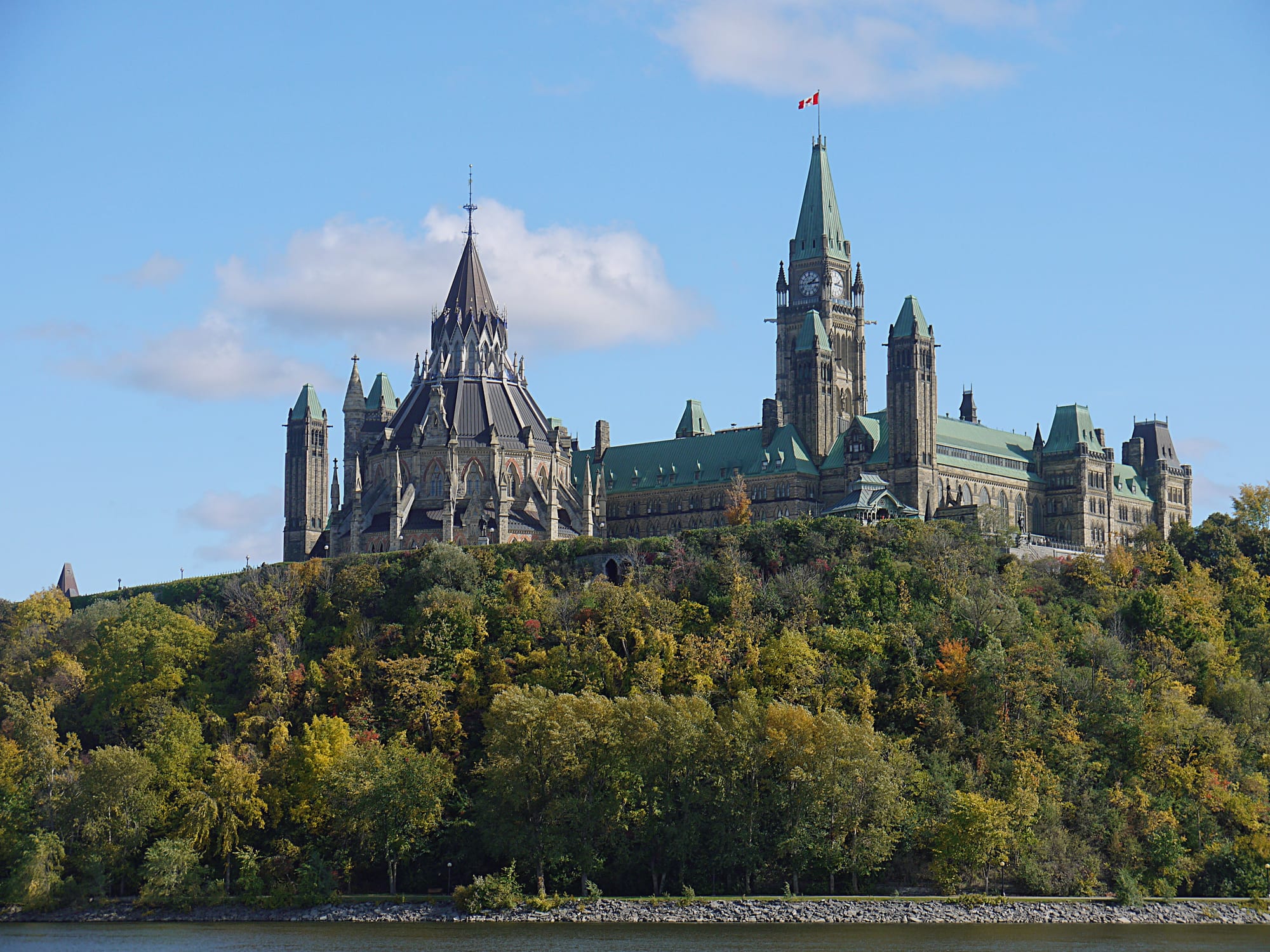
Context · Ottawa (Canada), seat of the Department of Transport that ran Project Magnet
Parliament Hill from the Ottawa River.JPG · Wikimedia Commons · CC BY-SA 2.5 ca · open original
Part 01
The file in question
On December 2, 1950, the Department of Transport (Transport Canada) formally approved Project Magnet, a program to study unidentified aerial phenomena under the direction of Wilbert Brockhouse Smith, a senior radio engineer at the Department of Transport with a master's degree in electrical engineering. The stated aim was to collect data on UFOs and apply what was learned to engineering, in particular to explore whether geomagnetic-field anomalies could be used to detect these objects and, eventually, as a source of propulsion.
The project's intellectual origin is documented and notable. Before its approval, in September 1950, Smith held a conversation in Washington with physicist Robert I. Sarbacher, a consultant to the U.S. Department of Defense Research and Development Board. Smith summarized that conversation in an internal memorandum dated November 21, 1950, which the Canadian government itself classified 'Top Secret': in it he states he had learned, through Canadian embassy staff, that the flying-saucer matter was a subject of the highest classification in the U.S. —by his wording, ranking even above the hydrogen bomb— and the object of a concentrated effort. That perception of a major foreign secret is what drove Smith to request his own research program; Smith's memo remains one of the most-cited pieces of Canadian declassification literature, although the Sarbacher claims it records were never independently corroborated.
Magnet operated for about four years. Smith set up a small instrument station at Shirleys Bay, near Ottawa, to try to detect disturbances associated with UFOs. In a report (submitted to the Second Storey committee around 1953) he argued that UFOs were probably of intelligent, extraterrestrial origin and almost certainly harnessed magnetism for flight —a conclusion neither his own department nor the committee endorsed. In parallel, in April 1952, the Canadian government established Project Second Storey, a Defence Research Board committee tasked with assessing UFO reports, with Smith also involved. Unlike Magnet, Second Storey took a skeptical stance: it concluded that the testimonies were too unreliable and subjective to support conclusions and recommended against committing sustained resources.
The corpus framing is balanced. What is institutionally solid and verifiable is the existence of two formal state programs dedicated to the phenomenon, in a G7 country, in the early 1950s —among the earliest in the world, contemporaneous with the first USAF efforts (Sign, Grudge, later Blue Book). What should NOT be oversold are the conclusions: the extraterrestrial-magnetic thesis was Smith's personal interpretation, not official Canadian government policy; Magnet lost state funding in 1954 (Smith continued it informally until his death in 1962) and Second Storey was explicitly dismissive. The case's value is the early institutionalization of the subject —not a validation of the phenomenon.
Part 02
Why this case moved the needle
The institutional complement to Canada's incident cases (Shag Harbour, Falcon Lake, Yukon): it shows that Canada not only had documented sightings but two official government programs dedicated to the phenomenon in the early 1950s —among the earliest in the world. It reinforces the corpus thesis that institutional processing of UAP predates the current cycle by decades and is not exclusive to the U.S. Moreover, the Magnet–Second Storey documentary chain illustrates a dynamic that would recur for seventy years: a state devotes resources to the subject because it worries about national security and the possibility of foreign technology, but its formal bodies tend toward skeptical caution, while the most committed individual researchers reach far stronger conclusions the institution never adopts. Smith and his committee are, in miniature, today's AATIP/AARO pattern.
The case is also a good exercise in epistemic discipline. It is tempting to read the 1950 'Top Secret' memo and the Sarbacher quote as early proof of a coordinated international cover-up; the corpus resists that reading. What is verifiable is the document and its classification, not the truth of what Sarbacher supposedly told Smith, which was never independently corroborated and was hedged in later years. The case's value is institutional —the early state structuring of the subject— not phenomenological; that is why it is included honestly: the extraterrestrial conclusions were Smith's, not the Canadian state's, and the parallel committee (Second Storey) was dismissive.
Part 03
What's left on paper
Documented evidence
- Project Magnet: approved by Transport Canada on Dec 2, 1950, directed by engineer Wilbert B. Smith; formally active until 1954.
- Project Second Storey: Defence Research Board committee (Apr 1952); assessed reports and concluded they were unreliable (skeptical stance).
- Smith's preliminary report (Jun 1952): extraterrestrial-origin and magnetic-propulsion thesis — personal interpretation, not official policy.
- Honest framing: two of the world's earliest state UFO programs; institutional value, not validation of the phenomenon.
Sources
- Wikipedia — Project Magnet (Canada)
- Library and Archives Canada — Wilbert Smith / Project Magnet records (Department of Transport)
- DoW/USAF — «Joint US-Canadian Aviation Projects and UFO Sighting Reports» (1954–1955) — Joint U.S.–Canada correspondence and reports from the Project Magnet / Second Storey period. AARO UAP Records, release 04 (DOWUAPD095).
Patterns it exhibits (1)
Location
Ottawa, Canada (Department of Transport / Defence Research Board) · 45.42°, -75.70°
Related cases
Associated actors (1)