Case No. 34·United States
2002·DIA HQ
United States.Wilson-Davis Memo
Eric Davis's handwritten 2002 notes record Admiral Thomas Wilson — former DIA Vice Director — recounting that in 1997 he was denied access to a special access program on recovered technology despite his rank: the compartmentalization described matches Grusch's 2023 testimony.
Year
2002
Tier
A
Probability
62%
Category
Document
Institutional evidence: multiple verifiable witnesses or official documentation. Three independent axes: the «tier» measures the strength of the evidence; the «probability» estimates how genuinely unexplained the case is —a natural phenomenon can remain unexplained, so it does not equal «non-prosaic»—; and the partition of explanations (below) says what it most plausibly was. So a well-documented case can have a possible hoax as its most plausible cause, and a Tier B is not, for that reason, a hoax.
Primary documents · viewer
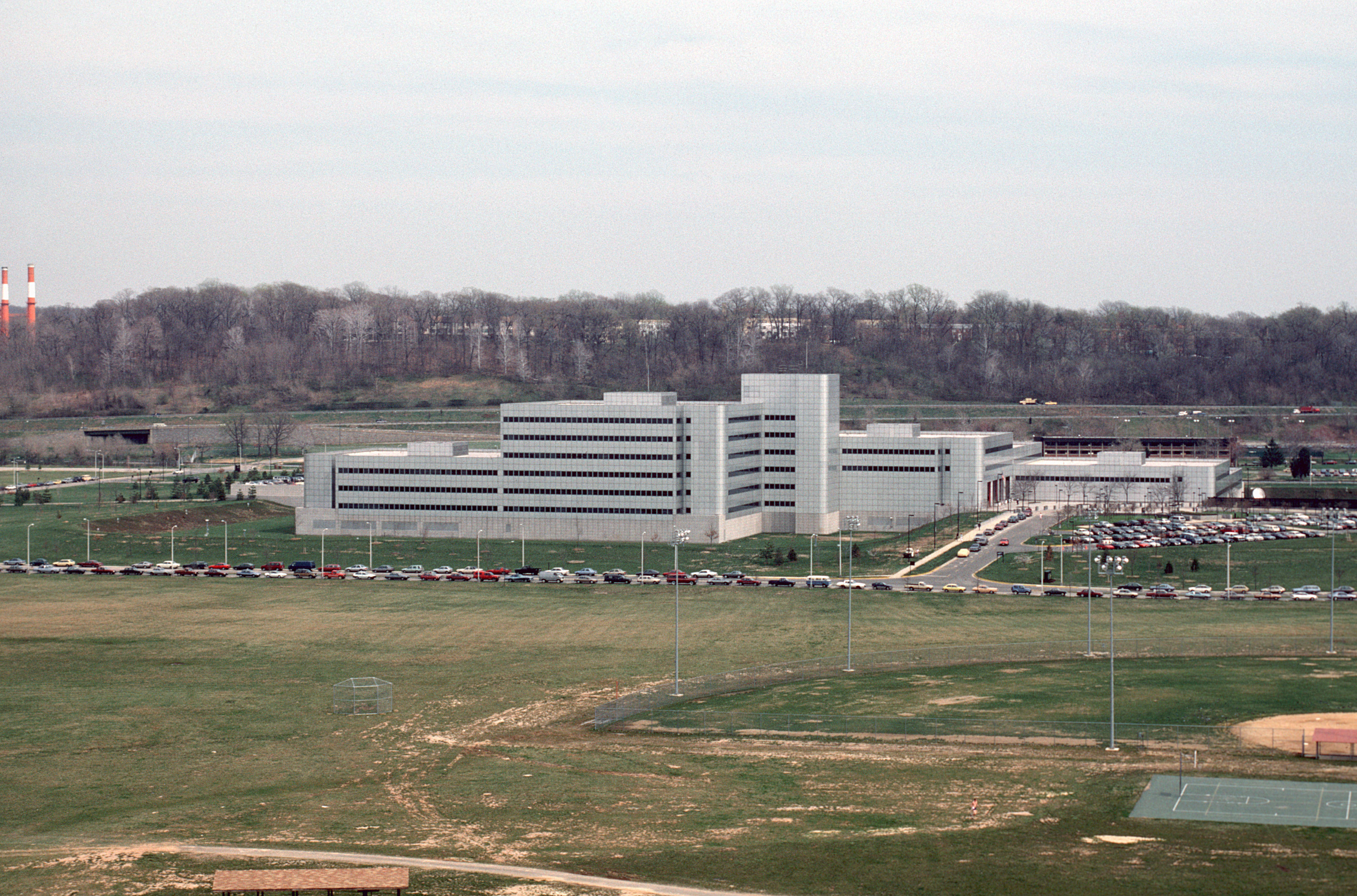
Context · the Defense Intelligence Agency (DIA) headquarters, Washington
Defense Intelligence Agency headquarters, Bolling Air Force Base.JPEG · Wikimedia Commons · Dominio público · open original
Part 01
The file in question
The so-called 'Wilson-Davis memo' is a set of handwritten notes attributed to Dr. Eric W. Davis, an astrophysicist and DIA contractor linked to the AAWSAP program. The notes record a conversation, dated October 16, 2002, between Davis and Admiral Thomas R. Wilson —former Vice Director of the Defense Intelligence Agency and later Director of the Joint Staff. According to the documents, the meeting took place in the context of the circle of Apollo 14 astronaut Edgar Mitchell, near Las Vegas defense facilities historically associated with deeply classified programs (the name of contractor EG&G, tied to Area 51 operations, is mentioned).
The core content: Wilson reportedly recounted that, around 1997, as a senior DIA official, he learned of a Special Access Program (SAP) operated by a private contractor that claimed to be studying recovered aerospace material —'crash retrieval' of an intact craft of unknown origin. When Wilson, despite his Top Secret/SCI clearance and his rank, requested formal access to the program, its managers denied him on the grounds that his need-to-know was not validated. The notes further describe Wilson tracing references to a 'carve-out' type program buried within the Office of the Under Secretary of Defense for Acquisition and Technology (OUSDAT), outside conventional oversight structures.
The notes came to light after Edgar Mitchell's death (2016) and circulated widely in 2019, first among researchers and then in the media. Davis did not deny authorship of the notes. Editorial honesty requires being precise about Wilson's position: the admiral has publicly denied —more emphatically than earlier versions suggest— ever meeting Davis or sharing the document's information, though he acknowledges a meeting with someone else (Will Miller) around the same period. The Pentagon has neither confirmed nor denied the authenticity of the described SAP. The file must therefore be read as private notes uncorroborated by any program document and with the protagonist in denial, not as established proof.
Part 02
Why this case moved the needle
If the notes faithfully reflect what Wilson said, they would be the corpus's most direct document on two distinct claims: that a program for the recovery and reverse-engineering of unconventional material exists, and that the program is so compartmentalized it denies access even to a DIA Vice Director with the highest clearance. The second claim is analytically more robust than the first: a denial of access to an officer of that rank describes the operative structure of a carve-out 'black program', a governance problem that requires no exotic premise to be troubling. The coherence with David Grusch's sworn congressional testimony (2023) about undisclosed programs reinforces the reading without proving it.
Editorial honesty requires holding the case in its true register: private notes, uncorroborated by any program document, whose protagonist denies both the meeting and its content, and which the Pentagon neither confirms nor denies. That combination is exactly what prevents elevating the case above Tier A or letting it weigh more than modestly. The file's value is not probative but structural: even treated with maximum skepticism —assuming the notes exaggerate or misinterpret— it documents the asymmetry of compartmentalized information as a persistent problem of the U.S. intelligence apparatus, where the 'need-to-know' barrier can, in principle, override the formal chain of command. It is a case about the limits of democratic control over secrecy, more than about saucers.
Part 03
What's left on paper
Documented evidence
- Original handwritten notes by Dr. Eric Davis (October 16, 2002)
- Confirmation of authenticity by Davis in 2020 after the public leak
- Wilson did not deny the meeting or the general discussion (only specific details)
- Coherence with Grusch's subsequent testimony (2023) about undisclosed programs
Sources
- Wilson-Davis Memo — full text leaked 2019
- The Debrief — Wilson Davis Memo coverage (2020)
- Mellon, C. — Comments on Wilson-Davis (2020) — Former Deputy Asst SecDef, Intelligence
Patterns it exhibits (1)
Location
DIA HQ · 38.89°, -77.04°
Related cases
Associated actors (3)

