Caso Nº 35Case No. 35·MéxicoMexico

2004·CampecheCampeche

MéxicoMexico.Mexican Air Force (FLIR)Mexican Air Force (FLIR)

El 5 de marzo de 2004, una aeronave de la Fuerza Aérea Mexicana en patrulla antinarcóticos sobre Campeche detectó en radar y FLIR once objetos esféricos visibles solo en infrarrojo; el secretario de Defensa Clemente Vega García autorizó personalmente la difusión del video. Es un caso de calibración: la divulgación oficial no implica anomalía, y persiste una explicación convencional plausible (reflejos de plataformas).On 5 March 2004, a Mexican Air Force aircraft on an anti-narcotics patrol over Campeche detected eleven spherical objects on radar and FLIR, visible only in infrared; Defense Secretary Clemente Vega García personally authorized release of the video. It is a calibration case: official disclosure does not imply anomaly, and a plausible conventional explanation (reflections from oil platforms) remains.

AñoYear

2004

TierTier

A

ProbabilidadProbability

22%

CategoríaCategory

IncidenteIncident

Evidencia institucional: múltiples testigos verificables o documentación oficial. Tres ejes independientes: el «tier» mide la fuerza de la evidencia; la «probabilidad» estima cuán genuinamente inexplicado está el caso —un fenómeno natural puede seguir sin explicación, así que no equivale a «no-prosaico»—; y la partición de explicaciones (abajo) dice qué fue más plausiblemente. Por eso un caso bien documentado puede tener como causa más plausible un posible fraude, y un Tier B no es, por eso, un fraude.Institutional evidence: multiple verifiable witnesses or official documentation. Three independent axes: the «tier» measures the strength of the evidence; the «probability» estimates how genuinely unexplained the case is —a natural phenomenon can remain unexplained, so it does not equal «non-prosaic»—; and the partition of explanations (below) says what it most plausibly was. So a well-documented case can have a possible hoax as its most plausible cause, and a Tier B is not, for that reason, a hoax.

Documentos primarios · visorPrimary documents · viewer

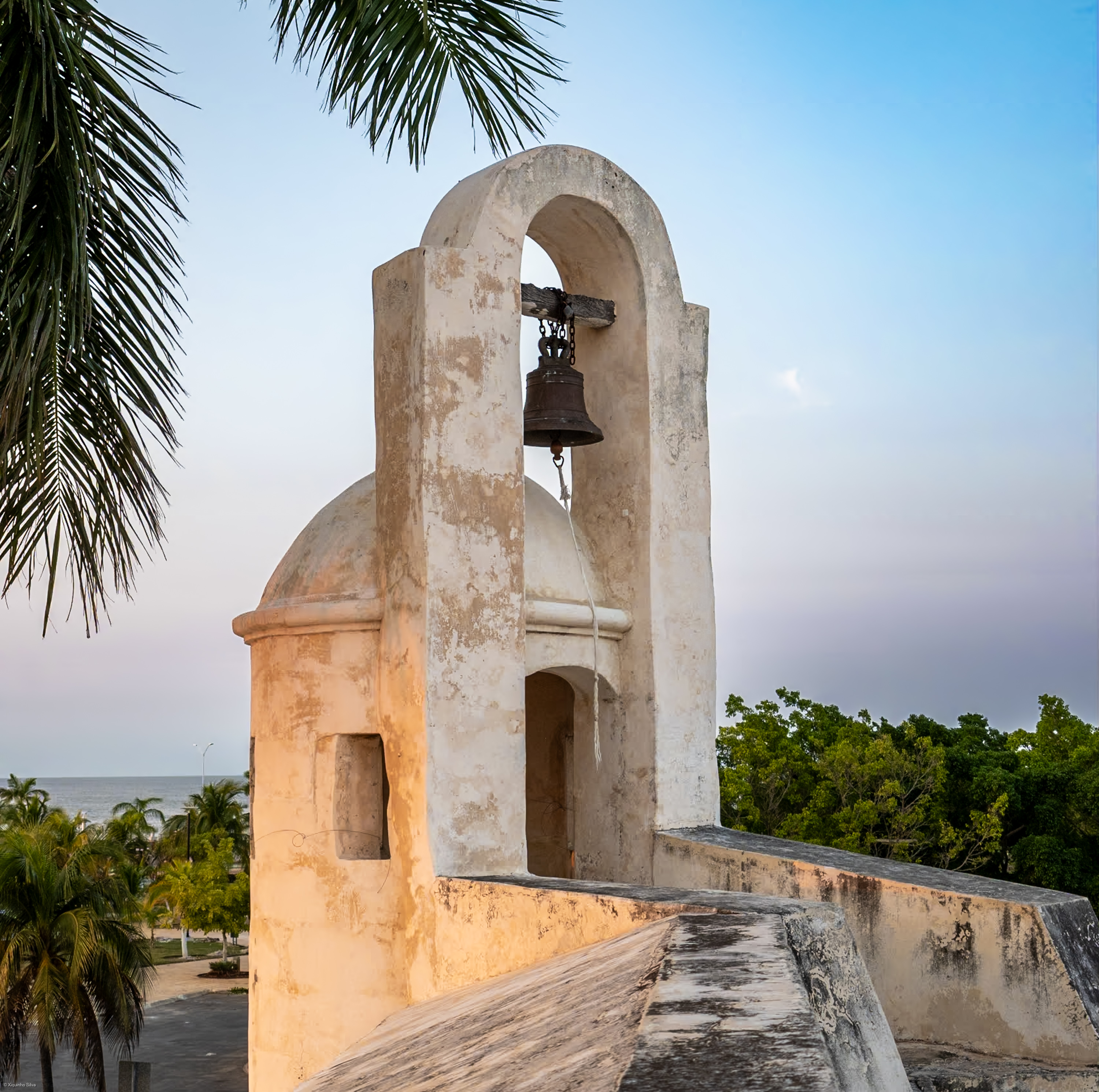
Contexto · Campeche (México), zona del vídeo FLIR de la Fuerza Aérea Mexicana

Contexto · Campeche (México), zona del vídeo FLIR de la Fuerza Aérea MexicanaContext · Campeche (Mexico), area of the Mexican Air Force FLIR video

San Francisco de Campeche, Campeche Mexico, dic 2023 - 13.jpg · Wikimedia Commons · CC BY 2.0 · abrir originalopen original

Parte 01Part 01

La noche en cuestiónThe night in question

El 5 de marzo de 2004, una aeronave Merlin C26-A del 501 Escuadrón de la Fuerza Aérea Mexicana (FAM) patrullando sobre el estado de Campeche, cerca de Ciudad del Carmen, en operativos antinarcóticos, detectó múltiples objetos en su radar (un AN/PS-143 Bravo Victor 3) y en su sistema FLIR (Forward Looking InfraRed, un Star Zapphir II). La tripulación reportó once objetos esféricos que parecían acompañar y rodear a la aeronave durante un intervalo prolongado, registrados tanto en modo normal como en infrarrojo. Lo decisivo es que los objetos solo aparecían en infrarrojo: la tripulación no los vio a simple vista.

El General Clemente Vega García, entonces Secretario de la Defensa Nacional (SEDENA), aprobó la divulgación del material. En abril de 2004 un oficial de la Secretaría contactó al investigador Jaime Maussan y le facilitó el video FLIR; Maussan lo presentó en una conferencia de prensa en mayo de 2004 que generó cobertura internacional masiva. La participación abierta de la SEDENA convirtió el episodio en un caso atípico: pocas veces el ministerio de defensa de un país soberano divulga proactivamente material de sensores militares como un evento UAP.

El piloto e investigador mexicano Alejandro Franz Navarrete, de la organización Alcione, propuso la explicación alternativa más influyente y, con el tiempo, dominante: el FLIR habría detectado los quemadores de gas (flares) de las plataformas petroleras del campo Cantarell, en la sonda de Campeche, una de las zonas de extracción más intensas del Golfo de México, situadas a entre 50 y 90 km de Ciudad del Carmen. A esa distancia y cerca del horizonte, fuentes de calor fijas pueden aparecer como objetos discretos suspendidos a la altura del avión, especialmente si una inversión térmica refracta su firma infrarroja. Franz fortaleció su argumento consultando el sistema FIRMS de la NASA, que confirmó la presencia de focos de calor activos en el área de Cantarell ese mismo 5 de marzo de 2004 —es decir, las plataformas estaban efectivamente quemando gas esa jornada—. La hipótesis es consistente con la geografía (vuelo sobre el Golfo), con la ausencia total de detección visual y con que los 'objetos' nunca se acercaran de verdad. La FAM no ha emitido una conclusión oficial actualizada que la confirme o refute. El caso se cita como ejemplo de evento UAP con divulgación institucional alta inicial seguida de una explicación convencional técnicamente plausible que nunca fue desmentida.

On March 5, 2004, a Merlin C26-A aircraft from the 501st Squadron of the Mexican Air Force (FAM) on an anti-narcotics patrol over the state of Campeche, near Ciudad del Carmen, detected multiple objects on its radar (an AN/PS-143 Bravo Victor 3) and its FLIR (Forward Looking InfraRed, a Star Zapphir II) system. The crew reported eleven spherical objects that appeared to accompany and surround the aircraft over an extended interval, recorded in both normal and infrared mode. The decisive point is that the objects appeared only in infrared: the crew did not see them with the naked eye.

General Clemente Vega García, then Secretary of National Defense (SEDENA), approved the release of the material. In April 2004 an officer of the Secretariat contacted researcher Jaime Maussan and provided him the FLIR video; Maussan presented it at a May 2004 press conference that generated massive international coverage. SEDENA's open involvement made the episode atypical: rarely does a sovereign country's defense ministry proactively release military sensor material as a UAP event.

Mexican pilot and investigator Alejandro Franz Navarrete, of the Alcione organization, advanced the most influential and, over time, dominant alternative explanation: the FLIR may have detected the gas flares of the oil platforms in the Cantarell field, in the Campeche sound, one of the most intense extraction zones in the Gulf of Mexico, located between 50 and 90 km from Ciudad del Carmen. At that distance and near the horizon, fixed heat sources can appear as discrete objects suspended at the aircraft's altitude, especially if a thermal inversion refracts their infrared signature. Franz strengthened his argument by consulting NASA's FIRMS system, which confirmed the presence of active heat sources in the Cantarell area on that very March 5, 2004 —that is, the platforms were indeed flaring gas that day—. The hypothesis is consistent with the geography (flight over the Gulf), with the total absence of visual detection, and with the fact that the 'objects' never actually closed in. The FAM has issued no updated official conclusion confirming or refuting it. The case is cited as an example of a UAP event with high initial institutional disclosure followed by a technically plausible conventional explanation that was never disproven.

Parte 02Part 02

Por qué este caso movió la agujaWhy this case moved the needle

Caso de calibración importante: una de las pocas instancias donde el Secretario de Defensa de un país soberano divulgó proactivamente video FLIR militar como evento UAP, seguido por una explicación convencional técnicamente plausible. Su lección central es que la divulgación institucional no implica nada sobre la naturaleza del evento subyacente: que un ministerio entregue el material no lo vuelve anómalo. El error inferencial que el caso desarma es el más tentador de la ufología seria —'lo grabó un sensor militar, luego es real'—, y por eso es una referencia metodológica para el resto del corpus.

Lo que enseña en positivo es el estándar multisensor. Aquí hubo radar y FLIR pero no detección visual, y la firma infrarroja sin correlato óptico resultó compatible con una fuente de calor terrestre vista a través de una atmósfera engañosa. Frente a esto, los casos que el corpus pondera alto (Nimitz, Teherán) sí suman radar + infrarrojo + visual concurrente, lo que les da una robustez de la que Campeche carece. El piloto e investigador mexicano Alejandro Franz Navarrete sostuvo la explicación convencional más influyente —los quemadores de las plataformas del campo Cantarell en el Golfo— y la respaldó con datos de focos de calor de la NASA para esa fecha; que su hipótesis nunca haya sido refutada por la FAM, y que sea geográfica y físicamente consistente, es justo lo que mantiene la probabilidad del caso baja pese a su alta visibilidad pública.

An important calibration case: one of the few instances where a sovereign country's Defense Secretary proactively disclosed a military FLIR video as a UAP event, followed by a technically plausible conventional explanation. Its central lesson is that institutional disclosure implies nothing about the nature of the underlying event: a ministry releasing the material does not make it anomalous. The inferential error the case dismantles is the most tempting one in serious ufology —'a military sensor recorded it, therefore it's real'—, which is why it is a methodological reference for the rest of the corpus.

What it teaches in the positive is the multi-sensor standard. Here there was radar and FLIR but no visual detection, and the infrared signature without an optical correlate turned out to be compatible with a terrestrial heat source seen through a deceptive atmosphere. By contrast, the cases the corpus weighs highly (Nimitz, Tehran) do combine radar + infrared + concurrent visual, which gives them a robustness Campeche lacks. Mexican pilot and investigator Alejandro Franz Navarrete advanced the most influential conventional explanation —the flares of the Cantarell field's oil platforms in the Gulf— and backed it with NASA heat-source data for that date; that his hypothesis was never refuted by the FAM, and that it is geographically and physically consistent, is exactly what keeps the case's probability low despite its high public visibility.

Parte 03Part 03

Lo que queda en papelWhat's left on paper

Evidencia documentadaDocumented evidence

  1. Video FLIR oficial FAM autorizado para release por SEDENAOfficial FAM FLIR video authorized for release by SEDENA
  2. Declaración pública del General Vega GarcíaPublic statement by General Vega García
  3. Análisis alternativo de Cantarell platform burners (Franz et al.)Alternative analysis of Cantarell platform burners (Franz et al.)
  4. Ausencia de detección visual concurrente con detección FLIR — consistente con hipótesis platform burnersNo concurrent visual detection alongside the FLIR detection — consistent with the platform-burners hypothesis

FuentesSources

  1. SEDENA México — comunicado oficial 2004
  2. Maussan, J. — Press conference video archive (mayo 2004) Material primario disponiblePrimary material available
  3. Franz, A. — Análisis alternativo de los quemadores de Cantarell (2004) Publicación académica mexicanaMexican academic publication

UbicaciónLocation

CampecheCampeche · 18.46°, -94.05°

Distribución de explicacionesDistribution of explanations

Este caso se clasifica entre las hipótesis del modelo: la barra reparte el 100% según cuánto pesa cada explicación (la incertidumbre se reparte entre las hipótesis que el caso apoya). Sumadas en todo el corpus producen la partición comparable. Es una pregunta distinta de la Probabilidad de arriba: aquella estima qué tan probable es que el caso sea un fenómeno genuinamente no explicado; esta reparte cuál sería la explicación.This case is classified among the model's hypotheses: the bar splits 100% by how much each explanation weighs (the uncertainty is spread across the hypotheses the case supports). Summed across the corpus they produce the comparable partition. It is a different question from the Probability above: that one estimates how likely the case is a genuinely unexplained phenomenon; this one splits which the explanation would be.

MisidentificaciónMisidentification85%
No-humano sin gestión estatalNon-human, no state management7%
Tecnología humana clasificadaClassified human technology4%
Tecnología adversariaAdversary technology2%
No-humano + encubrimiento estatalNon-human + state cover-up2%

Hipótesis modalModal hypothesis: MisidentificaciónMisidentification 85% · suma 100%sums to 100%

Se confundió conConfused with: Sin objeto único identificadoNo single object identified

Juicio analítico estructurado, no frecuencia calibrada. Clasificación forzada: la masa que la evidencia no permite asignar se reparte entre las hipótesis que el caso sí apoya.Structured analytical judgment, not a calibrated frequency. Forced classification: the mass the evidence cannot assign is spread across the hypotheses the case does support.

Casos relacionadosRelated cases

Actores asociados (3)Associated actors (3)